
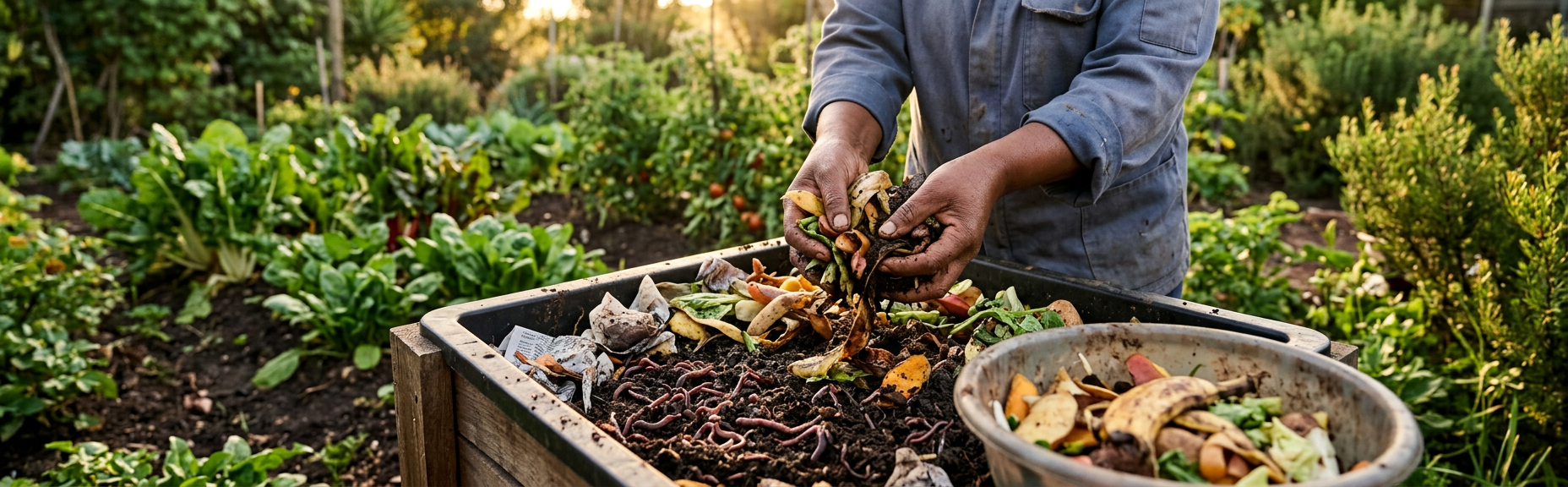
What do composting worms eat?
Red Wigglers (Eisenia fetida) eat decaying organic matter. In a worm bin that mostly means fruit and vegetable scraps, coffee grounds, tea leaves, eggshells and soft plant trimmings. They do not eat fresh, raw food straight from the fridge — bacteria need to start breaking it down first. That is why burying scraps under bedding matters: it creates the moist, microbe-rich environment worms need.
Yes — feed these
- Fruit and vegetable peelsApple cores, banana peels, potato skins, gem squash shells
- Coffee grounds and tea leavesRooibos and ordinary tea bags; remove staples
- Crushed eggshellsAdds grit and helps balance bin acidity
- Plain cooked grainsRice, pap, oats and maize meal in small amounts — no salt, oil or sauce
- Aged leaves and grass clippingsLet green grass wilt first to reduce heat
- Shredded cardboard and newspaperCarbon-rich bedding, which worms will eventually eat too
- Soft garden trimmingsDeadheading, soft weeds and spent veggie plants
No — keep these out
- Citrus and orange peelsToo acidic and can kill worms in quantity
- Onions, garlic and chivesStrong oils disrupt the bin and deter worms
- Meat, chicken and fishAttracts flies, rats and causes foul odours
- Dairy productsCheese, milk and yoghurt rot and smell
- Oily or fatty foodsAvocado oil, cooking oil, salad dressing, chips
- Salty or spiced leftoversSalt and spices are harmful to worms
- Pet wasteHealth risk and parasites
South African kitchen scraps: yes or no?
Local diets produce local scraps. Here is how common South African foods stack up for your worm farm.
| Scrap | Verdict | Tip |
|---|---|---|
| Mango peels and pips | Yes | Chop pips small or leave them out |
| Avocado skins and stones | Yes | Break stones open or compost separately |
| Rooibos tea bags | Yes | Remove staples and tags |
| Pap or stywe pap leftovers | Yes | Only plain, unsalted pap |
| Braai leftovers and meat fat | No | High fat and salt — keep out |
| Bunny chow or curry scraps | No | Spices, oil and salt are harmful |
| Citrus from naartjies and lemons | No | Very acidic; small amounts only |
| Pumpkin and butternut seeds | Yes | Chop seeds or they may sprout |
Five rules for feeding your worms
- 01
Feed little and often
Start with a handful of scraps every 2–3 days. A 1 kg worm colony eats roughly 500 g of food per week. If food is still visible after three days, slow down. - 02
Bury scraps under bedding
Push food 5 cm below the bedding surface. This keeps fruit flies away, prevents smells and encourages worms to move up and feed. - 03
Balance greens and browns
For every cup of wet kitchen waste, add a cup of dry carbon — shredded cardboard, newspaper or dried leaves. This prevents a soggy, acidic bin. - 04
Chop scraps small
Smaller pieces break down faster, which means worms can eat sooner and you avoid mouldy leftovers sitting on top. - 05
Watch the weather
In hot, humid coastal climates worms eat faster but bins also heat up. In cold Highveld winters, cut quantities by half until activity picks up.
What not to put in a worm farm
The fastest way to ruin a worm bin is to treat it like a general rubbish bin. Worms cannot process plastic, glass, metal, glossy paper, diseased plants or anything contaminated with chemicals. Even biodegradable items like teabags need a quick check for plastic seals or staples.
- No meat, bones, dairy or eggs — they rot and attract pests.
- No citrus, onion or garlic — they acidify the bin and repel worms.
- No oily, salty or spiced food — worms are sensitive to salt and strong flavours.
- No fresh grass clippings in bulk — they heat up and cook the worms.
- No pet waste or kitty litter — health hazard and parasites.
- No glossy magazines, labels or sticky tape — plastic and adhesives do not break down.
Quick rules
- Feed: fruit, veg, coffee, tea and crushed eggshells.
- Avoid: citrus, onion, meat, dairy, oil and salt.
- Amount: around 500 g per week for every 1 kg of worms.
- Method: bury scraps under 5 cm of bedding.
- Balance: one part greens to one part browns.
Frequently asked questions
Can worms eat banana peels?
Yes. Banana peels are a worm-farm favourite. Tear them into strips and bury them under bedding. They break down quickly and worms love them.
Can I feed worms avocado?
Yes, in moderation. The flesh is fine; the skin and stone break down slowly. Chop the stone or leave it out to avoid it sitting in the bin for months.
Why do worms avoid onions and citrus?
Onions, garlic and citrus contain acidic oils and sulphur compounds that irritate worms and shift the bin pH. Even small amounts can make worms crawl out.
How often should I feed my worms?
Most household bins do well with a small feeding every 2–3 days. The rule is simple: if the last feed is gone, add more; if it is still there, wait.
What if my worm farm smells bad?
Bad smells usually mean overfeeding, too much moisture or food exposed to air. Stop feeding, add dry shredded cardboard, stir gently and bury future scraps deeper.
Ready to start or scale your worm farm?
Feeding worms is just one part of a healthy vermicomposting system. If you want help setting up a bin, choosing worms or designing a commercial system, we work across South Africa.