
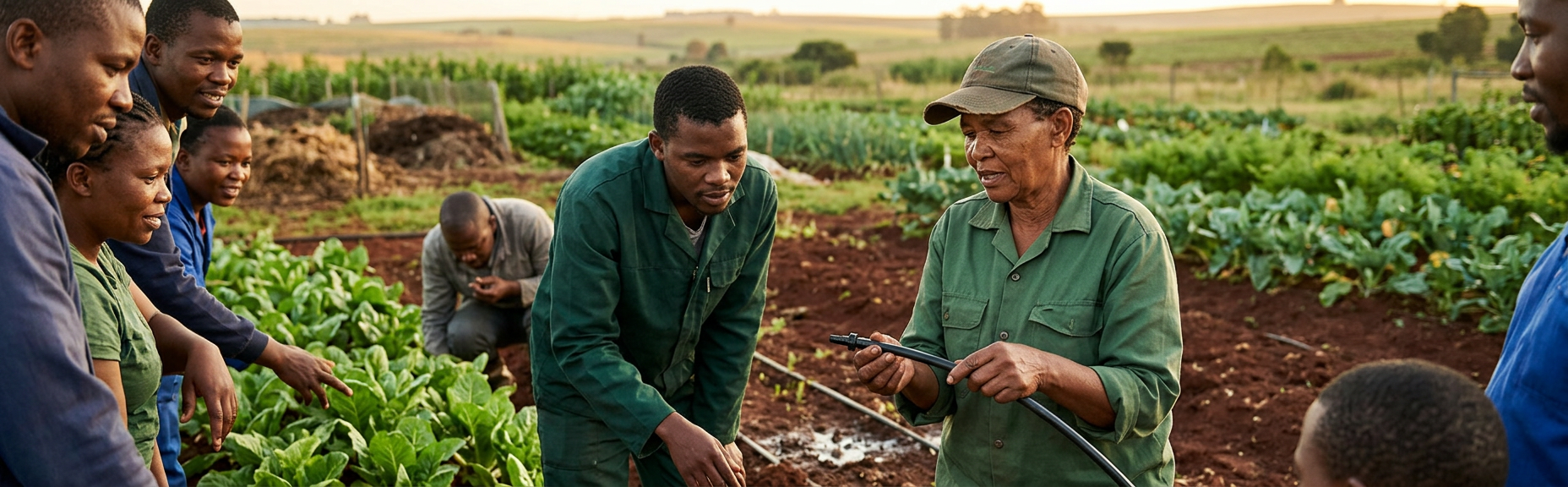
The quiet learner may be reading the field
A learner who says little during a presentation may be the first person to notice a blocked dripper, a change in soil smell or a crop under stress. Classroom confidence and workplace competence are not the same. Adult learners bring experience, responsibilities, language preferences and reasons for deciding whether a new practice deserves trust.
FAO's farmer field school approach treats the field as a primary learning resource: people observe, compare, experiment, discuss and decide. The principle transfers well to worm farms, waste stations, food gardens and irrigation systems. Practical learning is not an unstructured activity; it needs a clear task, safe boundaries, observation prompts and a useful debrief.
Green Earth Concepts uses hands-on training formats connected to the systems people actually operate.
Six moves from information to capability
Begin with a real problem adults recognise. Ask what they have seen, what they already do and where the task becomes difficult. Demonstrate the complete task once, then break it into decision points. Let learners handle the tools and materials in safe rotations. Ask them to predict, observe and explain what changed.
After practice, debrief the reasoning rather than praising speed. What signal guided the decision? What could cause a different result? When must the operator stop and escalate? Finish with a workplace action and a time for follow-up. Reflection turns an isolated exercise into a method the learner can adapt.
Facilitators can turn this cycle into a repeatable session with field facilitation skills, then protect learning after the session through a 30-day retention plan.
The debrief is where activity becomes learning. After a practical attempt, ask for observation before opinion: What changed? What did you see, feel, smell, hear or measure? Then ask learners to explain the likely cause, compare alternatives and choose the next safe action. The facilitator can add technical language after the group has described the evidence in familiar words. This sequence respects experience while still testing whether the conclusion is supported.
Use contrast cases so that learners practise judgement, not only repetition. A healthy worm bed and a hot, sour-smelling bed can be compared; two irrigation zones can show different pressure symptoms; a clean and contaminated waste sample can be sorted against the same acceptance rule. Rotate who performs, observes, records and explains. Before moving on, ask each learner to demonstrate or teach back the critical decision. Participation alone is not evidence that the skill can be used independently.
Build reflection into normal work after the session. A five-minute review at the end of a collection round, irrigation check or feeding cycle can ask what was expected, what happened and what should change next time. Capture one photograph, reading or sample only where permission and safe data handling are clear. The facilitator can use these small records at follow-up to reconnect the concept with real variation. If the team reaches a conclusion that conflicts with safety, law or the system specification, acknowledge the reasoning, explain the boundary and practise the correct escalation rather than allowing experience to become an unquestioned rule.
The field-learning cycle
- 01
Surface experience
Invite examples and existing methods without assuming every practice is safe or appropriate. Clarify that experience will be examined, not judged as a person.
- 02
Focus observation
Give a small set of prompts: colour, moisture, pressure, contamination, plant response or another relevant signal. Too many prompts create watching without noticing.
- 03
Demonstrate with narration
Show the task at normal pace, then repeat critical decisions more slowly. Explain why and identify stop points.
- 04
Let everyone practise
Use pairs or small rotations so no confident participant does all the work. Provide tools and conditions close to the workplace.
- 05
Debrief evidence
Ask what learners observed, why results differed and what they would do next. Correct unsafe reasoning clearly while protecting dignity.
- 06
Transfer and revisit
Name the next workplace use, responsible supervisor and follow-up check. A skill becomes reliable through supported repetition.
Teach from the system, not beside it
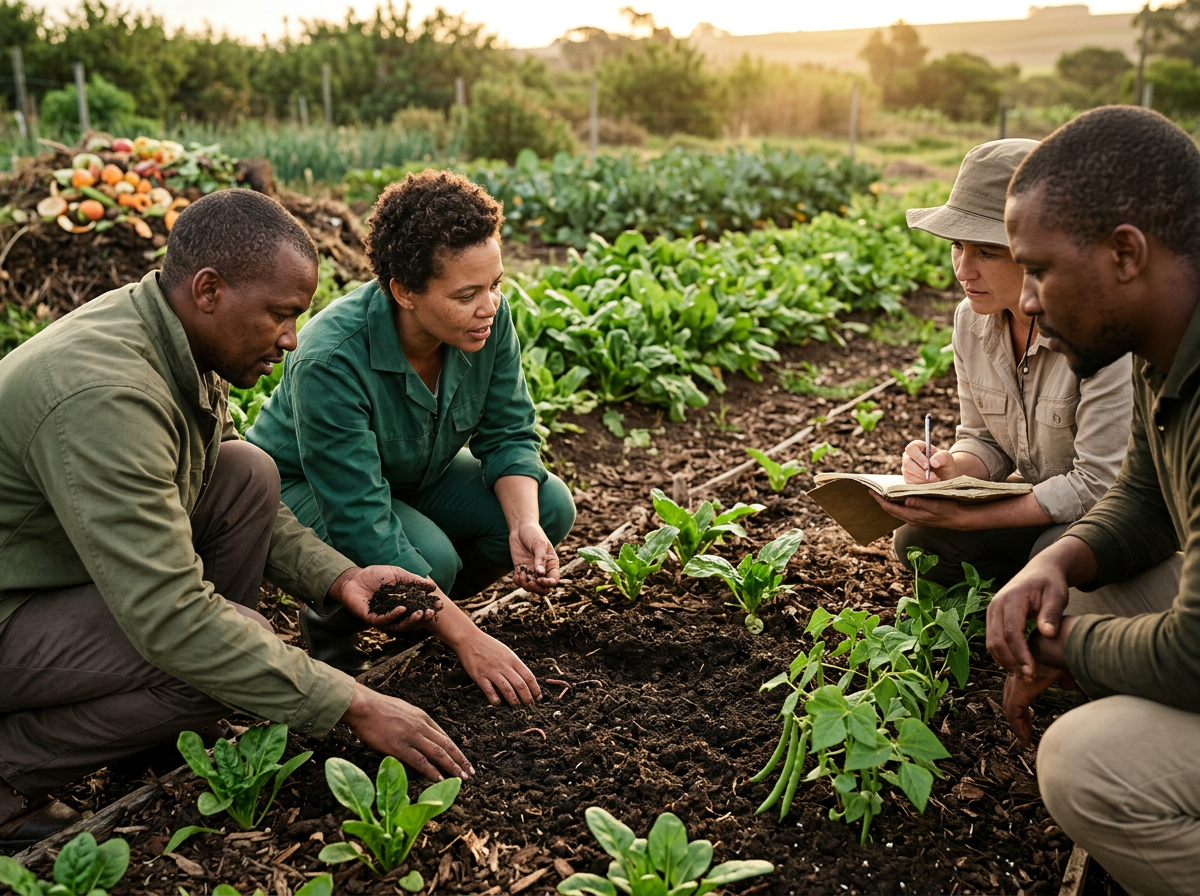
For an irrigation lesson, learners can compare a clean and dirty filter, predict the pressure effect, isolate safely, inspect and explain the escalation point. For waste separation, they can classify a realistic sample and redesign a confusing station. For soil, they can compare infiltration in two managed areas without turning one quick test into a laboratory claim.
Use the image to show the four-part cycle—observe, try, reflect, adjust—with adults actively examining real work. Avoid depicting a facilitator speaking while everyone else passively watches.
Respect adult experience without romanticising it
Do
- Ask what learners already know and how they know it.
- Connect theory to a task they recognise.
- Give each person safe practice and feedback.
- Explain when technical or legal requirements override habit.
- Use local knowledge with permission and attribution.
Don't
- Assume quiet participation means no knowledge.
- Use a lecture as the default for a physical task.
- Let one experienced learner perform for the whole group.
- Dismiss practice without investigating its context.
- Present community knowledge as free curriculum material.
Replace passive content with field evidence
| Passive version | Practical redesign | Evidence of learning |
|---|---|---|
| Slide on filter maintenance | Inspect, isolate, clean and reinstall a real filter | Learner performs safely and explains the cleaning trigger |
| List of accepted waste | Sort a representative clean sample and discuss borderline items | Learner applies rules and escalates uncertainty |
| Talk on soil moisture | Compare two root-zone observations | Learner records condition and selects an appropriate next check |
| Lecture on pest scouting | Observe a marked area and report evidence | Learner distinguishes observation from diagnosis |
Practical-session quality check
- The task solves a problem learners recognise.
- Existing experience is invited and examined respectfully.
- Every learner handles the task or decision.
- Safety boundaries and escalation are explicit.
- The debrief names the evidence behind decisions.
- A workplace follow-up is assigned.
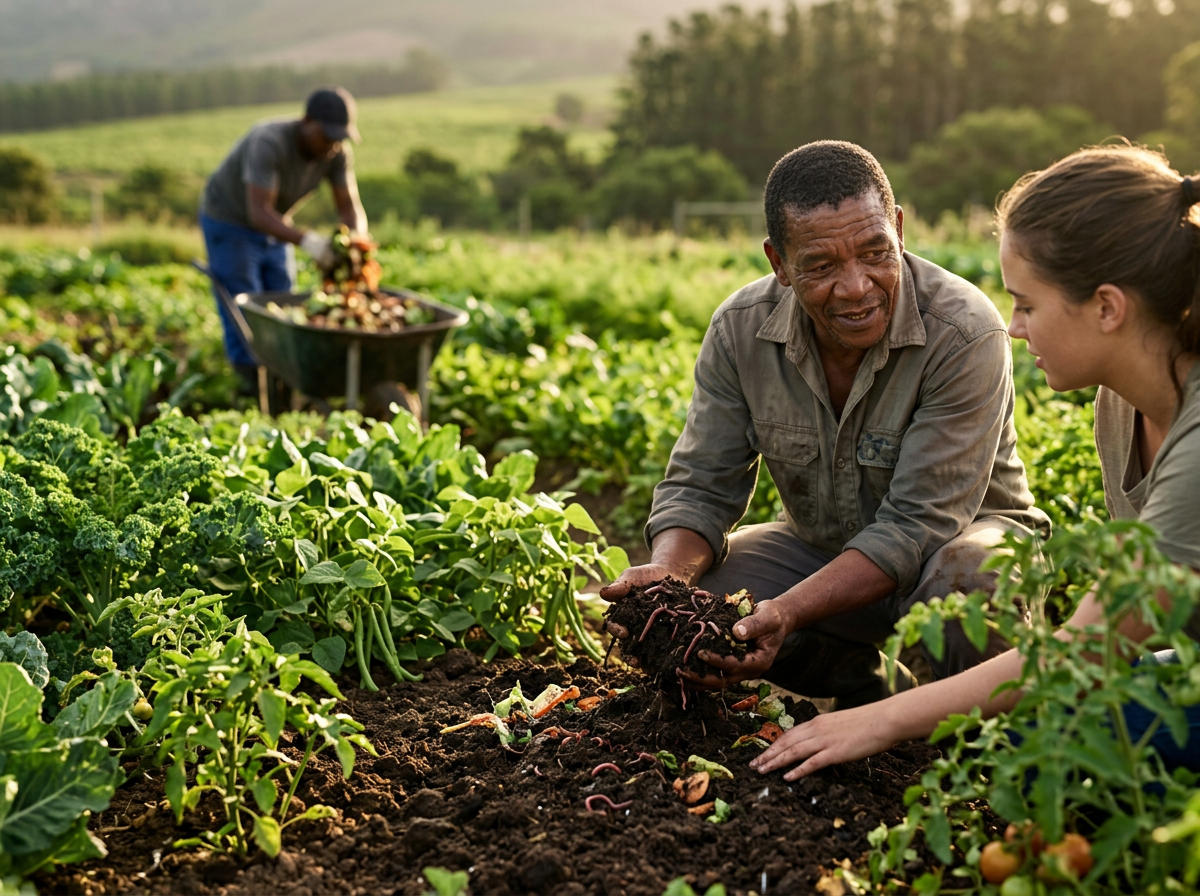
Plan training around real tasks
Green Earth Concepts can assess the system and turn priority tasks into demonstrations, practice rotations, visual aids and follow-up checks suited to the team and site.
Doing is structured learning
- Start with experience and a real operational problem.
- Make observation and decision points visible.
- Practise safely, then debrief the reasoning.
- Repeat the skill at work with supervisor support.
The field gives immediate feedback
Adults do not need entertainment disguised as training. They need relevant problems, respectful participation, safe practice and feedback they can use. When the system itself becomes part of the lesson, learning moves closer to reliable work.