
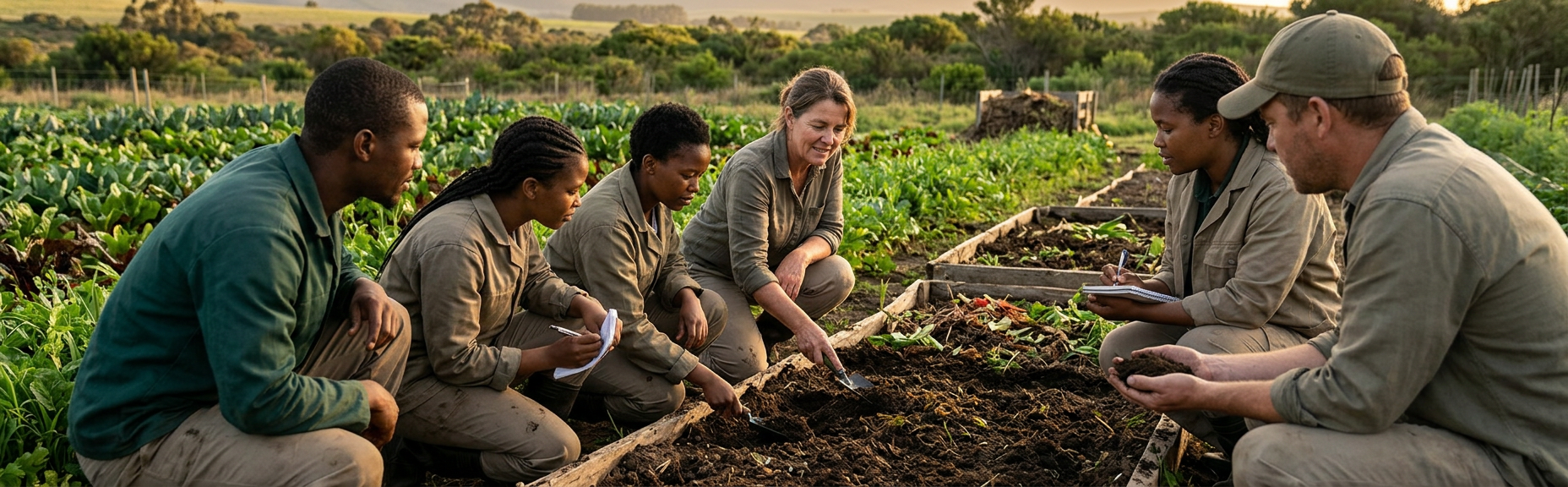
Strong facilitation looks like more noticing and less performing
A facilitator can explain every technical detail and still leave the group unable to act. In the field, attention must move between the system, the task and the people: Is the demonstration safe? Who has practised? Who is silent because the language or group dynamic is difficult? What is the equipment showing? Which confident answer is unsupported by evidence?
Practical facilitation creates conditions for people to observe, try, discuss and make a sound decision. It is not a retreat from expertise. The facilitator must know the technical boundaries well enough to correct dangerous actions and admit when specialist advice is needed.
Green Earth Concepts provides facilitated on-site environmental training linked to operating systems.
Prepare the learning environment before the learners arrive
Walk the site, confirm the system is safe to demonstrate, reserve tools and materials, identify weather or access risks and agree what may not be photographed or recorded. Map learner roles, language preferences and mobility or sensory access needs. Brief the site supervisor and any interpreter on outcomes and technical terms.
Plan fewer activities than the time appears to allow. Real practice needs setup, rotation, questions, correction and cleanup. Decide what evidence will show that each participant—not only the group—can perform or explain the priority decision.
Pair the run sheet with adult learning through field practice and a longer-term train-the-trainer pathway when local facilitators will take over.
Keep a simple observation grid during rotations: learner, task, evidence noticed, action chosen, support needed and recheck date. It helps the facilitator see who has only watched, who can copy a routine but cannot diagnose a change, and who is ready for an extension task. Correct unsafe actions immediately and privately where possible; save broader patterns for the group debrief without naming or shaming individuals. When confidence outruns evidence, return the discussion to the system signal and acceptable range.
Participation needs active design. Invite answers in pairs before plenary discussion, change who holds the tool or marker, and give interpreters the prompt in advance. Do not treat quietness as lack of knowledge or fluent technical English as competence. Close with one action per role, the evidence that will be reviewed and a named route for questions after the facilitator leaves. A field session succeeds when the team can continue the work safely, not when the presenter finishes every slide.
Prepare a decision for interruptions before the session starts. If weather, a delivery or an equipment fault removes the planned activity, protect the outcome: switch to a safe component inspection, compare records, diagnose a prepared scenario or reschedule the live practice. Do not sign off practical competence from discussion alone. Record what was completed, what remains and who will arrange the missing evidence. That honesty protects learners and keeps an unpredictable field day from becoming a false claim of readiness.
The seven-stage field-session run sheet
- 01
Prepare
Confirm outcomes, people, site, tools, language support, safety, permissions and evidence. Test the equipment and prepare an alternative if weather or operation changes.
- 02
Welcome and contract
Explain purpose, timing, participation, safety, respect, breaks, questions, photography boundaries and how performance will be checked.
- 03
Elicit experience
Ask what learners have observed or tried. Record useful terms and misconceptions without allowing the opening discussion to consume practice time.
- 04
Demonstrate
Show the complete task, then repeat critical decisions. Use visible positioning, short phrases and real signals. Narrate stop-and-escalate points.
- 05
Rotate practice
Assign roles so each person performs, observes with a prompt and gives evidence-based feedback. Change roles and prevent one participant from taking over.
- 06
Debrief and check
Ask what changed, what evidence guided action and what could go wrong. Use a demonstration or scenario to check individual understanding.
- 07
Close and follow up
Agree the next workplace use, supervisor support, outstanding questions and review date. Leave the area and equipment safe.
Prompts that reveal thinking
| Moment | Weak prompt | Stronger prompt |
|---|---|---|
| Before practice | Do you understand? | What will you check first, and why? |
| During observation | What do you see? | Which visible change matters to the decision? |
| After an error | Why did you do that? | Show us where the decision changed and what signal you used. |
| During debrief | Was that easy? | What would make this harder on the busiest shift? |
| At close | Any questions? | What will you do next time the reading is outside the normal range? |
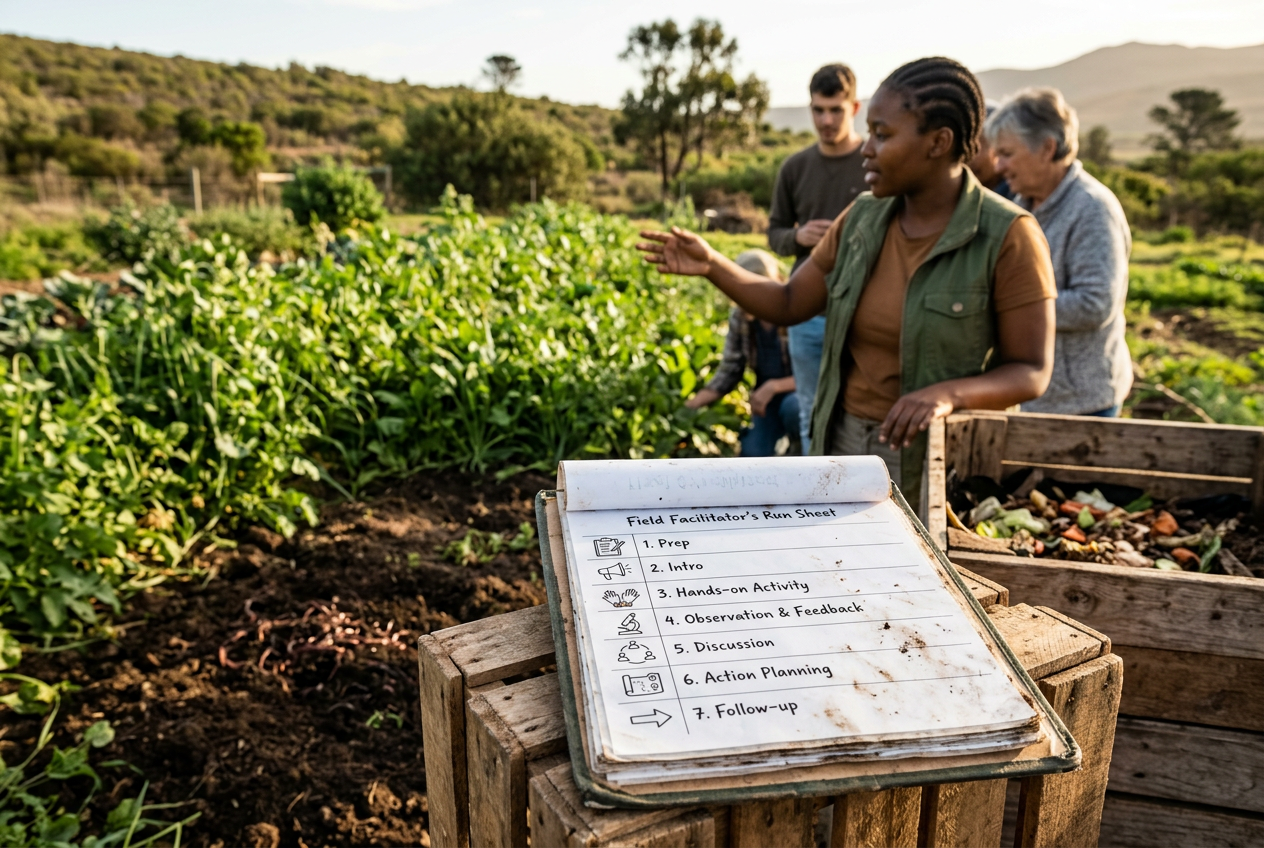
Manage participation without losing the task
Do
- Invite quiet learners through pairs and specific prompts.
- Rotate hands-on roles visibly.
- Correct unsafe action immediately and explain why.
- Park off-topic issues with a named follow-up.
Don't
- Let fluent speakers represent everyone.
- Use humiliation as evidence of rigour.
- Continue a demonstration when conditions become unsafe.
- Pretend to know an answer outside your competence.
Facilitator field check
- The system and materials are safe and ready.
- Outcomes and evidence are visible to learners.
- Language and accessibility support are briefed.
- Every person has a route into practice.
- Stop points and escalation are explicit.
- The supervisor owns follow-up.
Field-facilitation questions
How large should a practical group be?
Size depends on risk, tools, space, facilitators and the need for each person to practise. If some learners can only watch, add stations, time or facilitators rather than calling observation full practice.
What if a learner knows more than the facilitator?
Invite the evidence and experience, clarify the learning outcome and retain responsibility for safety and verified technical requirements. Expertise can be shared without handing one person control of the group.
Should mistakes be allowed during practice?
Safe, reversible errors can support learning when boundaries are clear and feedback is immediate. Do not permit actions that risk injury, contamination, equipment damage or environmental harm.
Design a field session around the work
Green Earth Concepts can assess the task, site and learner group, then facilitate practical delivery with role-based practice, visual support and follow-up evidence.
Facilitation is guided attention
- Prepare the real conditions, not only the content.
- Demonstrate decisions and stop points.
- Rotate practice and check individuals.
- Debrief evidence, then assign workplace follow-up.
The facilitator protects the learning conditions
Good facilitation does not compete with the learners or the system. It makes the task visible, distributes practice, corrects risk and helps people explain the evidence behind their next action.