
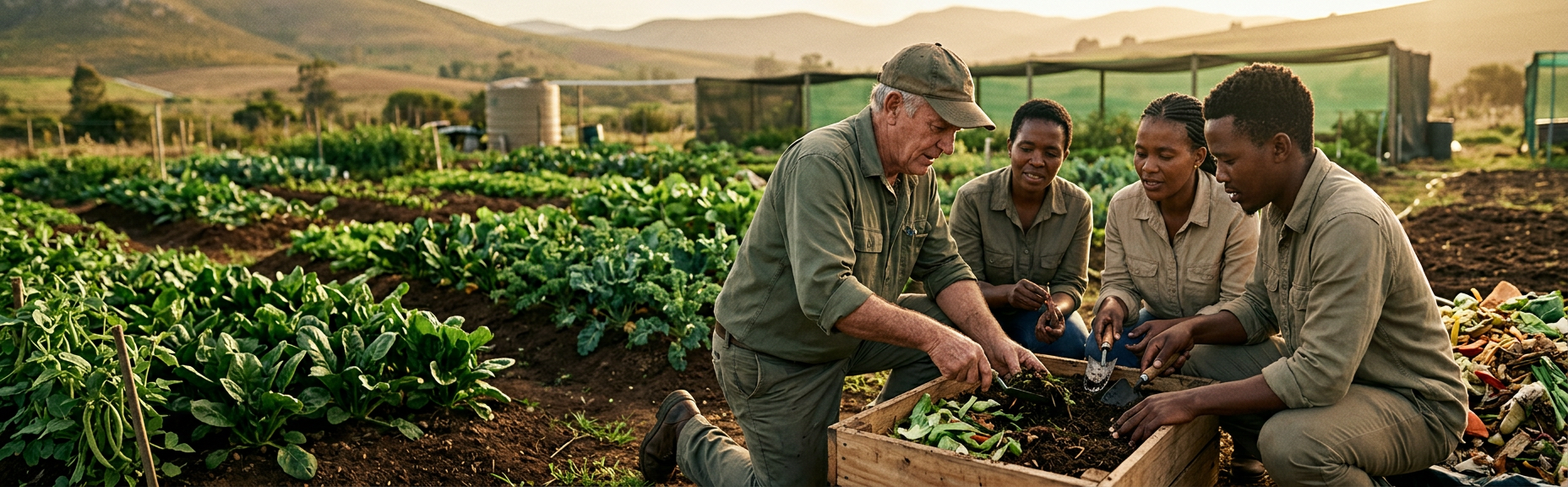
An event reaches a room; a trusted trainer can build local capacity
Training one hundred people once can create energy and little lasting support. Developing local facilitators can place practical help closer to farms, schools and community gardens—but only when technical accuracy, facilitation skill, scope and continuing support are protected. Giving a confident participant a slide deck is not a train-the-trainer programme.
The goal is not to reproduce one presenter's style. It is to prepare people who can demonstrate priority tasks safely, invite local experience, recognise the limits of their competence, check understanding and connect learners to further help.
Green Earth Concepts can shape training and development programmes around the agricultural systems and communities in scope.
Select for trust, task and learning—not status alone
Potential trainers need credible task experience or a clear route to acquire it, willingness to practise, respect for learners, reliability and the ability to receive feedback. Language reach and community trust matter, but no individual should be treated as the sole representative of a community or asked to share protected knowledge without authority.
Define the trainer's scope. One person may be ready to teach bed preparation and record keeping but not diagnose irrigation pumps, prescribe soil amendments or certify competence. A scope statement protects learners and gives the trainer a confident sentence for escalation.
Build facilitation skill through the field-session run sheet, then support new trainers through supervisor skills coaching.
Trainer development should include calibrated observation. Two candidates can watch the same demonstration, score it independently and compare the evidence behind their decisions. Differences reveal vague criteria, hidden assumptions or technical gaps before these are passed to learners. Keep the criteria short enough to use in the field and include the conditions that require an immediate stop or specialist escalation.
After initial approval, use supported delivery rather than an abrupt handover. A candidate can first lead one activity, then a complete session with a mentor present, then deliver independently while submitting agreed evidence. Review learner performance, safety events, unanswered questions and follow-up—not presentation style alone. Set a recheck interval and a route for updating trainers when procedures, equipment or local language terms change.
Give trainers a bounded technical support channel. They should know which questions they may answer, which records or manuals to consult and when to pause delivery for an agronomist, engineer, health-and-safety practitioner or other specialist. Keep a question log and feed resolved cases back into briefings. This makes saying ‘I need to verify that’ a mark of professional judgement, not a weakness, and prevents confident improvisation from becoming local doctrine.
The trainer development pathway
- 01
Agree purpose and governance
Define communities, systems, outcomes, safeguarding, knowledge permissions, trainer role, decision rights and who maintains technical content.
- 02
Select transparently
Publish criteria, invite nominations and avoid choosing only the most senior or fluent speaker. Confirm time, language, travel and support expectations.
- 03
Build task competence
Trainers perform the actual agricultural or environmental tasks, interpret normal and abnormal conditions and demonstrate safe escalation.
- 04
Model the learning method
Master trainers teach through observation, practice and reflection—the same method candidates should later use.
- 05
Co-facilitate
Candidates lead bounded parts of real sessions while an experienced facilitator supports safety, timing and technical accuracy.
- 06
Facilitate under observation
Candidates prepare and run a complete session. Use transparent criteria covering inclusion, practice, feedback, evidence and close.
- 07
Give specific feedback and repeat
Name observed strengths and one or two priority improvements. Provide another practice opportunity rather than treating feedback as final judgement.
- 08
Sign off a defined scope
Record what the trainer is ready to deliver, required materials, limits, referral route and review date. Do not imply external accreditation without authority.
- 09
Mentor and update
Schedule observation, peer exchange, technical updates and escalation support. Trainer development continues after initial sign-off.
Evidence for trainer readiness
| Capability | Evidence | Red flag |
|---|---|---|
| Technical task | Performs and explains critical decisions safely | Memorises steps but misses abnormal conditions |
| Facilitation | Distributes practice and asks evidence-based questions | Lectures or allows one person to dominate |
| Inclusion | Uses language and visual support respectfully | Equates fluency or literacy with intelligence |
| Feedback | Corrects specifically without humiliation | Avoids correction or attacks the person |
| Scope | States limits and uses referral routes | Invents answers or claims unheld accreditation |
| Knowledge ethics | Checks consent, attribution and access boundaries | Treats community knowledge as programme property |
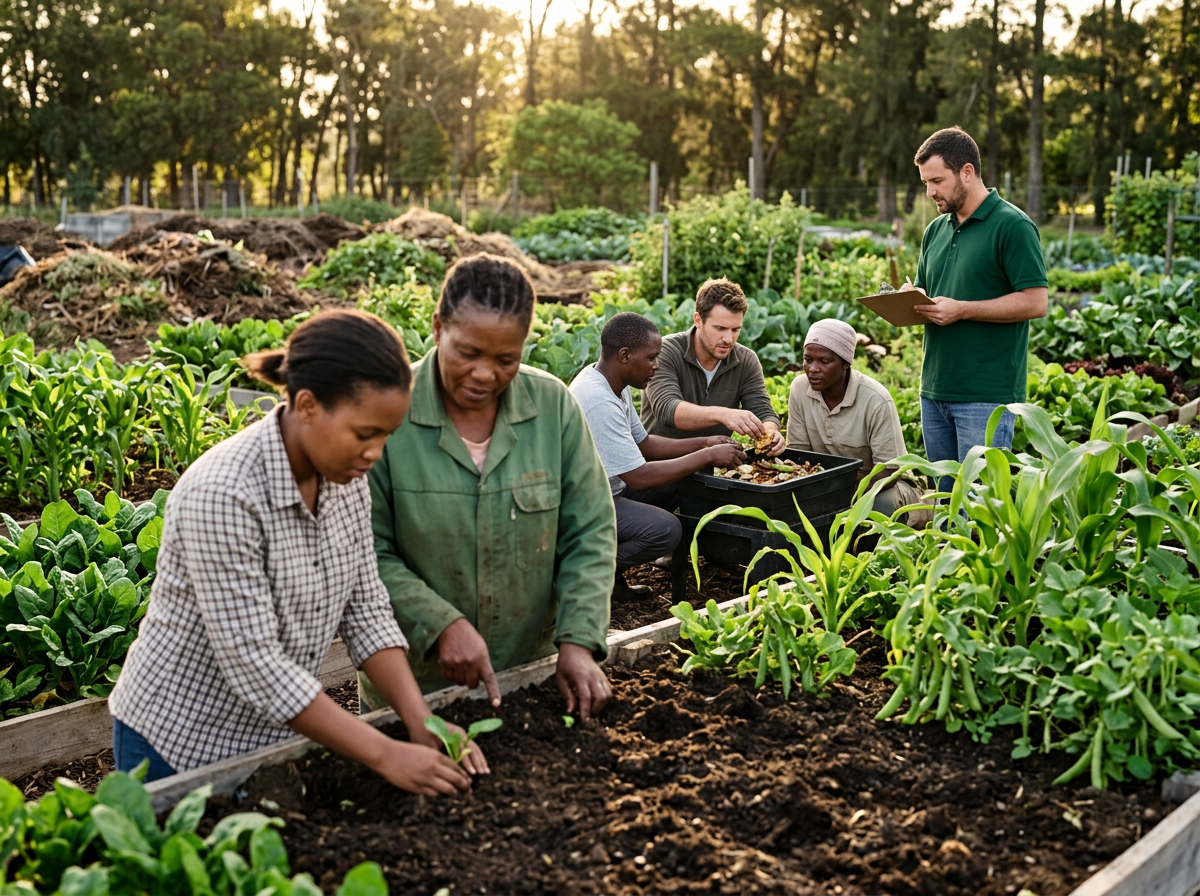
Use a ladder, not a leap
Show a visible progression from learner to demonstrator, co-facilitator, observed facilitator and mentor. Candidates may move at different speeds and may be signed off for different modules. The image should not place everyone on one competitive ranking.
Add decision gates for more practice, narrower scope and referral. A responsible programme makes it safe to say not yet.
Scale without losing quality
Do
- Maintain reviewed lesson and task standards.
- Observe trainers in real delivery.
- Pay or recognise preparation and mentoring fairly.
- Keep referral and technical-update channels open.
- Agree community knowledge permissions separately.
Don't
- Select only by title, confidence or English fluency.
- Use one workshop as permanent sign-off.
- Force trainers beyond their technical scope.
- Count sessions without checking learner practice.
- Turn trusted facilitators into unpaid programme infrastructure.
Programme readiness
- Selection criteria and trainer scope are published.
- Candidates receive repeated task and facilitation practice.
- Observation criteria and appeal or re-practice routes are clear.
- Materials, language support and travel realities are budgeted.
- Mentoring and technical updates have named owners.
- Claims about certification or accreditation are accurate.
- Knowledge rights, consent and benefit arrangements are explicit.
Train-the-trainer questions
How long does trainer preparation take?
It depends on prior task competence, module complexity, facilitation experience and opportunities for observed practice. Seasonal agricultural topics may need learning across a production cycle. Avoid a fixed promise before assessment.
Does internal sign-off make someone accredited?
No. Internal readiness can authorise delivery within a defined programme scope. Accreditation and registered qualifications have specific external requirements. Describe the status accurately.
Should every trainer teach every module?
Not necessarily. Modular scope allows trainers to work where they are competent and trusted while referring specialist or higher-risk topics.
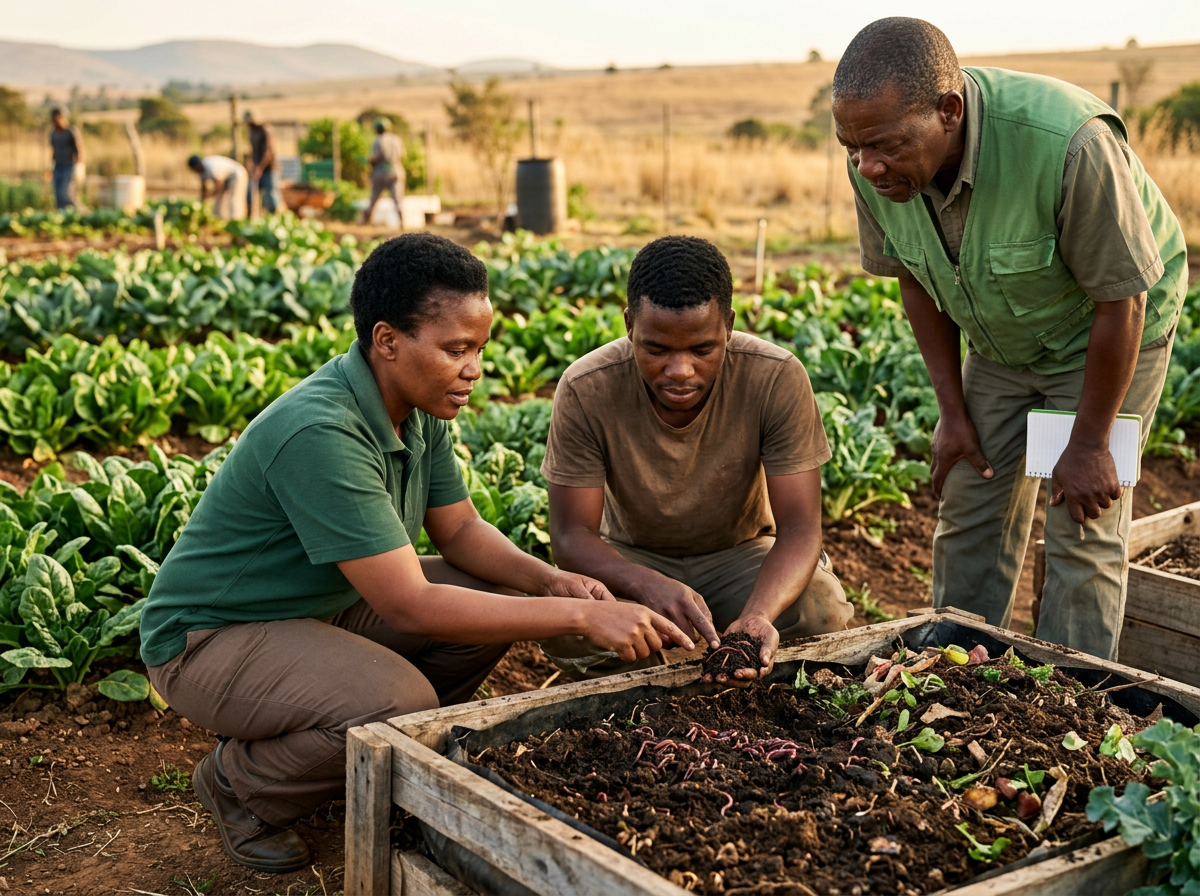
Design a trainer pathway for the real programme
Green Earth Concepts can assess the systems, trainer candidates, languages, locations and support model, then develop a staged programme with practical evidence and clear limits.
Multiplication needs support
- Select for trust, practice and feedback readiness.
- Model the method candidates must later use.
- Observe complete delivery and sign off a defined scope.
- Fund mentoring, updates and referral after launch.
Local capacity is a relationship, not a handover file
Trusted trainers grow through practice, feedback and access to continuing technical support. Build the pathway slowly enough to protect quality and openly enough that candidates know what ready means.