
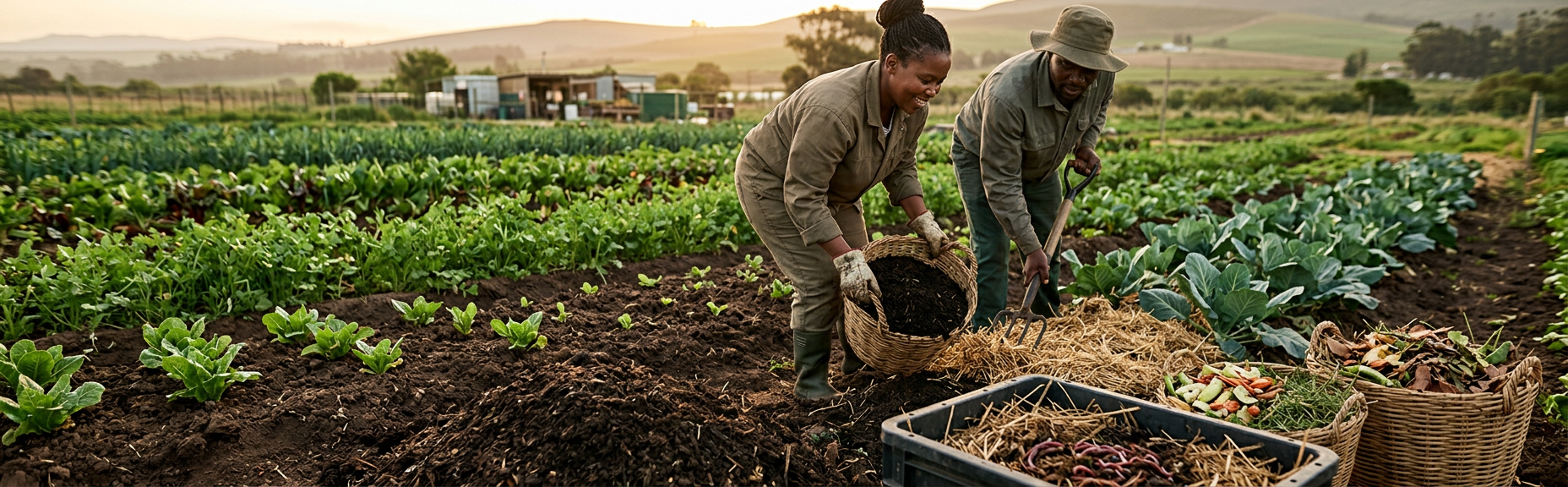
Healthy soil is built through a sequence, not bought in one load
Tired soil attracts dramatic promises. One truckload will fix it. One liquid will activate it. One season of compost will turn it into rich loam. Real soil improvement is less theatrical and more useful: protect the surface, add appropriate organic inputs, keep living roots where practical, reduce damaging disturbance, manage water and observe the response over time.
Organic matter matters because it participates in soil structure, nutrient cycling, biological activity and water relations. Yet more is not always better. Immature compost, salty material, contaminated feedstock or deep layers of undecomposed carbon-rich material can create new problems. Mulch can protect the surface, but it can also hide leaks, hold moisture against stems or increase fire and pest concerns when badly managed.
A living-soil plan therefore begins with a baseline and uses cautious, repeatable actions. The aim is not to chase a particular appearance. It is to create a root zone that accepts and stores water appropriately, supports the intended crops and becomes easier—not harder—for the team to manage.
For site-specific design and implementation, explore sustainable agriculture systems.
Four processes to support
Keep the surface protected
Bare soil is exposed to raindrop impact, wind, rapid heating and evaporation. Appropriate crop residue, mulch or living cover can reduce that exposure. The material, thickness and timing must fit climate, crop, fire risk, pests, irrigation and available biomass. In smallholder systems, crop residues may also be needed for fodder or fuel; a soil-cover recommendation that ignores those uses is not a practical plan.
Feed soil with known inputs
Mature, traceable compost can contribute organic matter and nutrients, but its properties depend on feedstock and process. Inspect source quality and seek analysis when scale, crop sensitivity or repeated application justifies it. Vermicompost can be another input, but it should also be used as a measured material rather than a guaranteed cure.
Maintain roots and diversity
Living roots influence soil structure and biological processes. Crop rotation, intercropping or suitable cover crops may help maintain cover and diversity, but selection must fit water, seed availability, crop sequence, labour and the next planting window. A cover crop that competes for scarce water or cannot be terminated responsibly may not serve the system.
Reduce avoidable damage
Repeated digging, traffic on wet beds, heavy equipment and uncontrolled runoff can undo progress. Low-disturbance approaches are useful where initial constraints have been assessed. They are not a reason to ignore hardpan, rubble, severe compaction, drainage, salinity or contamination that requires targeted correction.
For the next practical decision, continue with test garden soil before amending it.
For the next practical decision, continue with use compost in vegetable beds carefully.
For the next practical decision, continue with choose an appropriate mulch.
Choose an action by function, not fashion
<p><em>Each practice has a purpose, a site condition and an operating requirement.</em></p>
| Goal | Possible practice | Check before using it |
|---|---|---|
| Protect the surface | Clean straw, leaves, chipped plant material, crop residue or living cover | Source, weeds, disease, fire risk, wind, termites or other pests, crop-stem clearance and irrigation access |
| Add stable organic material | Mature compost or suitable vermicompost | Feedstock, maturity, salinity or nutrient analysis where needed, crop sensitivity and previous applications |
| Keep roots active | Successive crops, intercrops or cover crops | Season, water, termination plan, rotation, seed source and competing uses |
| Reduce compaction | Permanent paths, restricted traffic and suitable timing | Existing hard layer, bed width, access, tools and drainage |
| Improve water management | Mulch, infiltration protection and irrigation matched to soil | Wetting depth, runoff, source quality, emitter coverage and seasonal schedule |
| Track change | Fixed photos, simple field observations and periodic comparable tests | Consistent locations, methods, dates and realistic review period |
A four-season soil-building cycle
- 01
Establish the baseline
Map management zones. Record soil cover, crusting, compaction clues, drainage, crop condition, root depth and previous inputs. Use representative laboratory testing where it supports a real decision.
- 02
Correct urgent constraints first
Address unsafe contamination concerns, severe drainage, erosion, unsuitable irrigation and major chemical limitations with appropriate expertise. Do not bury a structural problem under compost.
- 03
Make one measured input decision
Select a clean, mature material for a stated purpose. Record source, batch, amount, area, date and method. Avoid stacking several new treatments when you need to learn what changed.
- 04
Cover and plant
Protect exposed soil, leave appropriate clearance around stems and establish crops or cover suited to season and water. Keep permanent paths so the bed is not repeatedly compacted.
- 05
Observe through wet and dry periods
Check how water enters, how long the root zone remains moist, whether mulch shifts or smells, how weeds respond and whether roots explore deeper soil. Adjust irrigation separately from input decisions.
- 06
Review after the crop cycle
Compare fixed photographs, crop records, rooting, soil surface condition and task time. Repeat comparable tests at a useful interval rather than sampling constantly.
- 07
Continue, correct or stop
Keep practices that serve the goal, correct problems and stop inputs that are accumulating without evidence of need. Soil building is adaptive management, not automatic annual application.
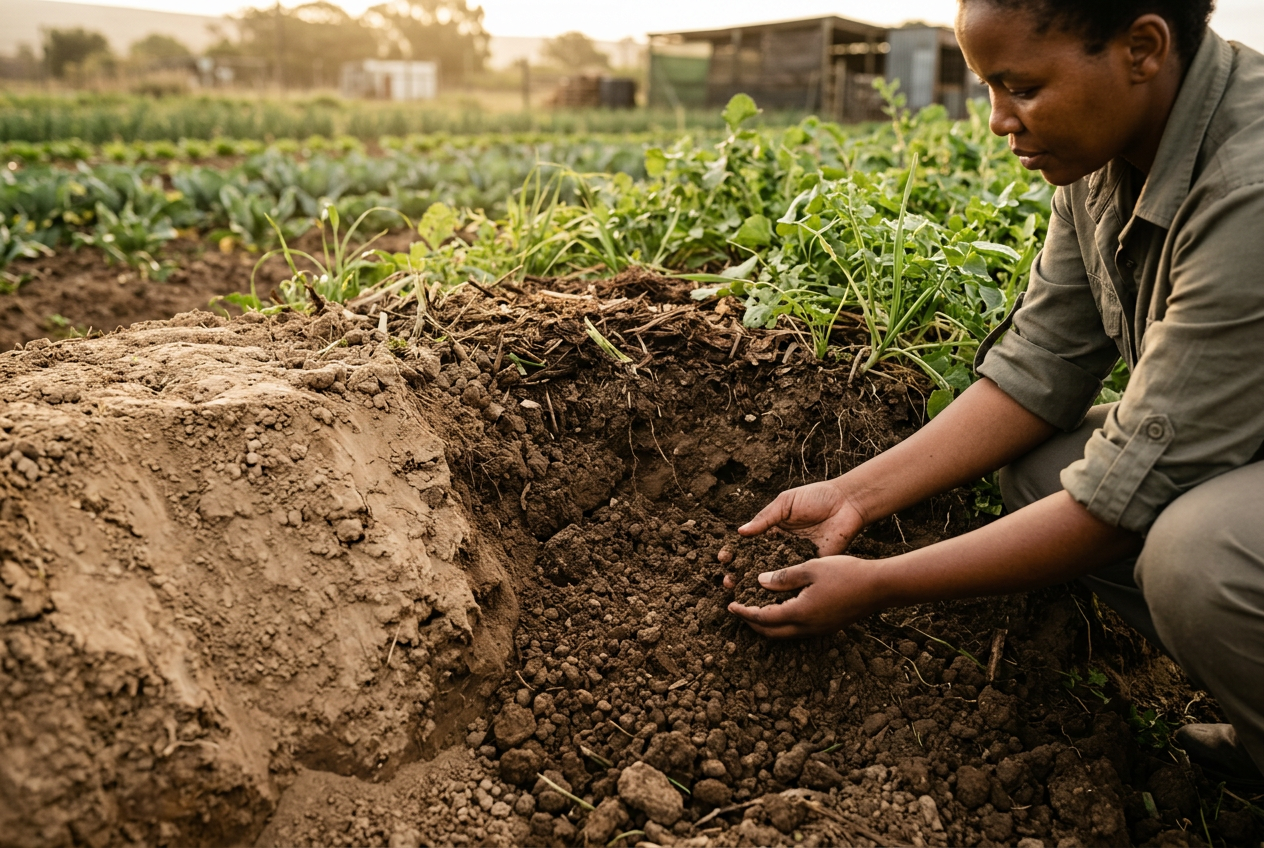
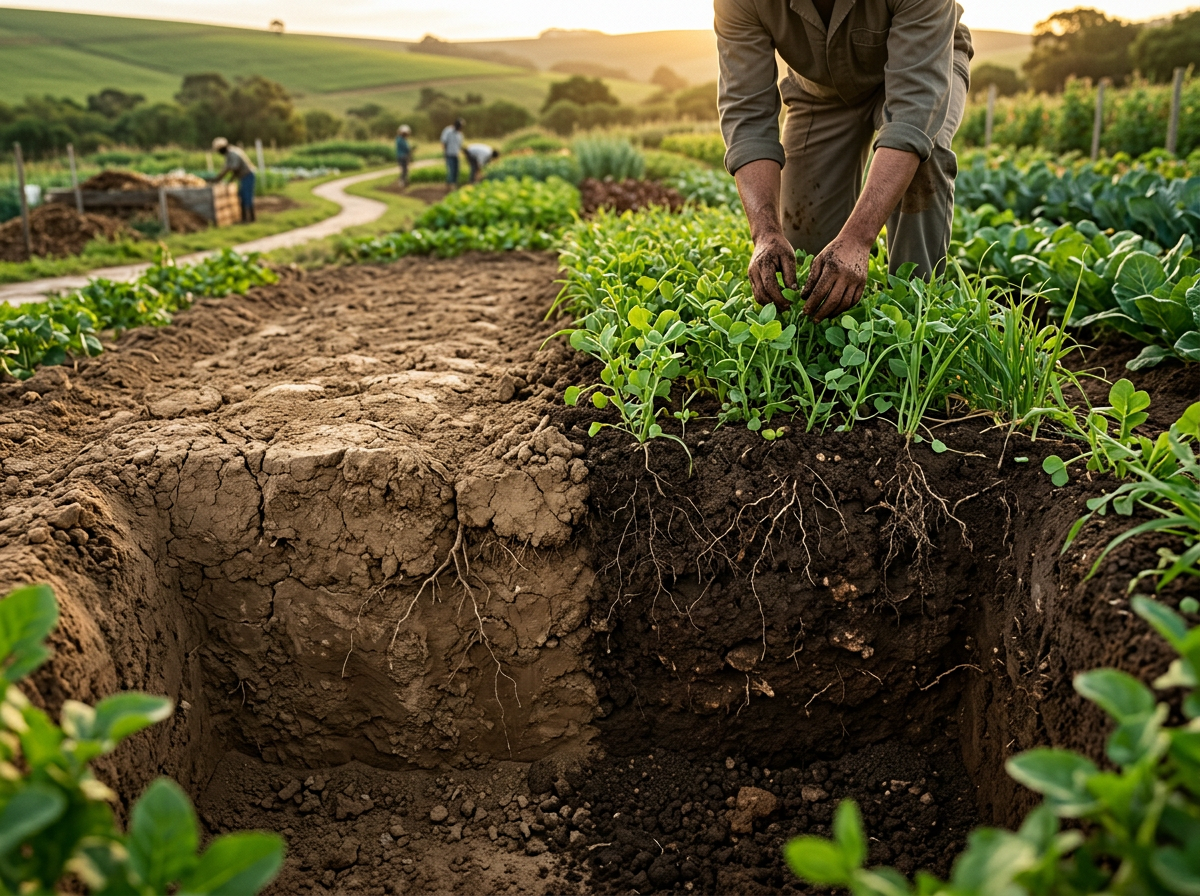
Example: rebuilding a compacted project bed without hiding the cause
A cooperative inherits beds that produce uneven crops. The surface is hard, water runs towards one corner and staff walk through the beds because paths are too narrow. The first proposal is to add a deep layer of compost everywhere. A site review shows that bed access and irrigation distribution are immediate causes of damage.
The team widens and marks permanent paths, tests irrigation coverage and keeps foot traffic out of the growing area. A representative soil test supports an input decision for each similar zone. The cooperative sources mature compost with a known feedstock and keeps a delivery record. It applies the material according to site-specific advice, covers the surface with a locally practical clean mulch and plants a manageable crop sequence.
During the season, the team checks whether water is entering evenly, whether roots move beyond the old compacted surface and how much time the revised beds take to maintain. It does not claim the soil has been restored after one crop. It records a starting trend and decides what to repeat only after reviewing the evidence.
Use organic inputs with discipline
Do
- Know the source and feedstock of compost and mulch.
- Check maturity, contamination and salinity risk where appropriate.
- Record what was applied, where, when and why.
- Keep mulch clear of stems and inspect beneath it.
- Match cover crops and residues to water, labour and competing uses.
- Use the same monitoring points to compare change.
Don't
- Assume organic means harmless at any rate.
- Apply immature, foul-smelling or visibly contaminated material to food beds.
- Use thick surface cover to conceal standing water or leaking irrigation.
- Drive or walk on wet growing beds.
- Promise that soil texture, yield or water saving will change by a fixed amount.
- Extract or publish community soil practices without consent and agreed attribution.
Monthly soil-system check
- Is the surface covered without mulch touching vulnerable stems?
- Does irrigation wet the intended root zone evenly?
- Is water ponding, running off or leaving sediment elsewhere?
- Are paths carrying traffic, or are people stepping into beds?
- Do plants show a pattern linked to one zone, emitter or input batch?
- Are weeds, pests, odours or fungal growth changing under the cover?
- Are compost and mulch source records complete?
- What one adjustment will be recorded before the next review?
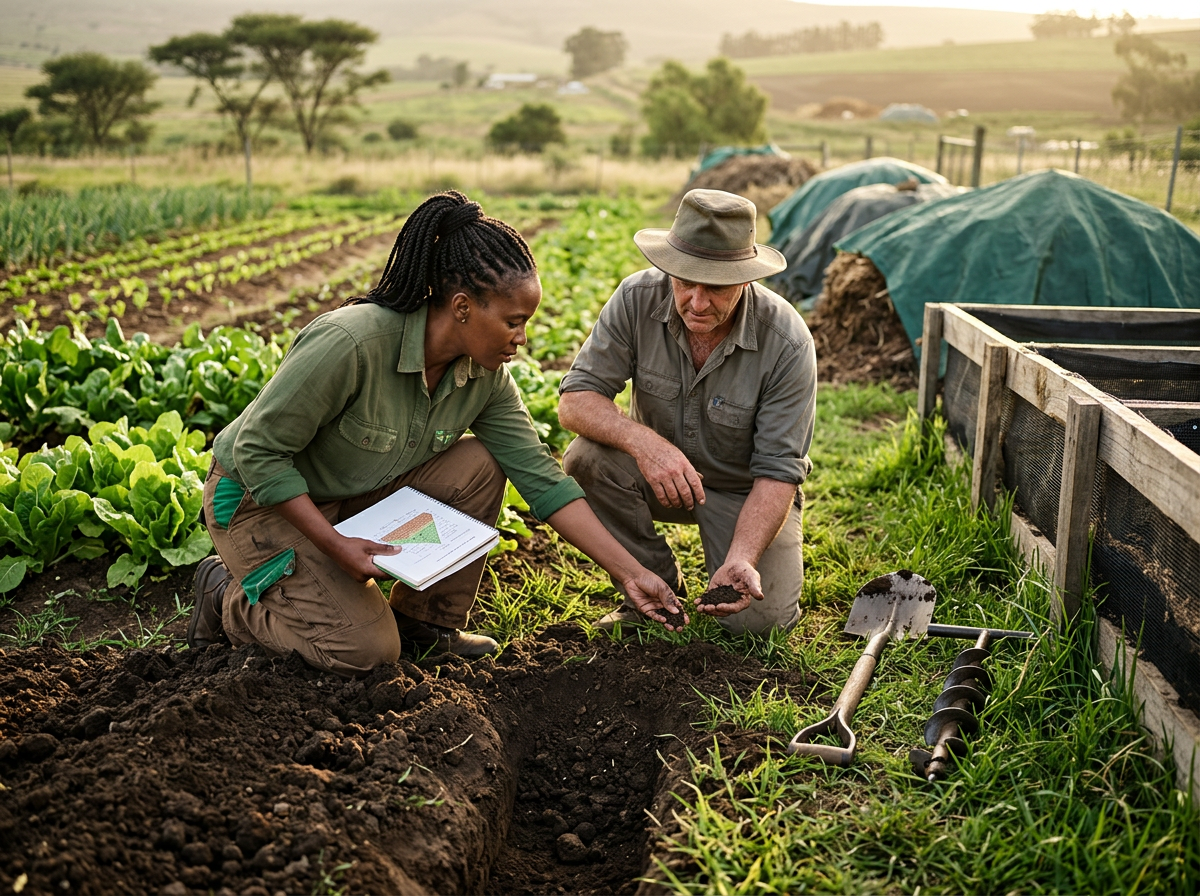
Build a soil plan that fits your site and resources
Green Earth Concepts can assess soil, drainage, water, crops, available organic materials and the team's capacity to manage them. The assessment can help identify immediate constraints, suitable bed approaches and a measured soil-building sequence.
Living soil is managed, not manufactured
- Protect soil, maintain appropriate roots, add known inputs and reduce avoidable disturbance as a connected system.
- Organic matter supports important functions, but application must fit test results, crop, soil, water and input quality.
- Mineral texture does not change because a bed receives compost; soil structure and function may improve over time.
- Correct drainage, contamination, compaction and irrigation constraints instead of covering them up.
- Track trends across comparable seasons and zones; do not turn one good crop into a universal claim.
Small, consistent actions compound
Healthy soil is not a finish line reached by adding enough material. It is a changing system shaped by roots, cover, water, organisms, inputs and disturbance. That is why patient management outperforms a one-off cure.
Start with the most important constraint, choose inputs for a defined purpose and protect the progress with cover, access and irrigation that work. Review what the roots and records show. Over time, those disciplined cycles create the conditions for more resilient growing without pretending that every soil, crop or South African climate will respond in the same way.