
A zone is a watering promise
When one valve opens, every plant and device connected to it receives the same opportunity to run. If that group mixes lawn sprinklers, vegetable drippers, shaded shrubs and young trees, the controller cannot satisfy them independently. A zone is therefore more than a pipe branch: it is a promise that the grouped area can be watered well at the same time.
Good zoning has two tests. The plants and site conditions must make sense together, and the source must sustain the combined device demand at suitable working pressure. Passing only one test creates either stressed plants or a hydraulically weak system.
For an integrated zone and layout plan, use Green Earth Concepts irrigation design.
Hydrozoning first, arithmetic second
Begin with plant use and root-zone behaviour. Separate lawn from trees, vegetables from established shrubs, sun from deep shade where demand differs, and steep or slow-infiltrating areas from zones that can accept water faster. Different application methods usually belong on different valves because their flow and run-time behaviour differ.
Then list every emitter or nozzle proposed for the candidate zone and use current manufacturer flow data at the intended pressure. Add the flows in consistent units. Compare that demand with usable source capacity after the designer has considered pressure, losses, variability and a suitable operational margin. There is no honest universal percentage for every site.
Do not confuse a hydraulic zone with a controller programme. Several valves may share a similar seasonal schedule while remaining separate hydraulic zones, and one valve may need its run time adjusted as crops establish or weather changes. Controller capacity, wiring routes, manual override and power reliability affect how the zone plan can be operated. Where supply is limited, sequencing must prevent unintended overlap and leave essential household or operational demand protected.
For a quick worked check, imagine a candidate bed zone with twenty emitters rated at two litres per hour at the intended pressure. Its nominal device demand is forty litres per hour before losses, variation or future additions are considered. That arithmetic does not approve the zone; it simply makes the demand visible for comparison with measured source conditions and product limits.
Write every assumption beside the calculation so it can be challenged before installation. Use hydrozoning for mixed landscapes to refine plant groups, and gather source data with the bucket flow test.
Build the zone plan
- 01
Map every planted area
Draw boundaries, dimensions, plant types, root areas, exposure, slope and future growth. Include hard surfaces and no-spray limits.
- 02
Group similar water behaviour
Create candidate hydrozones based on plant need, establishment stage, soil, sun, wind and maintenance—not simply proximity.
- 03
Separate application methods
Keep devices with incompatible pressure or run-time behaviour apart. A mixed zone should be a deliberate engineered exception, not a convenience.
- 04
Choose preliminary devices
Select suitable emitters or nozzles using their current technical data. Confirm spacing and wetting pattern before calculating demand.
- 05
Sum the zone flow
Multiply device flow by quantity, convert units consistently and add the results. Record the assumed working pressure because device flow can depend on it.
- 06
Test against usable source conditions
Compare demand with measured flow and working pressure after likely losses and variability. Adjust zone size or the system design when the source cannot sustain it.
- 07
Check operation and future phases
Confirm valve access, flushing, controller capacity, maintenance routes and whether later expansion has deliberately reserved capacity.
- 08
Commission each zone
Measure pressure and flow, inspect coverage, check the soil wetting pattern and correct defects before programming final schedules.
Zone worksheet
| Candidate zone | Why grouped | Method | Demand inputs | Reason to split |
|---|---|---|---|---|
| Sunny lawn | Similar turf and exposure | Matched sprinklers | Nozzle flows at design pressure | Irregular shape, pressure limit or different slope |
| Vegetable beds | Similar crop beds and management | Drip laterals | Line length, emitter flow and spacing | Different soil, crop stage or bed schedule |
| Young fruit trees | Similar age and root-zone strategy | Expandable point or micro emitters | Emitters per tree and future additions | Tree size, soil or block elevation differs |
| Established shrubs | Lower-frequency landscape block | Drip or micro as assessed | Device count and wetting coverage | Deep shade, species need or access differs |
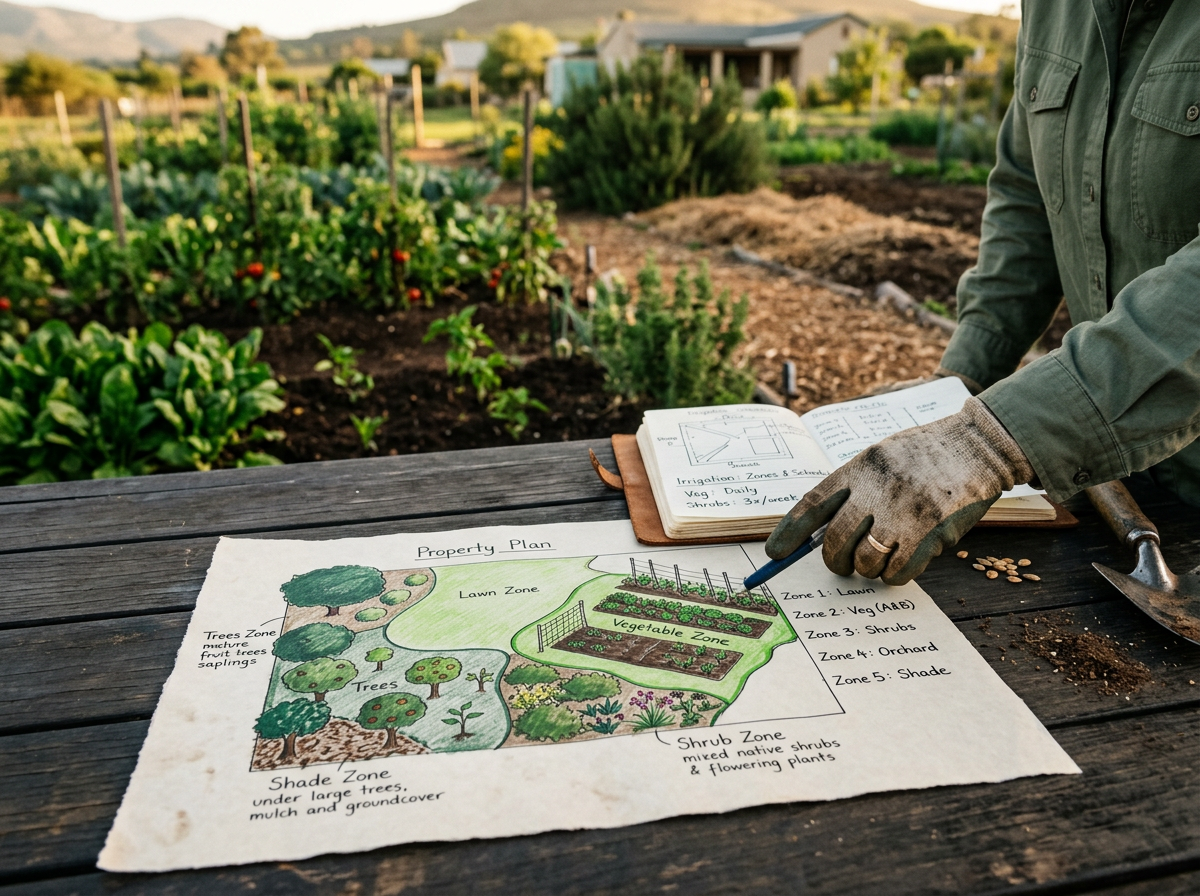
Property plan grouping lawn, vegetables, shrubs, trees and shade into distinct irrigation zones
Colour-code the logic
A useful plan colours zones by both valve and watering behaviour. Give each zone an ID, method, plant group, approximate demand and measurement point. The visual should make it obvious when one proposed line crosses between unlike soil, exposure or plant types.
Do not print final pipe sizes or run times on an early concept. Those decisions depend on hydraulic calculation, commissioning and seasonal root-zone checks.
A zone is ready to design when
- Plants, soil, exposure and slope justify watering together.
- The application method and device family are compatible.
- Summed demand uses consistent units and current product data.
- Usable flow and working pressure are measured, not assumed.
- Valve, filter and flush points remain serviceable.
- Expansion is either designed in or explicitly excluded.
- The zone exists only because it was easiest to draw one pipe.
Group by behaviour, limit by capacity
- Hydrozones make the biological grouping.
- Device demand and source conditions make the hydraulic limit.
- Different methods and schedules usually require separate valves.
- Commissioning proves whether the paper zone works.
Get a zone plan grounded in measurements
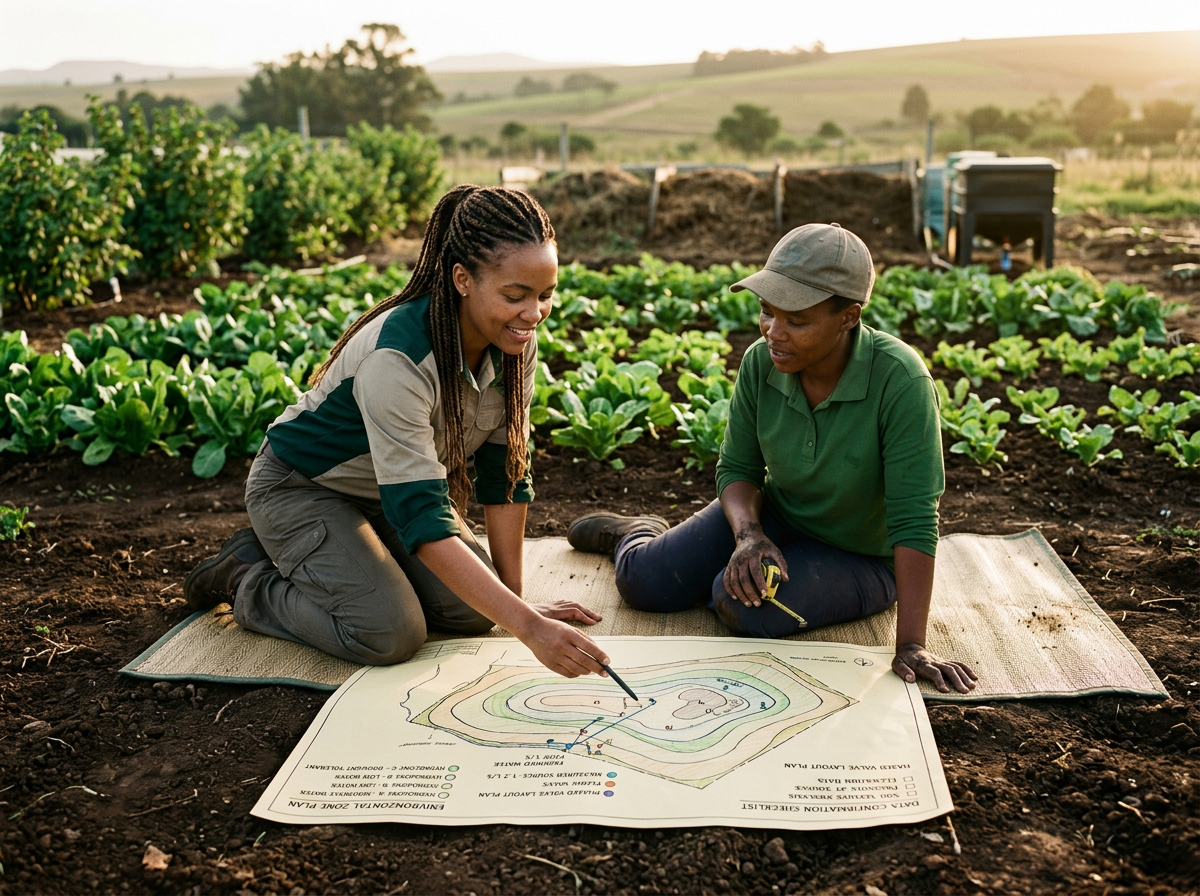
Green Earth Concepts can map hydrozones, measure the source and develop a phased valve plan that respects plants, soil and maintainable system capacity. The design can also show which data must be confirmed before final component selection.
Irrigation-zone questions
How many zones does a small garden need?
There is no size-only answer. A compact garden may need several zones when it contains lawn, vegetables, trees and containers, while a larger uniform block may need fewer. Plant behaviour and hydraulic capacity determine the number.
Can two zones run at the same time?
Only when the source, pipe, controls and design can sustain their combined demand at suitable pressure. Simultaneous operation should be calculated and commissioned, not discovered accidentally.
Should new and mature trees share a zone?
They may have different root areas, device counts and schedules. A designer can assess whether separate control or an adaptable layout is more practical.
More zones are not automatically better
Every additional zone adds control and also valves, wiring, programming and maintenance. Use enough zones to keep unlike watering jobs apart, then keep the system as simple as the site allows.