
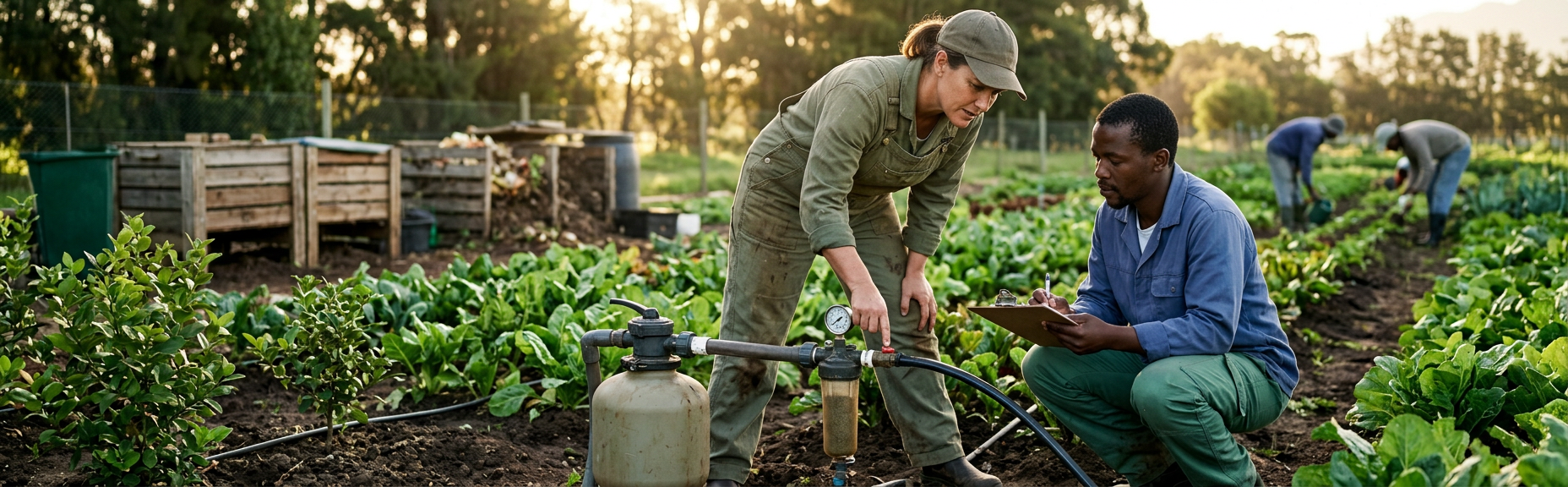
The system may not be broken—the handover may be
A blocked irrigation filter, contaminated recycling stream or neglected worm bed can look like an equipment failure. Sometimes it is. Sometimes the operator was shown the task once, never practised it, received no acceptable range and does not know who to call when the reading changes. Buying new hardware before checking the work can repeat the failure at greater cost.
A training needs assessment asks what people must be able to do, what they currently do under real conditions and what prevents the correct action. The answer may be training, a clearer procedure, better tools, safer access, supervision, maintenance or a design correction. Good assessment refuses to call every operational problem a skills gap.
Green Earth Concepts offers hands-on environmental training and development built around the actual site and system.
Assess four layers before writing a course
Start with the site: access, safety, language context, work peaks and available time. Then inspect the system: its operating requirements, failure signals, maintenance points and current condition. Observe people completing representative tasks, with consent and without turning the exercise into a surprise disciplinary test. Finally, examine routines: shift handovers, records, escalation, spares and management follow-through.
Separate knowledge, performance and opportunity. A person may explain a task but lack safe access to do it. Another may perform it confidently but be unable to interpret an unusual result. A team may know the correct separation rules while poorly labelled bins make contamination predictable. Each gap needs a different response.
Translate the findings into demonstrable outcomes using practical training outcomes for environmental systems, then turn them into a one-page training plan.
Build the baseline from more than one kind of evidence. Compare what a procedure says, what the operator demonstrates, what the record shows and what the system condition confirms. A disagreement between them is a finding, not an inconvenience: a perfect checklist beside a neglected machine may show that recording has become a ritual; a capable demonstration beside repeated failures may point to workload, spares or an unreliable handover. Note the operating conditions during every observation so that a quiet-day performance is not treated as proof of peak-season competence.
End the assessment with a short validation conversation. Let operators correct the draft findings, let the responsible manager accept non-training actions, and record uncertainty instead of converting it into a confident recommendation.
A repeatable training needs assessment
- 01
Define the operational result
State the system outcome that is at risk: reliable irrigation checks, clean feedstock, safe compost handling or another observable result. Avoid beginning with a course title.
- 02
Map critical roles and tasks
List who accepts, operates, checks, records, cleans, repairs, supervises and covers absences. Identify tasks where error has safety, quality or environmental consequences.
- 03
Review evidence
Use records, photos, breakdown history, rejected loads, complaints and maintenance logs where available. Do not treat absence of records as proof that performance is good.
- 04
Observe representative work
Ask the worker to show and explain the task in normal conditions. Use an agreed checklist, protect dignity and stop unsafe actions. Look for both skill and system barriers.
- 05
Interview across the handoff
Speak with operators, supervisors and adjacent teams. Ask what makes the right action difficult, what changes on busy days and where instructions conflict.
- 06
Classify each gap
Mark it as knowledge, physical skill, judgement, language or resource/access, procedure, supervision, design or maintenance. One finding may have more than one cause.
- 07
Prioritise by consequence and frequency
Address high-consequence frequent tasks first. Include a quick stabilisation action when the full learning programme will take time.
- 08
Agree the brief
Confirm learners, outcomes, practice conditions, evidence, language support, responsible manager and post-training follow-up before delivery is booked.
From symptom to intervention
| Observed symptom | Possible cause | Evidence to collect | Possible response |
|---|---|---|---|
| Filter is never cleaned | Task unknown, inaccessible or unassigned | Demonstration, access check, shift plan | Training plus access and ownership correction |
| Waste stream is contaminated | Rules unclear or stations poorly designed | Peak-shift observation and rejected-item sample | Visual SOP, station redesign and supervisor feedback |
| Records are completed but unreliable | Purpose or method not understood | Compare entries with field condition | Worked practice, clearer fields and review routine |
| Operator knows routine but misses faults | Judgement and escalation gap | Scenario questions and fault simulation | Guided diagnosis practice and escalation card |
| Skill disappears after staff change | No backup or onboarding process | Role and turnover map | Trainer development, onboarding and competency record |
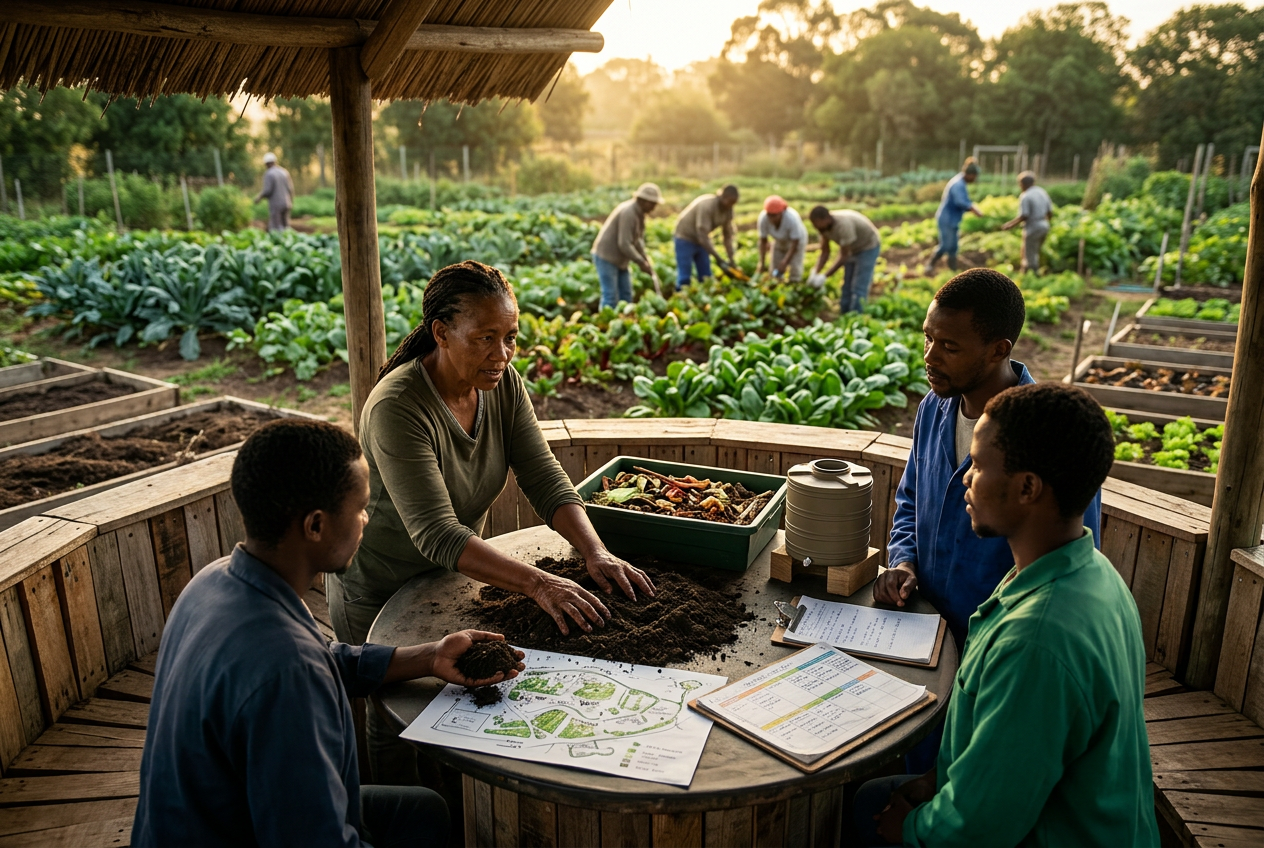
The assessment is ready to approve when
- Critical roles and real tasks are named.
- Operators contributed without a hidden disciplinary test.
- Observed evidence is separated from assumption.
- Non-training causes have an owner and action.
- Learning outcomes can be demonstrated on site.
- Language, literacy, disability and access needs are planned respectfully.
- Follow-up and supervisor reinforcement are funded and scheduled.
Training needs assessment questions
Should HR run the assessment alone?
HR can support planning and records, but site operators, supervisors and technical practitioners need to shape the task evidence. The assessment should connect organisational requirements with how the system actually works.
Is poor performance always a training issue?
No. Missing tools, unsafe access, conflicting instructions, unrealistic workload, weak supervision, poor design or equipment failure can prevent correct performance. Training cannot compensate for those conditions by itself.
Do we need to test staff?
Use transparent, job-relevant demonstrations and questions agreed in advance. The purpose is to identify support and verify safe competence, not to embarrass learners or invent an accredited assessment where none exists.

Turn the skills gap into a practical brief
Green Earth Concepts can assess the site, environmental system, team roles and current routines before recommending delivery. The result is a task-based plan that identifies what training can solve and what must change around it.
Diagnose before you deliver
- Begin with the required operational result and critical tasks.
- Observe work and handoffs, not only self-reported confidence.
- Classify non-training causes and correct them.
- Prioritise high-consequence, frequent gaps.
- Plan practice, evidence and follow-up from the start.
The best training request starts with evidence
A needs assessment protects both the budget and the learner. It prevents generic content, exposes system barriers and gives everyone a clear definition of improved performance. Train the task that matters, in the conditions where it must succeed.