

A healthy gauge at rest can hide a failing system
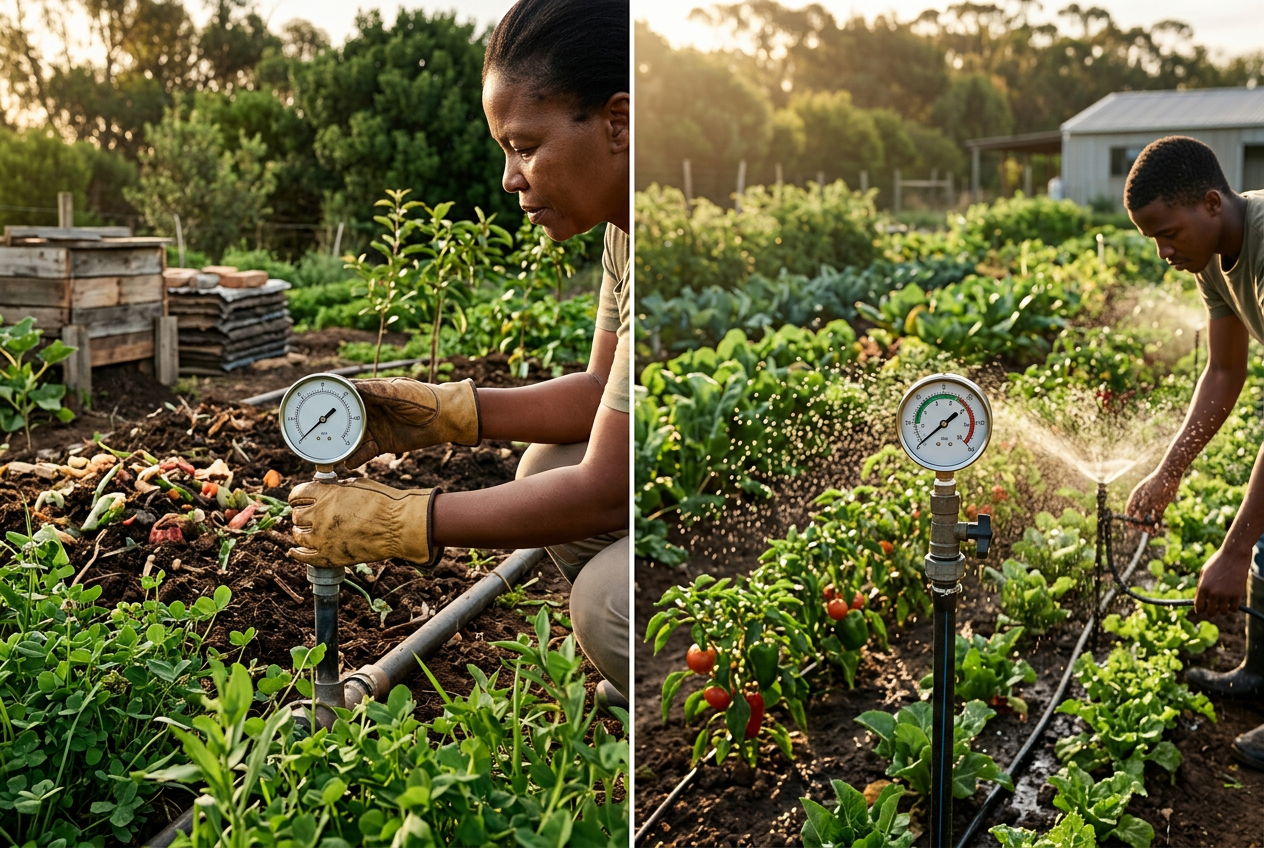
Static pressure is what a gauge sees when water is available and no relevant flow is moving. Dynamic or working pressure is what remains at a defined point while water moves through the source, valves, filters, pipe and operating devices. The difference explains why a system can look strong when closed and perform poorly as soon as a zone opens.
Pressure is not the same as flow. You need enough of both, in the correct relationship, for the selected equipment and layout. A high number can be as problematic as a low one: it may increase misting, wear, leaks and fitting stress. Never use a generic internet range as approval for a specific component—follow product data and a competent design.
Use the Irrigation Systems service when pressure, elevation, pumps or source behaviour need site-specific assessment.
Where pressure is gained and lost
Pumps and elevated storage may add pressure; elevation towards a high zone reduces it and downhill movement can increase it. Flow through pipe, valves, filters, backflow devices, regulators, fittings and emitters creates losses. Long runs, small internal diameters, dirty filters and excessive zone demand can leave the last device with different conditions from the first.
That is why a single source reading does not describe the whole system. Record where the gauge is connected, its units, whether the system is off or running, which zone is operating and what other demand exists. Compare readings only when the conditions are comparable.
Treat the instrument as another possible source of error. Confirm that its range is suitable, the connection is sealed, the needle returns sensibly and the reading is not being taken at a water-hammer event. A gauge that has been dropped, frozen, left permanently in harsh sun or exposed beyond its rating may need replacement or calibration. If two trustworthy instruments disagree, stop interpreting the decimal places and investigate the setup.
Sudden pressure changes deserve particular care. Fast valve closure and pump events can create short transients that a simple gauge may not show clearly. Repeated banging, vibration or unexplained failures are reasons to stop and obtain qualified diagnosis, not to keep tightening fittings.
If flow has not been measured, start with the bucket-test guide. If fittings burst, spray turns to mist or a zone collapses, follow the pressure troubleshooting tree.
Symptoms are clues, not diagnoses
| Observed symptom | Possible pressure link | Other causes to check |
|---|---|---|
| Sprinklers do not reach or overlap | Working pressure may be too low | Excess zone demand, blocked nozzle, undersized pipe, leak or incorrect nozzle |
| Fine mist and wind drift | Pressure may be too high for the nozzle | Wrong nozzle, wind exposure or damaged component |
| First drippers work; last ones struggle | Losses may leave insufficient pressure downstream | Blockage, long lateral, elevation, excessive flow or poor layout |
| Fittings repeatedly leak or separate | Pressure spikes or excessive pressure may contribute | Poor assembly, incompatible parts, heat damage or mechanical stress |
| Gauge cycles sharply | Pump or control behaviour may be unstable | Tank level, pressure switch, valve operation or gauge fault |
A safe observation sequence
- 01
Confirm the gauge and units
Use a suitable gauge in good condition and identify whether it reads kPa, bar or another unit. Do not compare numbers until units match. Install or connect it only at an appropriate test point.
- 02
Record static pressure
With the relevant outlets closed and the source in its normal state, record the reading, time, location and tank or pump condition. This is a reference, not the operating result.
- 03
Operate one defined zone
Open the zone normally and allow the system to stabilise. Record working pressure at the same point plus which valves, taps or appliances are also using water.
- 04
Inspect the zone
Observe sprinkler pattern, misting, leaks, dripper behaviour and the difference between the beginning and end of the line. Do not stand over suspect fittings or open a pressurised component.
- 05
Check strategic points
A designer may compare readings before and after filtration, regulation, elevation changes or long runs. A large change requires diagnosis; it does not automatically identify one faulty item.
- 06
Escalate instability or unsafe conditions
Stop and call a qualified installer, plumber, pump specialist or electrician when equipment cycles abnormally, pressure exceeds component ratings, water contacts electrical parts, or a pressurised failure is possible.
Pressure checks without false confidence
Do
- Record location, units, time and operating state.
- Compare static and working readings under defined conditions.
- Use manufacturer limits for every component.
- Inspect performance at the far and high parts of the zone.
Don't
- Call a static reading the available zone pressure.
- Adjust a pump or regulator by trial and error.
- Open pressurised filters or fittings.
- Assume one symptom proves one cause.
Pressure only makes sense in context
- Static means at rest; dynamic means under a defined flow condition.
- Pressure and flow are different but interdependent design inputs.
- Elevation and component losses change conditions across the property.
- Ratings and qualified diagnosis outrank generic online ranges.
Measure the system where it actually works
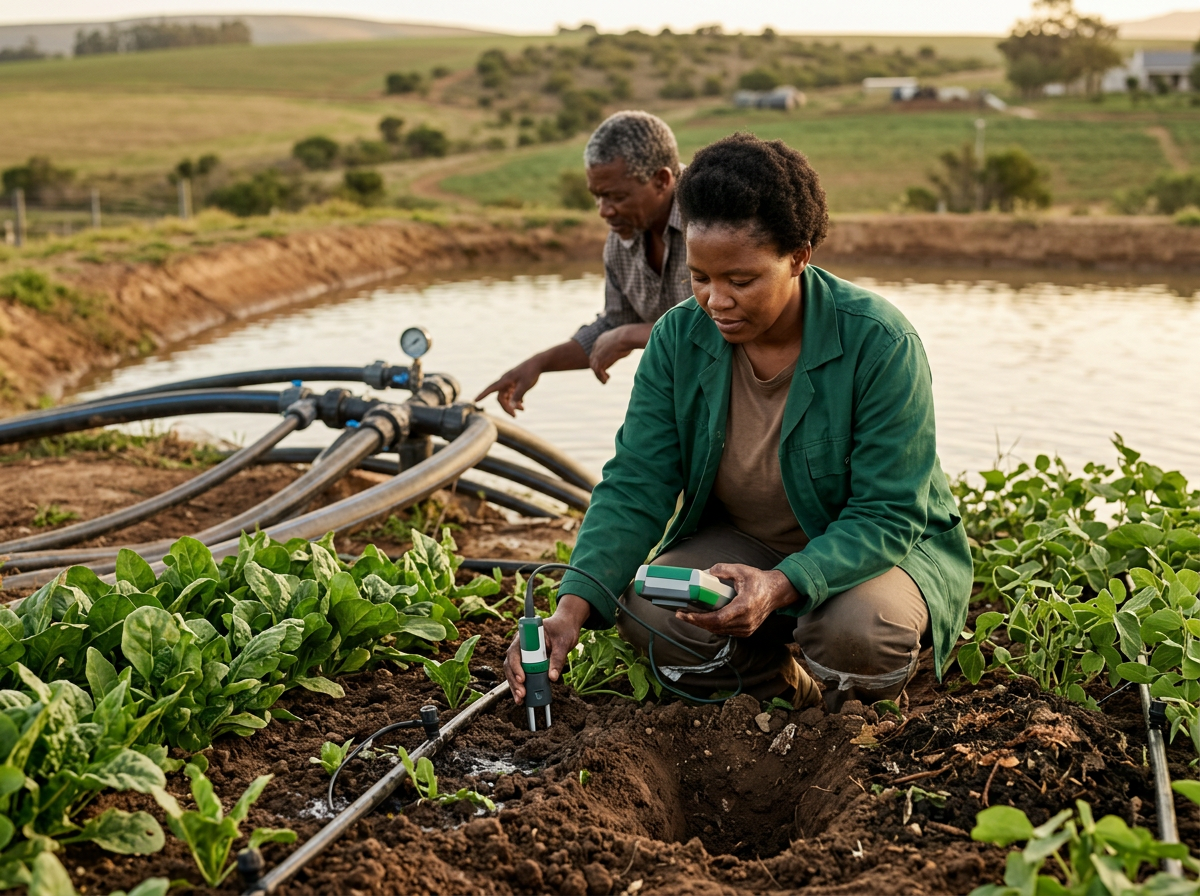
Green Earth Concepts can assess source behaviour, elevation, zone demand and performance at strategic points before recommending regulation, zoning or component changes. This replaces symptom-chasing with a measured hydraulic picture.
Pressure questions
What is the correct irrigation pressure?
There is no single value for every system. The required range depends on the device, nozzle or emitter, layout and manufacturer specification, while the source must also supply the required flow. Design and regulation should satisfy the actual components.
Can a pressure regulator fix low pressure?
A regulator limits or stabilises downstream pressure when suitable upstream conditions exist; it cannot create missing pressure or flow. Low working pressure needs diagnosis of the source, demand, losses, elevation and components.
Why does pressure change during the day?
Municipal demand, pump cycling, tank level, simultaneous use and control behaviour can all change conditions. Record repeat observations before sizing or diagnosing the system.
The working reading is the beginning of the diagnosis
A pressure number becomes useful only when its place and operating condition are known. Pair it with flow, layout and component data, then correct the cause rather than hiding the symptom.