
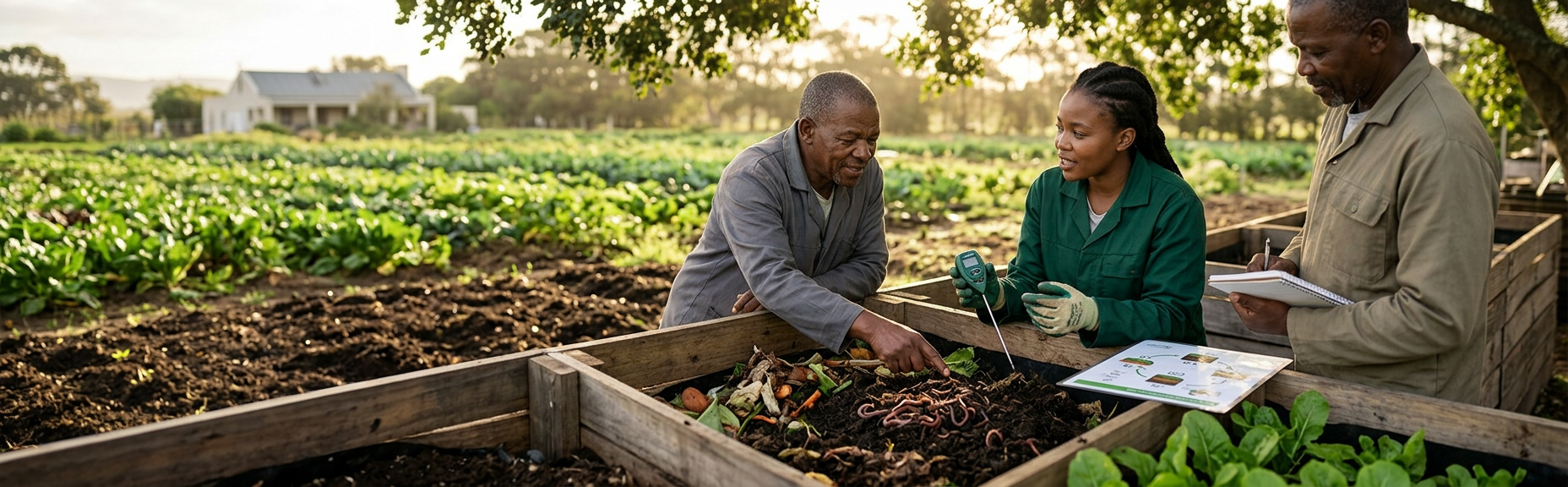
Words can arrive while the decision gets lost
Translation can move a sentence between languages and still miss the action behind it. A technical term may have several local alternatives. An interpreter may not see the equipment. Learners may agree politely while holding different meanings for flush, mature compost, contamination or safe pressure. Multilingual training needs a workflow for shared understanding, not a last-minute request to repeat the slides.
South Africa's language landscape is a strength and a design responsibility. Map the languages people prefer for discussion, reading, demonstration and job aids. Do not infer preference from name, ethnicity, region or apparent fluency. Ask, plan and test.
Green Earth Concepts can build language-aware practical training around the team and site.
Separate language access from technical authority
A bilingual colleague may understand the team and the task, but interpreting adds cognitive work and power. Agree the role, compensate it appropriately, provide material in advance and allow the person to pause for clarification. The technical lead remains responsible for accurate requirements; the interpreter should not be forced to invent terminology or resolve engineering uncertainty.
Build a short glossary from real objects and decisions. Include the agreed term, plain explanation, image or component and words that should not be confused. Review it with competent speakers and practitioners. Language is not frozen: record alternatives, regional usage and learner feedback rather than declaring one community term universally correct.
Combine multilingual preparation with mixed-literacy workplace training and community-led knowledge consent where curriculum touches community-held knowledge.
Create the glossary during site observation, not after the course has been written. Capture the name used for each tool, material, symptom and action; add a photograph or simple drawing; record terms that should remain untranslated; and note words that change by region or trade. Review the list with operators, a language practitioner or trusted community reviewer and a technical specialist. Agreement on meaning matters more than a mechanically literal translation.
During delivery, brief interpreters as part of the facilitation team. Share outcomes, demonstrations, safety limits and discussion prompts in advance, and agree how they will pause the session when a term is unclear. Allow enough time for interpretation and learner response instead of compressing the translated exchange. Afterward, collect corrections from learners and update the controlled glossary, visual aids and facilitator notes together so that future versions do not drift apart.
Decide how multilingual evidence will be recorded. A learner may demonstrate and explain in the language that supports their best technical reasoning, while an assessor uses the reviewed term card and observable criteria. Preserve the learner's meaning accurately in notes rather than replacing it with a smoother but less accurate English summary. For safety-critical instructions, use independent review or back-checking proportionate to risk. Record the language and version used so an investigation or refresher can reconstruct what was actually taught.
A seven-step multilingual workflow
- 01
Map language preferences
Ask learners and managers which languages support discussion, job aids and technical decisions. Include South African Sign Language and accessibility needs where relevant.
- 02
Identify high-risk terms
Prioritise words linked to safety, acceptance, measurement, abnormal conditions and escalation. Do not attempt to translate every background paragraph first.
- 03
Review terms with people and objects
Bring bilingual practitioners, language specialists or trusted speakers to the actual system. Check meaning in context, not only in a dictionary.
- 04
Brief interpreters and facilitators
Share outcomes, sequence, diagrams, difficult terms, confidentiality and the right to pause. Rehearse demonstrations where timing matters.
- 05
Use short delivery units
Demonstrate one decision, interpret or discuss it, then practise. Long uninterrupted speech increases memory and translation load.
- 06
Check without relying on yes
Ask learners to show the task, classify an example or explain a scenario in a comfortable language. Observe performance and reasoning.
- 07
Update the glossary and job aids
Record misunderstood terms, better local explanations and approved changes. Reissue controlled materials so old versions do not circulate indefinitely.
Terminology review card
| Field | Example | Why it matters |
|---|---|---|
| Technical term | Working pressure | Keeps the concept stable across languages |
| Plain explanation | Pressure while the zone is running | Connects the term to an observable condition |
| Object or image | Gauge beside an operating valve | Reduces ambiguity |
| Confusable term | Static pressure | Prevents a costly false equivalence |
| Stop or escalate | Gauge behaves abnormally—call the responsible technician | Preserves authority and safety |
| Approved alternatives | Terms agreed by the actual team | Respects real usage without inventing universality |

Language inclusion in practice
Do
- Ask preferences and allow more than one learning language.
- Review technical terms with competent speakers in context.
- Give interpreters preparation time and pause authority.
- Check learning through task performance.
- Update materials from learner feedback.
Don't
- Assume English fluency equals technical understanding.
- Choose a language from appearance or surname.
- Ask an interpreter to repair unclear source content live.
- Use machine translation as the final technical review.
- Publish community terms or stories without permission.
Before multilingual delivery
- Language and communication preferences are confirmed.
- Critical terms are reviewed beside the real system.
- Interpreters or bilingual facilitators know their scope.
- Visuals and text use the same approved meaning.
- Performance checks do not depend on one language.
- A controlled revision process exists.
Multilingual training questions
Must every document be translated into every language?
Prioritise based on learner need, risk and use. Critical job aids and decisions may need several versions, while some supporting material can be delivered differently. The team should agree a practical access plan rather than promise unusable volume.
Can we use automatic translation?
It can support drafting, but technical, legal, cultural and safety content needs human review by competent speakers and practitioners. Test the final material with intended users.
What if one technical term has no direct equivalent?
Use a short explanation, real object, image and agreed borrowed or descriptive term. Record the decision in the glossary and revisit it with learners rather than forcing a misleading single word.

Plan the language pathway before delivery
Green Earth Concepts can assess learner roles, languages, terminology, job aids and practice conditions, then build an inclusive delivery plan with clear technical review.
Design for shared meaning
- Ask language preferences instead of assuming.
- Review high-risk terms in technical context.
- Support interpreters and retain technical accountability.
- Verify understanding through action and reasoning.
Understanding is the outcome—not translated volume
Multilingual training succeeds when people can use shared terms to make the right decision at work. Prepare the language pathway with the same care as the technical pathway, and keep revising it with the people who use it.