
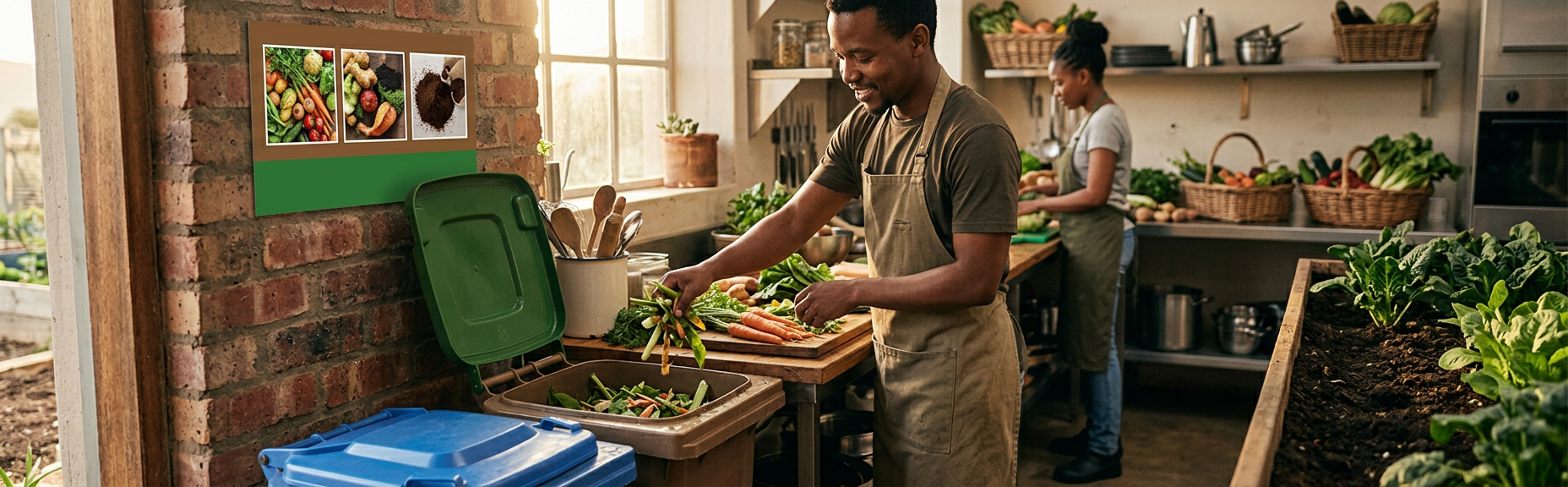
If the right bin is harder to use, the station is already failing
During a busy breakfast service, produce delivery or school lunch, people use the route that is visible, close and quick. If the correct container requires an extra turn, a lid lift with dirty hands, a walk across the room or a guess about the label, contamination is designed into the workflow. A poster cannot repair that friction.
Source separation is the point where a mixed disposal problem becomes a usable material stream. Green Earth Concepts designs organic waste recycling around real staff movement, accepted materials, cleaning, collection and operator capacity. The goal is not more bins. It is a repeatable decision that survives the busiest shift.
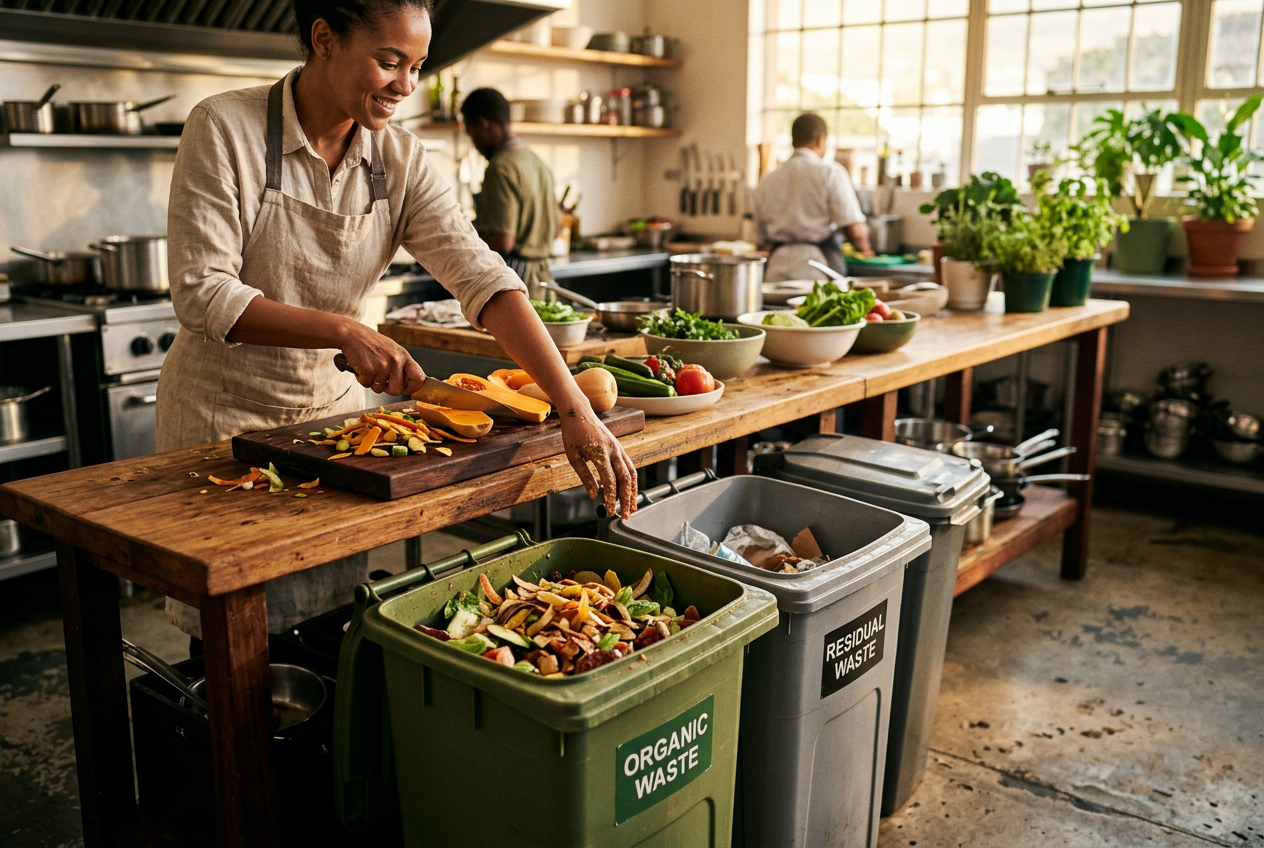
Define the decision before choosing the container
Write the accepted stream in plain terms. 'Food waste' may be too broad if the processor accepts preparation scraps but not liquids, packaging, animal products or compostable-labelled serviceware. Create an inclusion list using items found at the site and an exclusion list with an explicit stop-and-ask category. Confirm both lists with the collector or processor in writing.
Observe the task. Where is the item generated? What is in the person's other hand? Are gloves worn? Is the surface food-contact or non-food? Is there floor space? How far does the person move? How quickly does the container fill? Who replaces it? Where does a full container go? A station that works in an empty room can obstruct a trolley, emergency route or production line when work starts.
Colour can support recognition but should not carry the whole instruction. Use a consistent colour, a clear word label and photographs or simple illustrations of the site's own common items. Review language with staff who use the station; do not invent translations or assume every icon is universal. Essential safety and acceptance information must remain readable in text, not only in an image.
Design and test a source-separation station
- 01
Map one material journey
Follow a common item from the moment it becomes surplus to the final holding area. Mark each handoff, container change, door, lift, trolley and cleaning point. Ask the people doing the work where errors or delays occur.
- 02
Specify capacity from the peak
Count or measure how much arises between safe emptying rounds during the busiest relevant period. Choose a container that can be handled safely when full. Smaller internal bins emptied more often may be better than one oversized, heavy container.
- 03
Match the opening and lid to the task
The opening should accept the intended item without encouraging whole bags or unrelated waste. The lid or closure must suit hygiene, pest and odour controls without creating awkward contact or slowing the task. Use hands-free options only where they are safe, robust and maintainable.
- 04
Label with real items and clear exclusions
Use a short heading, large photographs of accepted items from that station and the top three wrong items. Put the cue where it is visible before the item is released. Test comprehension in the languages and formats used by the team, including large print or other access needs.
- 05
Test during a real peak
Run the station for a controlled shift. Observe movement, fill rate, wrong items, questions, cleaning and collection. Ask staff to demonstrate the decision and explain what is unclear. Change the station before repeating the instruction.
- 06
Close the feedback loop
Give departments prompt, neutral feedback on the top contamination items and where they arose. Update the label, purchasing choice, packaging step or handoff that caused the issue. When errors persist, use the dedicated method to reduce organic-waste contamination.
Station acceptance test
<p>A station is ready only when it passes the workflow and handover checks.</p>
- Accepted and excluded items match the recipient's written criteria — Prevents cleanly separated but unusable material.
- The correct container is the easiest safe option at the decision point — Reduces friction during peaks.
- Capacity covers the period between approved emptying rounds — Prevents overflow and improvised containers.
- The full container can be closed, moved and cleaned safely — Connects separation to handling.
- Labels use site-specific items, readable words and tested visuals — Improves recognition without relying on colour alone.
- Temporary, relief and new staff receive task practice — Protects consistency across shifts.
- A named person inspects and gives feedback — Stops errors from travelling unnoticed to the processor.
- The onward route is defined — Use the organic-waste storage and collection plan to prevent the source bin from becoming a dead end.
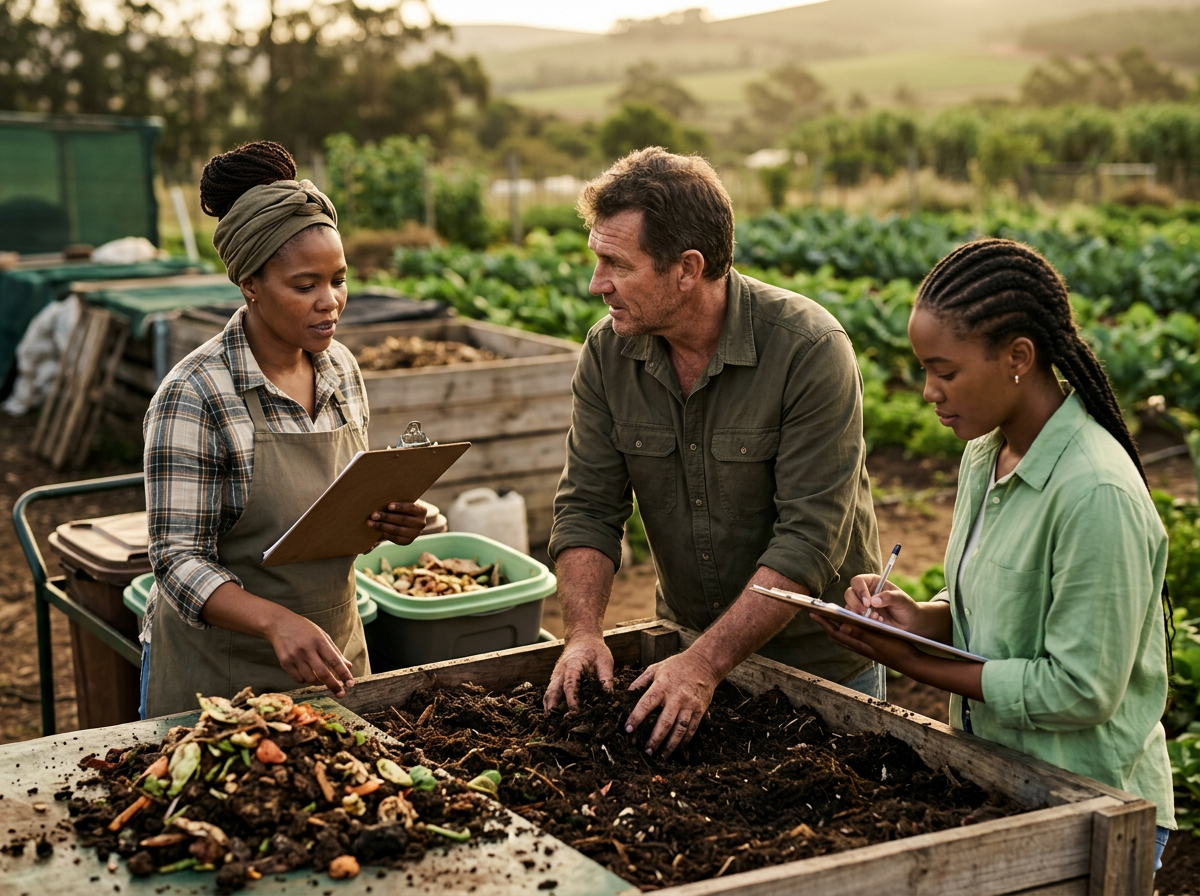
Test stations with the people who use them
A workflow assessment can trace material from its source to the holding area, verify acceptance criteria, observe a busy shift and identify where placement, capacity, labels, handling or training need to change.
Make the correct action obvious and workable
- Define accepted material before buying bins.
- Place the decision where the item becomes waste.
- Size capacity from peak fill rate and safe handling, not floor space alone.
- Use words, photographs and colour together; test them with real users.
- Measure wrong items by source and shift, then correct the workflow.
- Avoid adding a bin without an owner, cleaning method and onward route.
- Train kitchen and facilities teams through demonstration and observed practice.
Design the choice before repeating the instruction
Source separation succeeds in seconds: the item appears, the worker recognises it, the right container is within safe reach, and the full container continues along a controlled route. Watch that moment during the busiest shift. If the station makes the correct action awkward, change the station. Clearer training matters, but good design gives the training a fair chance to work.