
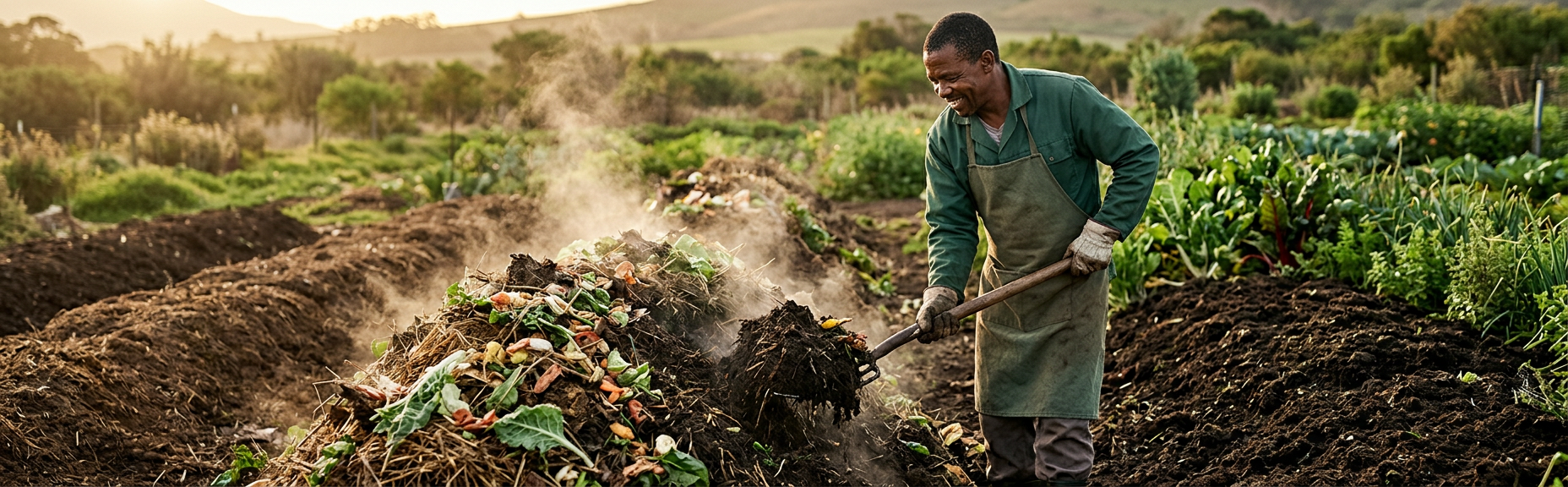
A hot pile belongs outside the worm bed
Steam rising from a fresh organic pile can look like proof that decomposition is working. For composting worms, it is a warning. Fresh, dense material can heat as microorganisms become active. If that heating happens inside a worm bed, the organisms cannot simply move away from every hot, oxygen-poor or chemically stressful zone.
Pre-composting is a deliberately managed stage before vermicomposting. Its purpose may be to blend feedstocks, create structure, allow an active heat phase, reduce readily degradable material or make a variable stream more uniform. It should never mean leaving waste in a pile until it “looks ready”. The handover to worms needs measured, documented acceptance criteria.
Green Earth Concepts' Commercial Worm Farms service assesses whether a stream needs preparation, a separate composting route or another solution. This article explains a cautious workflow. It does not certify pathogen reduction, prescribe a legal process or approve risky material. Those questions require the applicable South African standards, qualified practitioners and, where relevant, laboratory evidence.
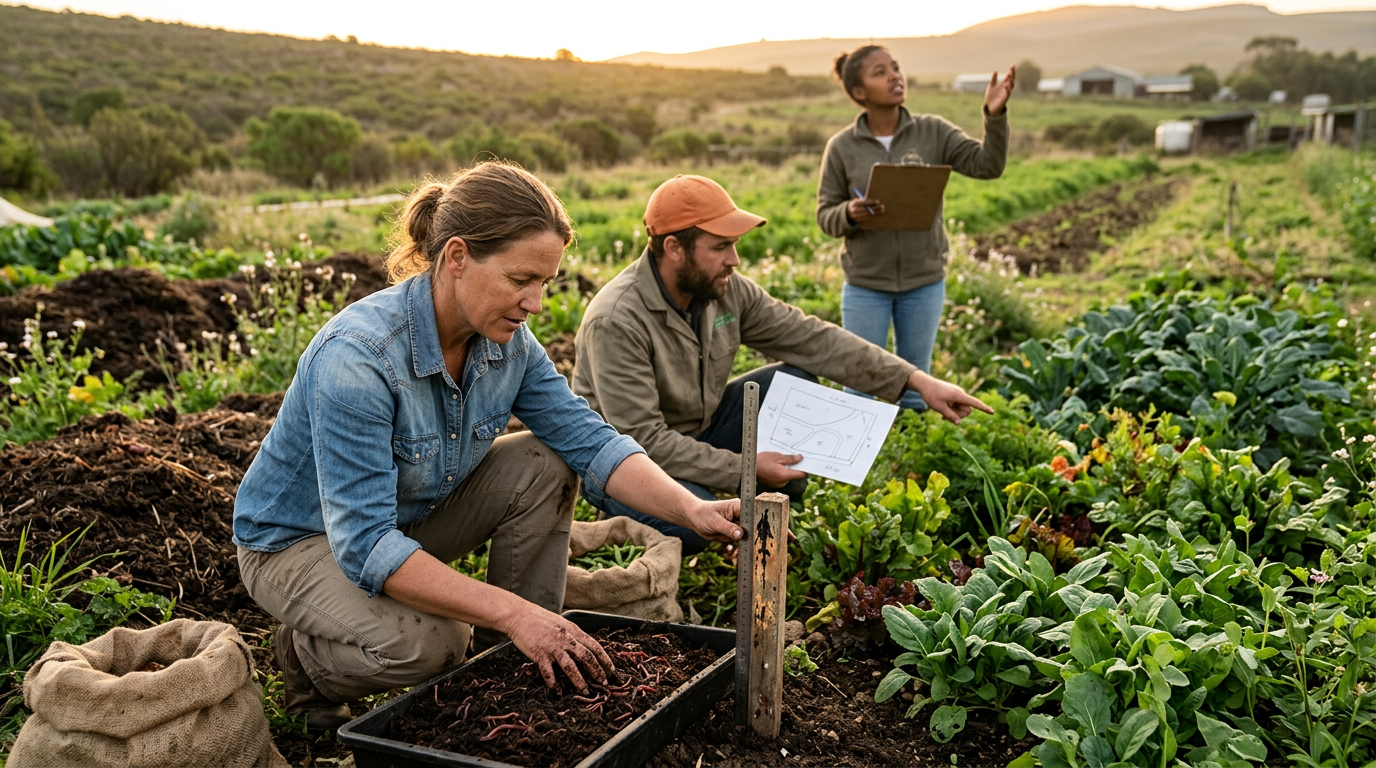
Know which process you are operating
The US Environmental Protection Agency describes composting as a managed aerobic process in which microorganisms break down organic material. Oxygen, moisture, nutrient balance, particle size and pile structure influence activity and temperature. Thermophilic composting deliberately uses elevated temperatures, but valid pathogen-reduction claims depend on the required time, temperature, method, coverage and records—not on one hot reading or visible steam.
Vermicomposting is different. Red wigglers are surface-dwelling composting worms that need a moist, aerated, non-heating habitat. A bed may warm locally when overloaded with fresh feed even if the air temperature seems mild. Internal measurements and worm behaviour matter. The article on vermicomposting versus hot composting compares the two operating envelopes.
Pre-composting adds a transition between them. That transition has to answer three questions: What change is the first stage meant to achieve? How will the operator know it happened throughout the relevant batch? What evidence shows that the material is now appropriate for a small worm trial? If those questions are unanswered, the extra stage is merely unmanaged storage.
South Africa's national norms and standards for organic waste composting may apply depending on the activity and scale. Other waste, municipal, zoning, stormwater, workplace, food-safety or product requirements may also matter. Confirm current obligations for the actual site before establishing or expanding a processing area.
A controlled pre-composting workflow
- 01
Define the batch and purpose
Give the material a batch ID and record every input, source, mass or volume estimate, date and known uncertainty. State whether the stage is intended to manage heat, improve structure, reduce variability or serve another verified purpose.
- 02
Reject contamination before blending
Remove packaging and visible unsuitable items at source under safe procedures. Isolate unknown, chemically contaminated or biologically risky material. Heat treatment should not be used as a vague justification for accepting everything.
- 03
Build for air and controlled moisture
Blend appropriate carbon-rich structural material where the process design calls for it. Avoid a dense, saturated mass. Provide the designed aeration, drainage and weather protection, and prevent uncontrolled runoff.
- 04
Monitor a pattern, not a single number
Take internal readings at defined positions and depths with an appropriate instrument. Record time, weather, recent turning or addition, odour, moisture and structure. Follow the applicable process plan for frequency and action limits.
- 05
Manage deliberately
Turn, aerate, blend, cover or moisten only according to the process plan and observed cause. Each intervention changes conditions; record it. If there is strong offensive odour, runoff, fire concern or another unsafe condition, stop routine work and escalate.
- 06
Allow cooling and stabilisation
Do not move material directly from an active hot phase to worms. Observe whether internal temperatures remain appropriate after disturbance, whether the structure is open and whether offensive odour or recognisable reactive pockets persist.
- 07
Apply a written handover gate
Review batch identity, accepted inputs, temperature trend, moisture, structure, odour, contamination, time and any required verification. Only an authorised person should release the material for a small, isolated worm trial.
- 08
Trial before full feeding
Place a small amount in a marked zone with stable bedding and a refuge. Monitor internal conditions and worm behaviour. Pause if the zone heats, compacts, turns sour or triggers persistent avoidance. Record the decision for the next batch.
Readiness checks before the worm trial
| Check | Evidence to review | Pause or escalate when |
|---|---|---|
| Batch identity | Inputs, sources, dates and preparation record match the batch | Material is mixed, anonymous or has an uncertain source |
| Temperature trend | Multiple internal points show the required stable trend under the approved plan | A hot pocket returns or readings are incomplete |
| Moisture and structure | Material is moist, porous and not releasing uncontrolled free liquid | It is saturated, matted or compacted |
| Odour | Expected earthy or feedstock-consistent odour under the process plan | There is strong sour, solvent, ammonia-like or unexplained odour |
| Contamination | Inspection meets the site's acceptance rule | Packaging, glass, metal, sharps or chemicals are found |
| Risk verification | Required specialist, process or laboratory checks are complete | Pathogen, veterinary, pesticide or product questions remain unresolved |
| Worm response | Small marked trial remains stable over the defined observation period | Heating, escape, mass avoidance or unusual inactivity occurs |
The handover record
- Batch ID and all feedstock sources are recorded.
- The purpose of pre-composting is stated.
- Monitoring locations, depths, times and instruments are identifiable.
- Turning, water, bedding and other interventions are logged.
- Temperature trend is reviewed after the last disturbance.
- Moisture, structure, odour and contamination checks are complete.
- Required specialist or laboratory evidence is attached.
- An authorised person signs release for a bounded worm trial.
- Release is based only on elapsed days or the pile no longer steaming.
Keep heat management separate from worm care
Do
- Do use separate, clearly identified process zones.
- Do calibrate or check instruments according to their instructions.
- Do preserve batch identity through every movement.
- Do give worms a stable refuge during a small trial.
- Do review the process when feedstock changes.
Don't
- Don't place active heating material into the bed.
- Don't infer sanitation from a single centre reading.
- Don't turn a pile blindly when the cause of odour is unknown.
- Don't accept risky material because heat is expected.
- Don't make pathogen or safety claims without the required evidence.
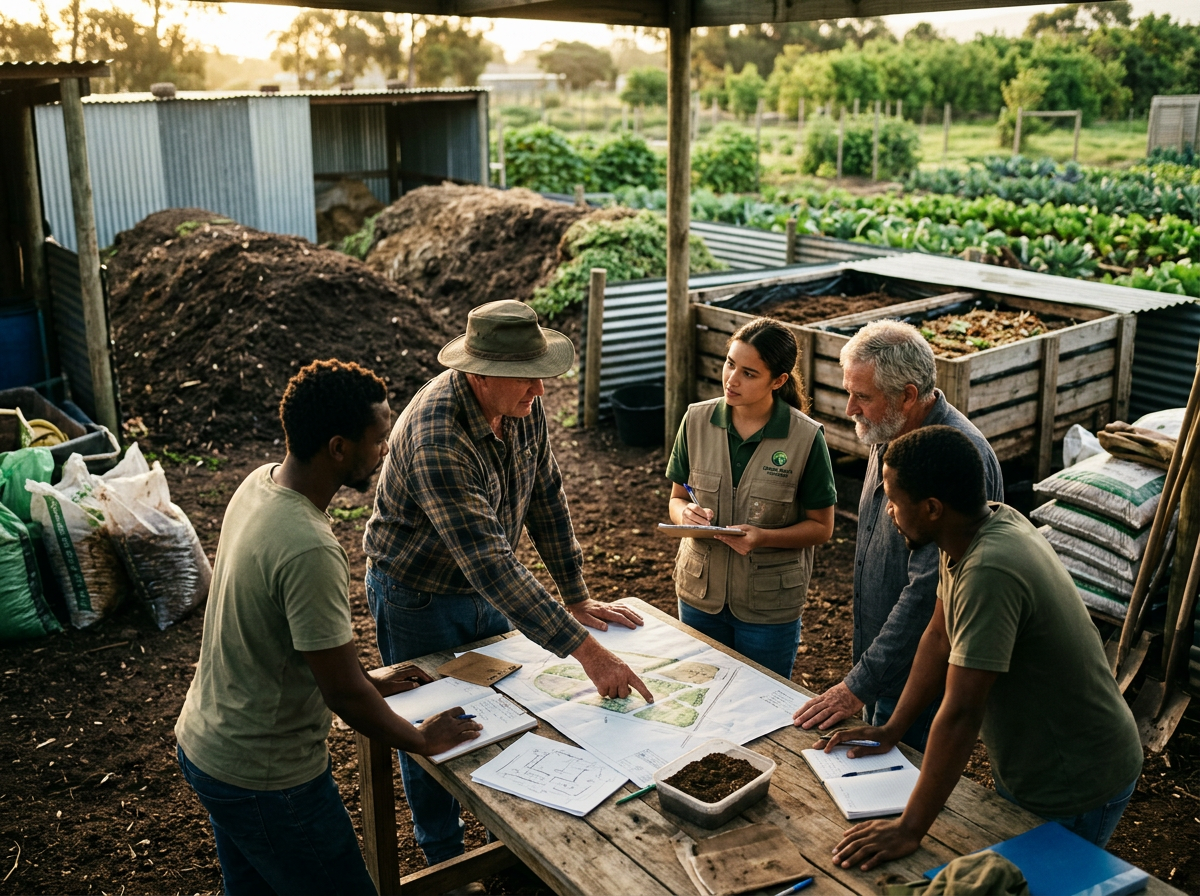
Design the handover before building the pile
A Green Earth Concepts site assessment can review the feedstock, space, weather exposure, monitoring, team skills and applicable specialist questions. Ask for a site-specific preparation and handover plan before processing difficult streams.
Pre-composting feedstock for worms: common questions
Does every worm farm feedstock need pre-composting?
No. The need depends on the exact stream, condition, scale, system and risk. Some clean, prepared materials may enter a controlled vermicomposting trial directly; others need stabilisation, another treatment route or exclusion.
How long should feedstock pre-compost?
There is no safe universal number of days. Time depends on material, batch size, structure, weather, management and the purpose of the stage. Use measured process criteria and a documented handover rather than the calendar alone.
What temperature means the material is ready for worms?
Readiness is not one number. Review internal temperature at several points and after disturbance, alongside moisture, structure, odour, contamination, batch history and required risk checks. Follow system-specific professional guidance.
Does pre-composting make manure or animal by-products safe?
Do not assume so. Source, pathogens, veterinary treatments, salts and applicable rules can require specialist process design and testing. Vermicomposting is not a substitute for a validated risk-control process.
What if the material heats again in the worm bed?
Pause feeding, protect an unaffected refuge, check internal conditions and isolate the new material if this can be done safely. Escalate persistent or severe problems. The guide to worm-farm temperature in South Africa covers seasonal monitoring and response.
The gate protects both processes
Pre-composting is useful when it performs a defined, monitored job. It becomes risky when “a few days in a pile” is treated as proof of cooling, stability or safety.
Separate the zones, identify every batch, monitor a pattern, record interventions and require a written release into a small worm trial. That gate protects the worms, the operators and the credibility of any claim made about the resulting material.