
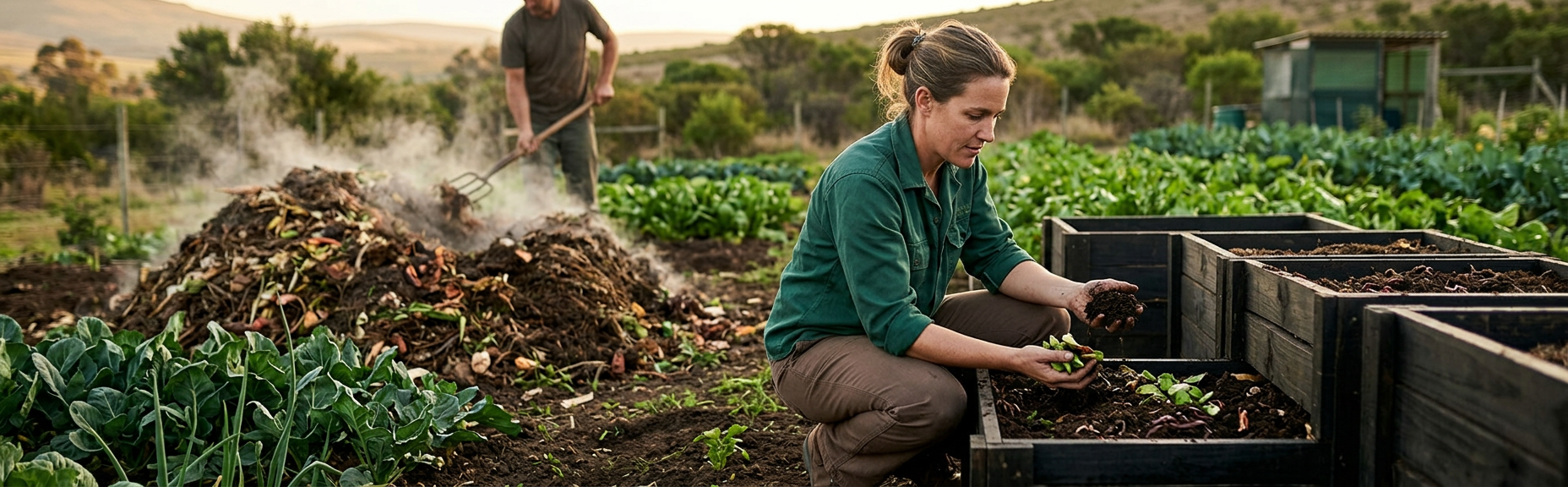
The right process may be hot, cool—or deliberately both
Ask whether vermicomposting or hot composting is “better” and you will usually get an answer based on preference. Ask what the material needs before it can become a stable, useful output and the comparison becomes practical. Hot composting is driven primarily by microorganisms in a managed aerobic mass that can generate substantial heat. Vermicomposting relies on composting worms working with microbes in a cooler, oxygenated habitat.
Neither process makes contamination harmless, and neither should be selected from a single claimed throughput number. The best fit depends on feedstock, particle structure, moisture, biological risk, scale, site layout, operator skill, monitoring and end use. Green Earth Concepts' Commercial Worm Farms service assesses those factors before a system is designed.
For many South African farms, packhouses, hospitality sites and food businesses, the answer is not necessarily one method. A controlled hot phase or stabilisation step may prepare certain materials for worms; other clean, suitable streams may enter a managed vermicomposting process without that sequence. A hybrid only makes sense when each stage has a defined purpose and a measurable handover.
The biological difference changes the operating job
The US Environmental Protection Agency defines composting as managed aerobic biological decomposition by microorganisms. In a well-managed hot composting process, oxygen, moisture, structure, nutrient balance and pile size interact to produce heat. The EPA notes that temperature control is part of reducing pathogens and weed seeds, but the exact time-and-temperature requirements depend on the method and applicable standard. A warm pile is not automatically a validated sanitation process.
Vermicomposting is also aerobic, but the living worms impose a different operating envelope. Oregon State University Extension identifies red wigglers, Eisenia fetida, as a commonly used composting worm and distinguishes them from deep-burrowing garden earthworms. Worm beds need moisture and air while avoiding temperature extremes and fresh material that is actively heating. Conditions inside the bed matter more than a weather-app reading.
Hot composting is therefore not simply “faster worms without worms”, and vermicomposting is not “cold composting with a better product”. They are different biological processes with different control points. The finished output from either route still needs maturity, quality and end-use checks; colour and an earthy smell alone cannot verify nutrient content, pathogen status or suitability for a particular crop.
In South Africa, facility requirements may also differ according to the activity, material, scale and location. The national norms and standards for organic waste composting are a starting source, not a site-specific ruling. Confirm current national, provincial and municipal requirements before construction or a material change in throughput.
Vermicomposting vs hot composting at a glance
| Decision factor | Vermicomposting | Hot composting | Question for your site |
|---|---|---|---|
| Core agents | Composting worms plus microbes in a managed bed | Microbial activity in an aerobic pile, windrow or vessel | Does the feedstock suit worms now, or must it first be stabilised? |
| Heat | Worm habitat should not be allowed to enter an active hot-compost phase | Heat is an intended process characteristic that must be monitored | Can the team measure internal conditions and respond correctly? |
| Feedstock | Works best with approved, prepared, non-heating material within the system's acceptance rules | Can accept blended carbon-rich and nitrogen-rich feedstocks appropriate to the chosen method | What moisture, structure, contamination and risk profile arrives? |
| Footprint | Can be compact, but needs beds, service aisles, preparation and harvest space | Footprint varies widely by pile, windrow or in-vessel design, plus curing and storage | Is there enough controlled space for every process zone? |
| Labour | Frequent observation, controlled feeding, moisture management and gentle harvest | Mixing or turning, temperature and moisture checks, structure management and curing | Which tasks can the team perform consistently? |
| Output | Vermicompost requiring fit-for-purpose quality checks | Compost requiring maturity and quality checks | Who will use the output, when and under what evidence? |
Use the comparison responsibly
Do
- Do characterise each feedstock rather than classifying everything as food waste.
- Do measure peaks, contamination, moisture and seasonal changes.
- Do design preparation, active processing, curing or harvest, storage and end-use zones.
- Do confirm requirements with competent authorities and specialists.
- Do test a hybrid sequence against a clear purpose.
Don't
- Don't send an actively heating mass into a worm bed.
- Don't claim that any warm pile has met a pathogen-reduction standard.
- Don't choose a process only because its footprint looks smaller.
- Don't assume the finished material is automatically safe, mature or saleable.
- Don't use a universal internet ratio as a commercial design specification.
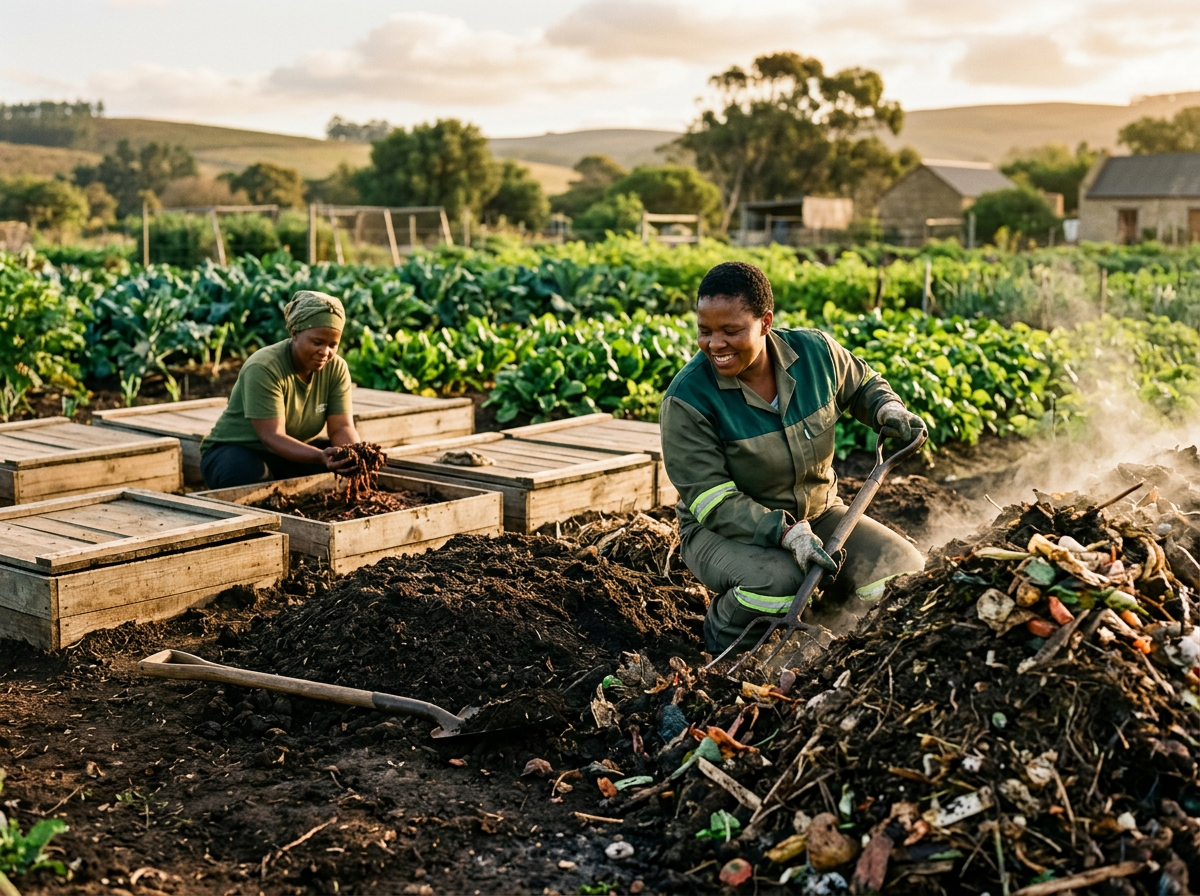
Separated hot-compost, readiness-check and vermicomposting zones on a South African site
When a hybrid process earns its extra complexity
A hybrid may be appropriate when a site has enough consistent material to justify separate stages and a clear reason for each one. The first stage might blend and stabilise fresh material, manage heat or create a more uniform feed. Only after the material meets a documented handover gate does it enter the worm system. The dedicated guide to pre-composting feedstock for worms explains that gate in detail.
The trade-off is operational complexity. The site now needs separate zones, clean movement between them, more monitoring, batch identity and a plan for material that fails the handover check. The team must understand which process is active; “leave it for a few days” is not a control. Likewise, a poor structural blend may compact in either system. The worm bedding and feed balance guide covers the role of carbon-rich bedding and pore space after the material reaches the beds.
A useful hybrid decision is therefore evidence-led: define the problem, establish what the first stage changes, set measurable acceptance criteria and confirm that the second stage has capacity. If the site cannot operate and record both stages, a simpler on-site process or an approved off-site route may be more robust.
Five questions that usually decide the route
- What exact streams and contaminants arrive on normal and peak days?
- Does any material heat, compact, smell or vary sharply after collection?
- Can the site provide separate controlled zones and reliable monitoring?
- Does the team have time and training for the chosen method or sequence?
- Is there a verified destination and quality plan for the output?
- We have chosen the method before auditing the waste.
Compare methods against your real material
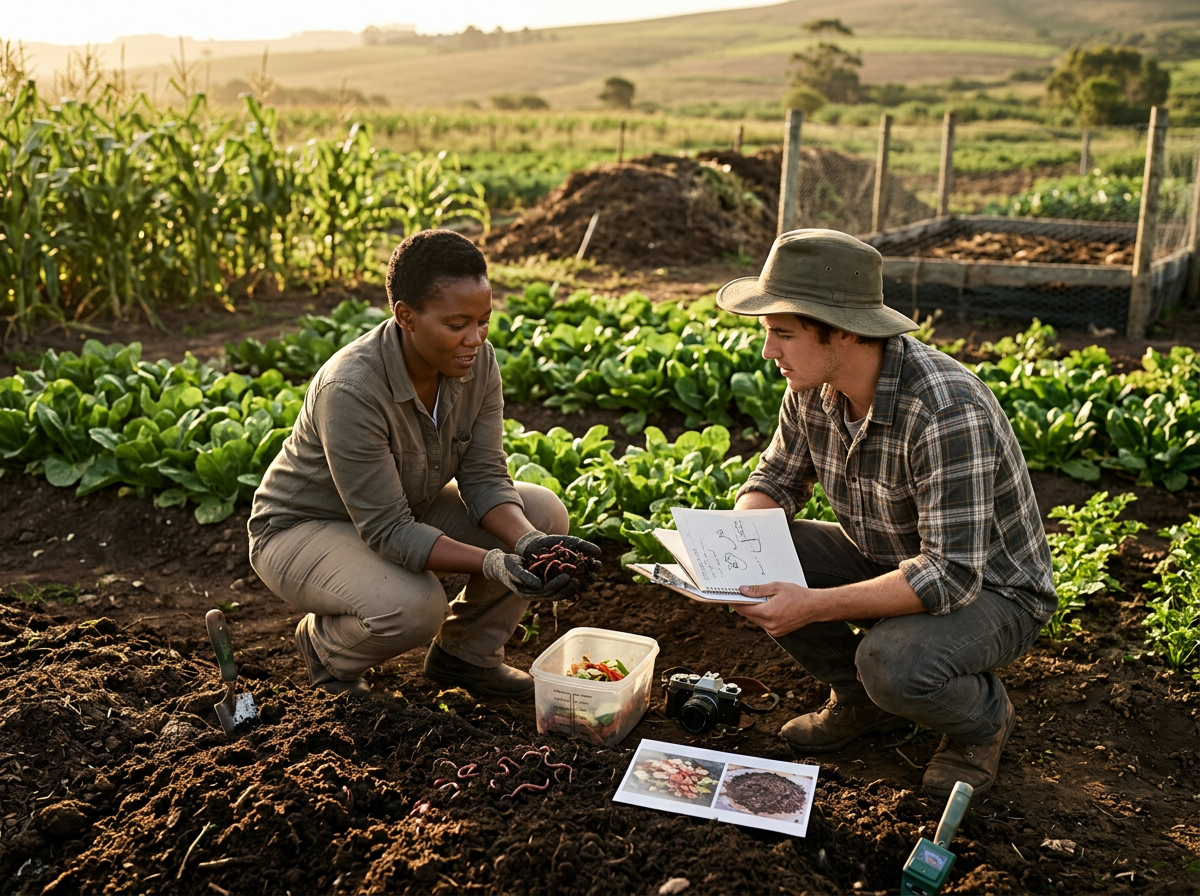
Bring measured volumes, photographs, contamination notes and end-use goals to a Green Earth Concepts site assessment. The assessment can compare worms, composting or a phased combination against the actual site rather than a generic technology claim.
Questions about vermicomposting and hot composting
Is vermicomposting always a cold process?
It operates within a cooler biological range than thermophilic composting, but a worm bed can still heat dangerously when too much fresh or actively decomposing material is added. Monitor the bed itself and pause inputs when conditions move outside the system's operating plan.
Does hot composting guarantee pathogen destruction?
No. Pathogen reduction depends on achieving and documenting the required conditions throughout the material for the relevant process and standard. A hot centre or visible steam is not enough evidence. Seek qualified guidance for risky feedstocks.
Can finished hot compost be fed to worms?
Potentially, if the material is appropriate, has cooled and stabilised, is free of unacceptable contaminants and meets the worm system's acceptance checks. It should be tested in a controlled portion rather than moved automatically.
Which method needs less land?
There is no universal answer. A system footprint includes reception, storage, blending, processing, access, curing or harvest, finished-product storage, stormwater control and buffers—not only the vessel or bed.
Can one site use both systems?
Yes, where each stage has a purpose, sufficient capacity, separate zones, trained operators and a documented handover. A hybrid is not automatically safer or more efficient; it must be designed and managed.
Choose the process by the job it must do
Hot composting and vermicomposting solve different parts of the organic-material challenge. Heat can be an intentional feature of controlled composting. Worms need a protected, non-heating habitat and carefully accepted feed. Both require oxygen, moisture management, contamination control, trained people and a suitable output plan.
Start with the feedstock and the site's operating capacity. If a hybrid is justified, define the handover as carefully as each stage. If it is not, choose the simpler route the team can run and verify consistently.