
The average bin is not the design load
A site that says it produces “about 100 kilograms a day” may actually send 40 kilograms on quiet days, 180 after a function and a large seasonal surge during harvest. Some of that total may be liquid, packaging, mixed refuse or material the worm system should not accept. If the unit is sized from the headline number, it can be too large for the clean stream, too small for peaks—or both.
A defensible commercial worm farm size starts with measured usable feedstock and the site's ability to prepare and manage it. It then uses pilot evidence, system-specific operating guidance, contingency and an expansion plan. Green Earth Concepts' Commercial Worm Farms service begins with those inputs rather than a universal “worms eat their body weight” rule.
This article provides a planning method, not an engineered design or guaranteed capacity. Worm activity changes with feedstock, preparation, bedding, moisture, temperature, maturity of the population and operator practice. Legal or facility requirements may also change with activity and throughput, so confirm them for the proposed site.
Measure what can actually reach the worms
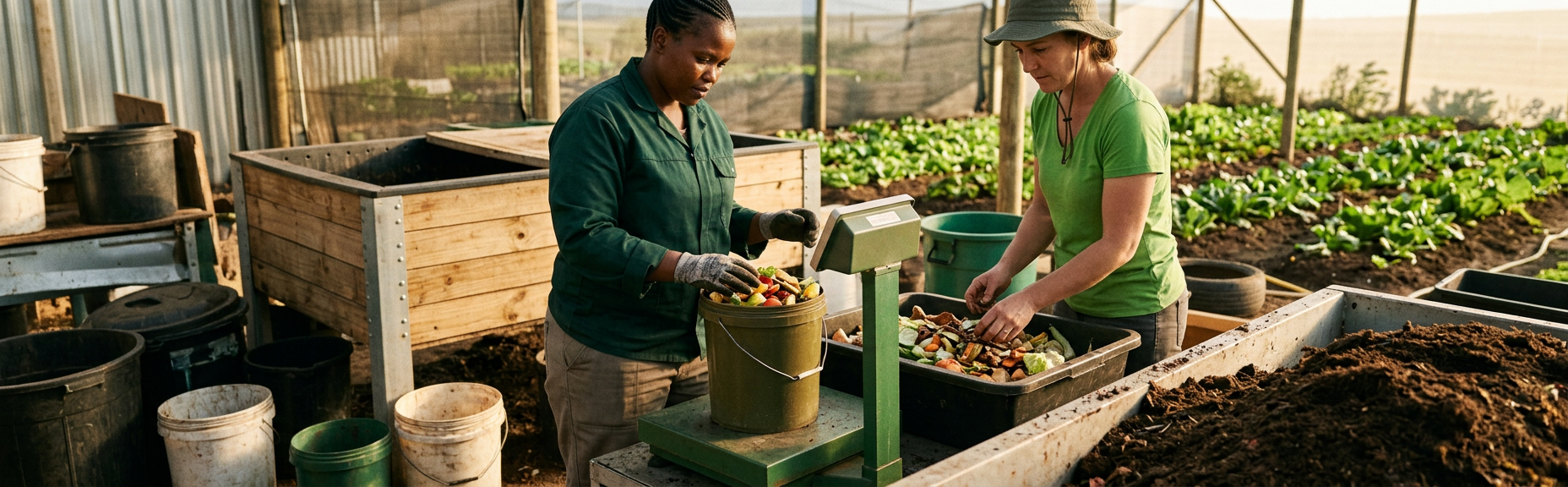
Start at source and weigh each stream separately. A kitchen preparation station, retail produce section and packhouse trimming line may all create vegetable material, but their packaging, water content, timing and contamination can differ. Record gross container weight and tare so the log contains net material mass.
Classify every stream as approved for measurement, requiring preparation or trial, excluded, or requiring specialist review. This is not a permanent scientific verdict; it is a controlled acceptance decision for the proposed system. Packaged stock should not enter the usable figure until a safe, reliable depackaging route exists. Uncertain animal by-products, manure, treated material or chemically contaminated loads require competent advice.
Measure across a representative operating cycle. Include weekends, functions, delivery days, crop changes, load-shedding effects and any days when material is sent elsewhere. A seven-day audit may suit a stable kitchen; a seasonal agricultural operation needs data across relevant production periods. Keep the raw daily figures—monthly averages erase the peaks that drive storage and contingency.
Also measure the material after preparation when feasible. Draining, sorting, blending or pre-composting can change mass and volume. The design should state clearly whether capacity refers to material as generated, accepted at reception, prepared for feeding or actually loaded to beds.
Build the sizing worksheet in layers
| Layer | Calculation or record | What it prevents |
|---|---|---|
| Generated baseline | Net kilograms by stream and day | Sizing from bin count or memory |
| Acceptance adjustment | Generated mass minus packaging, contaminants, excluded and rerouted material | Charging unsuitable material to worm capacity |
| Preparation basis | Mass and condition at the agreed feed-ready point | Comparing wet reception weight with prepared feed |
| Variability | Normal range, peak day, consecutive peaks and seasonal surge | Using a monthly average as the only design load |
| Pilot performance | Observed accepted mass processed under stable site conditions | Importing an unrelated internet rate |
| Availability | Planned maintenance, staff cover, weather disruption and recovery allowance | Assuming every bed and operator is available every day |
| Expansion gate | Feedstock, process, people, output and contingency criteria | Adding modules before the existing system is stable |
A seven-step sizing method
- 01
Define the measurement boundary
Write down where mass enters the calculation: at the source bin, reception area or after preparation. Use one boundary consistently and reconcile material removed later.
- 02
Collect representative daily weights
Weigh by stream and source, subtract tare and record unusual events. Avoid replacing missing days with a guessed average; flag them and extend the audit.
- 03
Separate usable from total organics
Remove packaging, rejected contaminants and material assigned to prevention, donation, animal feed, hot composting or another approved route. State assumptions next to the figures.
- 04
Map peaks and storage limits
Identify the highest day, consecutive high days and seasonal surge. Determine how long accepted material can wait under the site's hygiene, odour, pest and process controls. A large buffer is not automatically safe.
- 05
Run a bounded pilot
Use a representative approved stream and a known bed area or module. Record actual feed additions, internal conditions, visible processing, odour, pests, escape behaviour and operator time. Change one major variable at a time.
- 06
Create low, expected and high scenarios
Use conservative observed performance for the low case, stable typical performance for the expected case and peak feedstock demand for the high-demand case. Do not call the high case guaranteed capacity.
- 07
Choose a phase and expansion trigger
Select an initial module the team can operate reliably. Define the evidence required before expansion, then consult the guide to scaling a worm farm in modules.
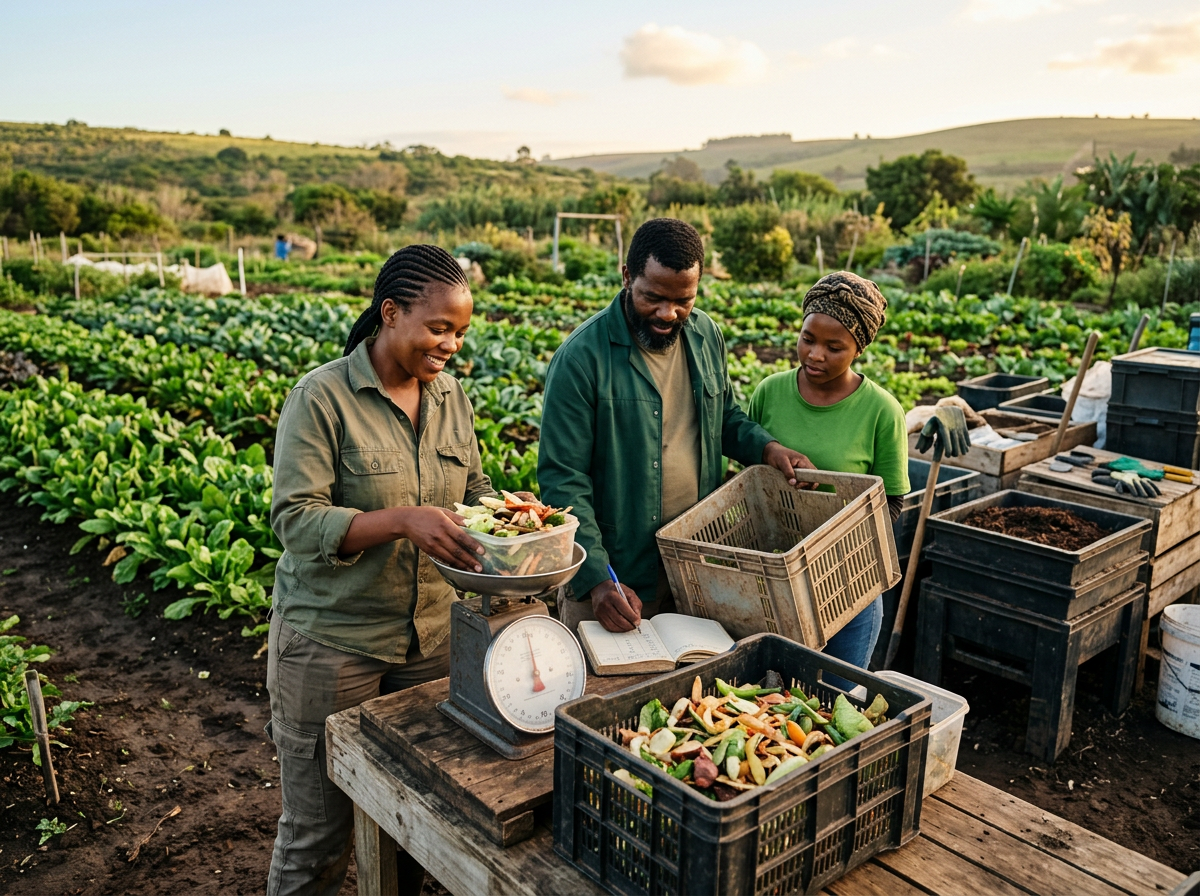
South African team weighing separated organic material to plan modular worm farm capacity
Use a range, not a false point estimate
A planning spreadsheet can express the logic without inventing precision. One useful structure is: feed-ready kilograms per operating period divided by an observed, system-specific stable processing rate, then adjusted for planned availability and contingency. Every term must carry its source, dates and uncertainty.
For example, do not write “the site needs 20 square metres” because a supplier brochure suggests a universal rate. Write, “During the pilot, this defined stream was accepted at this measured rate across this active area for this period, under these internal conditions, with these exclusions.” Then test whether the period included representative peaks and whether the output was ready for its intended next step.
The 25-point site assessment checklist matters because calculated bed area is not the footprint. Add feedstock reception, preparation, service aisles, water, drainage, harvest, storage, buffers, vehicle movement and expansion.
Evidence to approve before final sizing
- Weights cover normal, peak and relevant seasonal periods.
- Tare and measurement boundary are documented.
- Packaging, contamination and excluded streams are not counted as feed-ready mass.
- The pilot used representative material and recorded conditions.
- Operator time and backup capacity are included.
- The footprint includes all process and access zones.
- A suitable output route and storage plan exist.
- Contingency and expansion triggers are written.
- The result depends on one universal consumption ratio.
Replace the guessed rate with site evidence
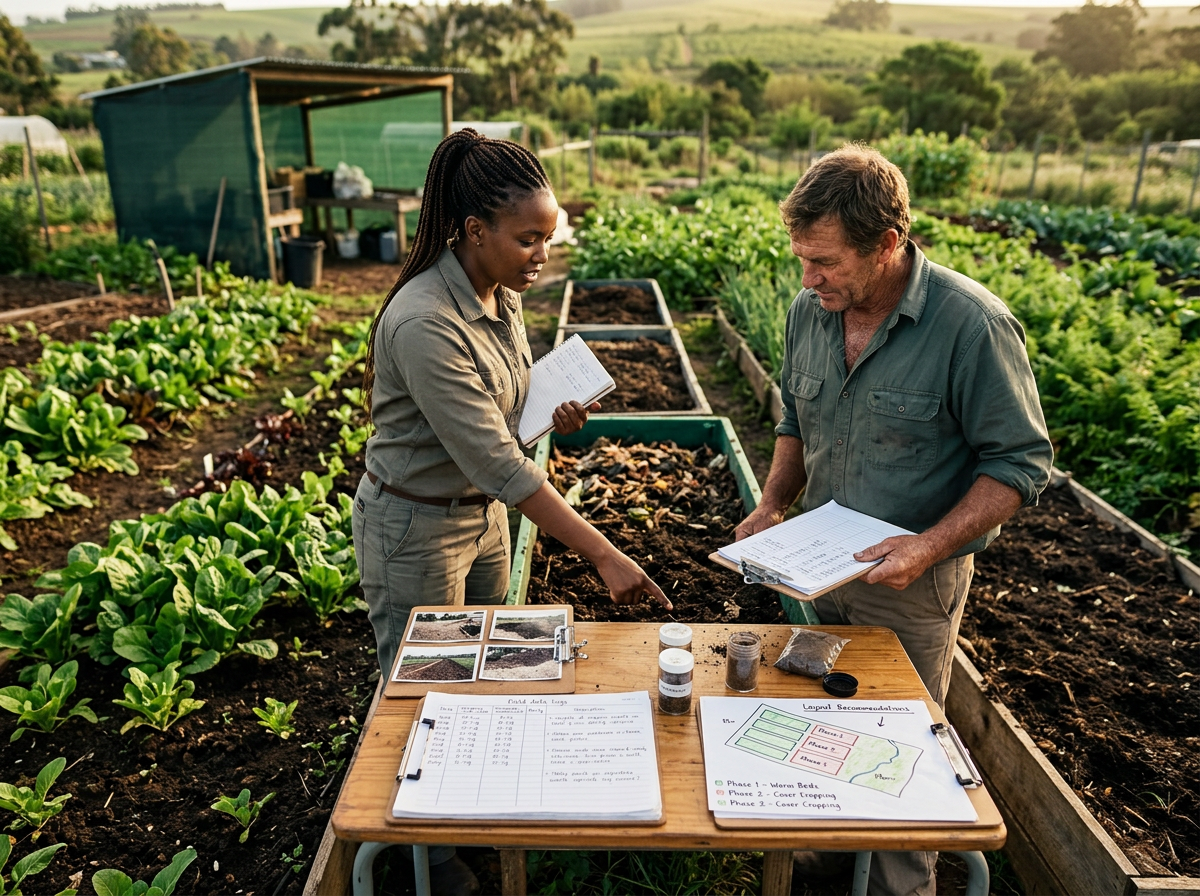
Bring daily weights, stream descriptions, site photographs and the proposed end use to a Green Earth Concepts site assessment. The assessment can turn the data into a right-sized phased recommendation and identify what still needs to be tested.
Commercial worm farm sizing questions
How many kilograms can one kilogram of worms process per day?
There is no universal commercial design rate. Published rules of thumb vary and often omit feedstock, temperature, moisture, bedding, population condition and what “processed” means. Use supplier guidance cautiously and verify it with a site-specific pilot.
Can I size from wheelie-bin volume?
Volume can help plan containers and movement, but wet density and fill level vary. Weigh representative filled containers, subtract tare and link volume estimates to each defined stream.
Should the system handle our single biggest day?
Not necessarily by immediate feeding. The design needs a safe plan for peaks, which may include prevention, scheduled preparation, controlled buffering, phased modules or an approved alternative route. Repeated peaks matter more than one unusual event.
How much spare capacity should we add?
A contingency allowance should come from measured variability, maintenance, weather, staffing and recovery plans. A generic percentage can create false confidence. Define what the allowance covers and when it may be used.
When is the system ready to expand?
Expand only when accepted feedstock is reliable, present beds are stable, operators follow the routine, records are complete, output has a destination and contingency remains adequate. More incoming waste alone is not enough.
Size the operating system, not only the bed
Commercial sizing is a chain of evidence: generated material, accepted material, prepared feed, observed stable processing, available labour, site footprint, contingency and output use. Make each boundary visible and keep the daily data behind the summary.
A range with honest assumptions is more useful than a precise-looking capacity promise. Start with a module the site can run, set expansion gates and revise the design as measured performance improves.