
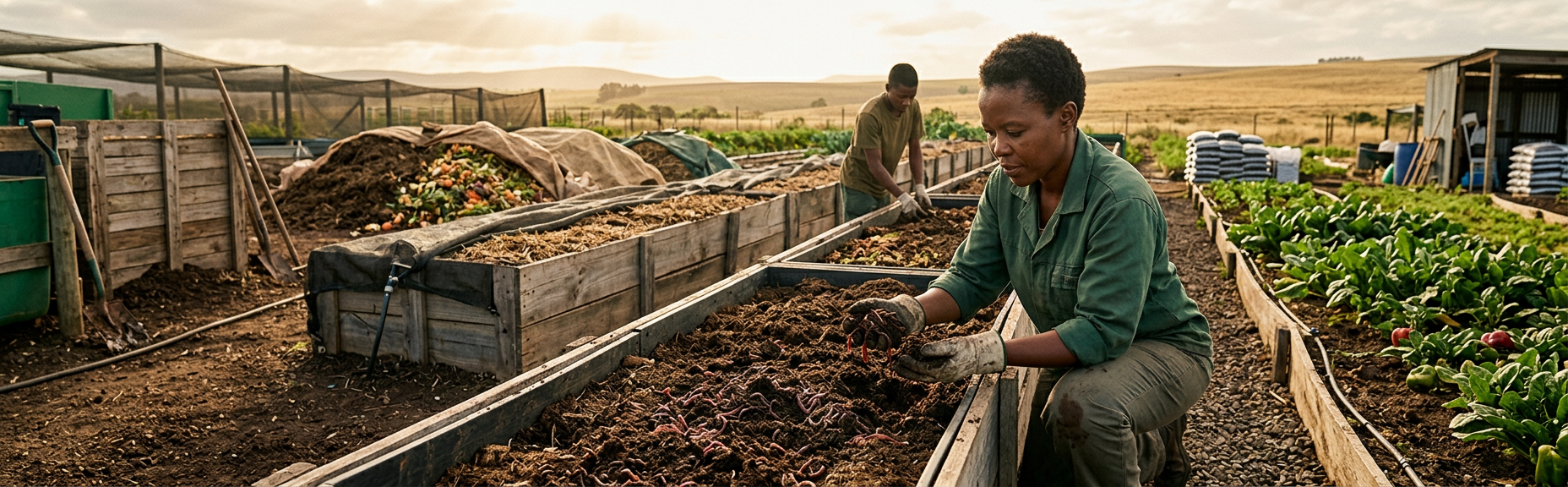
A worm farm becomes commercial when the routine becomes reliable
A commercial worm farm is not simply a household bin made longer or wider. It is a living processing system that receives a defined stream of organic material, protects a population of composting worms, produces traceable outputs and still has to work when the enthusiastic project champion is away. That distinction matters in South Africa, where a site may face hot afternoons, intense summer rain, water interruptions, seasonal harvest peaks, staff changes and long distances between suppliers.
Green Earth Concepts' Commercial Worm Farms service is built around that operational reality. The first question is not, “How many worms should we buy?” It is, “What material do we generate, what can the site support, who will run the process and what will we do with the finished vermicompost?” Those answers determine whether worms are appropriate and what scale is sensible.
The opportunity is meaningful. South African businesses generate organic residues at farms, packhouses, food retailers, kitchens, estates and hospitality sites. CSIR research also shows that food loss and waste is a substantial national problem, although not every discarded food stream is suitable for vermicomposting. A good project starts by separating, prevention, safe redistribution and other higher-value options from the unavoidable, clean organic material that may enter a biological treatment system.
What a commercial worm farm actually does
Vermicomposting uses composting earthworms and the associated microbial community to transform suitable, partly decomposed organic material into vermicompost. Cornell's composting guidance describes worm composting as the use of worms to recycle food scraps and other organic material into a soil amendment. At commercial scale, the biology remains important, but the project adds material acceptance rules, weighing, preparation, covered work areas, process checks, harvest procedures, staff responsibilities and records.
The worms do not make unsuitable waste disappear. Plastic labels, elastic bands, glass, chemicals and mixed packaging remain contamination. Large, wet loads can compact, lose oxygen or heat up. Highly variable or biologically risky materials may need a different route, pre-treatment or professional review. A commercial design therefore begins upstream, where material is purchased, handled and separated, not at the worm bed.
The output also needs a destination before the first feed arrives. A farm may plan controlled soil trials. An estate may use verified material in landscaped areas. A school or community project may connect it to a food garden under trained adult supervision. If the project intends to sell, package or make nutrient, crop, environmental or carbon claims, additional quality, labelling and regulatory questions arise. Do not build a business case around an untested price or a guaranteed yield.
South Africa's National Environmental Management: Waste Act provides the national framework for waste management, while the exact duties for a project can depend on the material, activity, throughput, location and destination. A blog article cannot determine whether a specific facility needs registration, approval or a licence. Treat compliance as an early design input and confirm current requirements with the relevant authorities or a suitably qualified practitioner.
The five inputs that shape a workable system
| Input | Questions to answer | Why it changes the design |
|---|---|---|
| Feedstock | Which streams arise, how many kilograms arrive on normal and peak days, and what contamination is present? | Determines suitability, preparation needs, storage, pilot scope and capacity. |
| Site | Is there shade, drainage, vehicle and barrow access, a clean water source and room for separate work zones? | Affects bed location, weather protection, hygiene, movement and future expansion. |
| People | Who accepts material, feeds, checks, records, harvests and covers leave? | A biological system requires consistent decisions, not occasional attention. |
| Outputs | Will vermicompost be used on site, tested in trials, stored, shared or potentially sold? | Defines quality checks, batch records, storage and the evidence needed for claims. |
| Risk and permissions | What waste, food-safety, workplace, municipal or product requirements apply? | May change the process, controls, documentation, site or whether the project proceeds. |
A practical route from idea to stable operation
- 01
Prevent and separate before processing
Identify avoidable surplus, purchasing losses and edible material that may have an approved higher-value route. Then define the clean, unavoidable organic stream. Keep it separate at source, sorting mixed refuse beside the worms is an expensive and unreliable control.
- 02
Measure a representative period
Weigh material by source for at least a normal operating cycle and include peak days, weekends or harvest periods. Record packaging, liquids and rejected loads separately. Monthly invoices rarely show the variability that drives storage and capacity.
- 03
Test the physical site
Walk the full route from generation point to processing area. Check sunlight, heat reflection, rain entry, stormwater, drainage, airflow, water reliability, security, neighbours, cleaning access and how a full container will move safely. Use the 25-point site assessment checklist to capture evidence rather than impressions.
- 04
Define the operating owner
Name a responsible operator and a trained backup. Agree what they will check daily, what they will record, when they may pause a feed and who receives an escalation. Add the work to a real shift plan, do not assume it will happen in spare time.
- 05
Run a controlled pilot
Start with a clearly bounded stream and conservative loading. Observe temperature, moisture distribution, odour, pests, worm behaviour and the rate at which recognisable feed changes. A pilot is meant to expose constraints and improve the design, not to prove a predetermined purchase.
- 06
Size and phase from evidence
Use the measured usable feedstock, not total mixed waste, to develop a capacity range. Account for variability, preparation, downtime, staffing and contingency. The dedicated guide to sizing a commercial worm farm explains how to size a Commercial Worm Farm from daily organic waste volumes.
- 07
Commission, train and review
Accept the installed system against agreed access, drainage, protection and workflow criteria. Train people using the actual materials and tools. Review the first weeks frequently, document changes and expand only after the present module operates consistently and its output has a suitable destination.
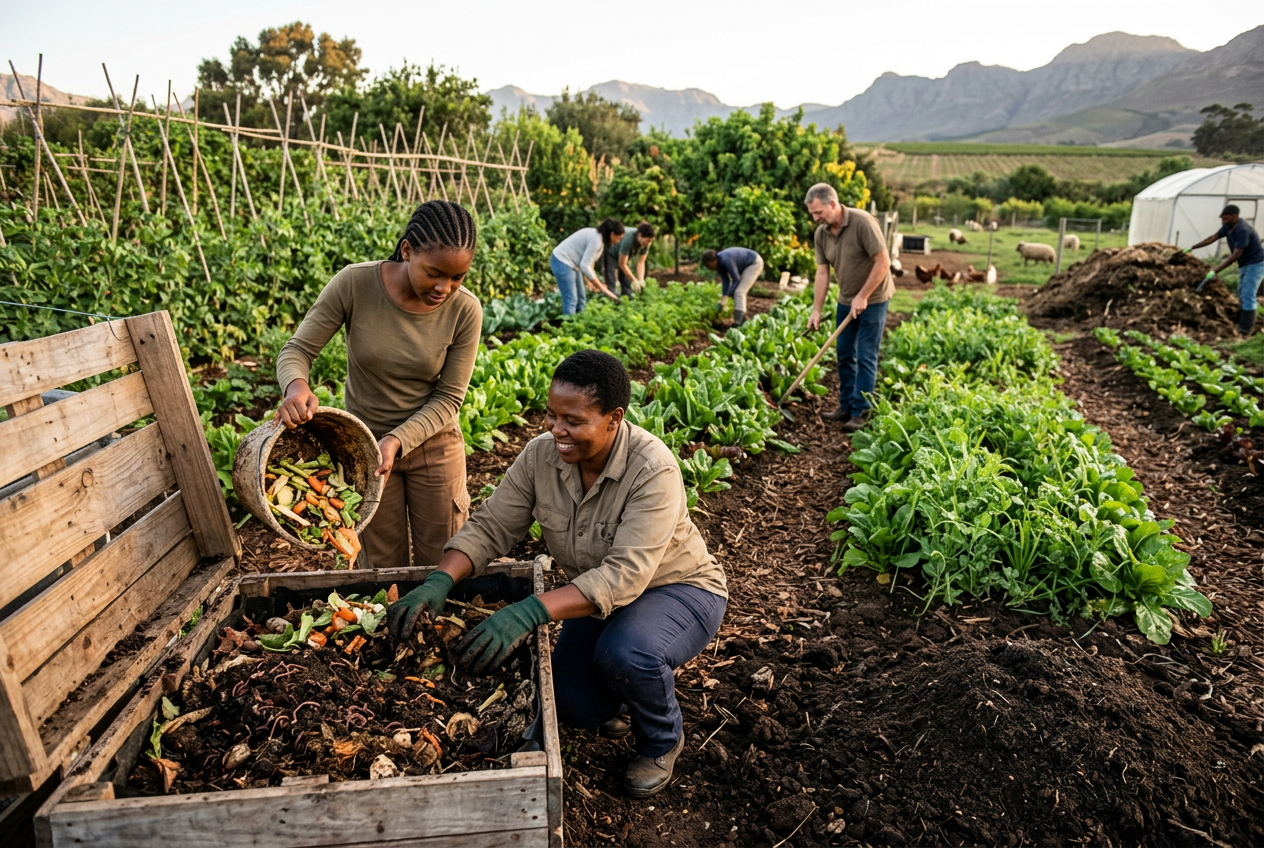
Are you ready to move beyond the idea?
- We can identify each proposed feedstock and its source.
- We have weighed normal and peak quantities rather than relying only on bin volume.
- The processing area has been checked for shade, weather, water, drainage, airflow and access.
- A responsible operator and trained backup have time allocated to the system.
- We know where the output may be used and what verification that use requires.
- We are choosing a unit only from a claimed kilograms-per-day figure.
- We assume every food or farm residue is safe and suitable for worms.
- We expect the project to produce guaranteed savings, income or crop results.
The decisions that matter most
Measure the clean, usable stream and its peaks before discussing size.
Design the full workflow, separation, movement, preparation, feeding, monitoring, harvest and end use.
Treat trained operators and backups as core infrastructure.
Use a pilot to learn, expand only from stable evidence.
Verify legal, safety, product and site requirements for the actual project.
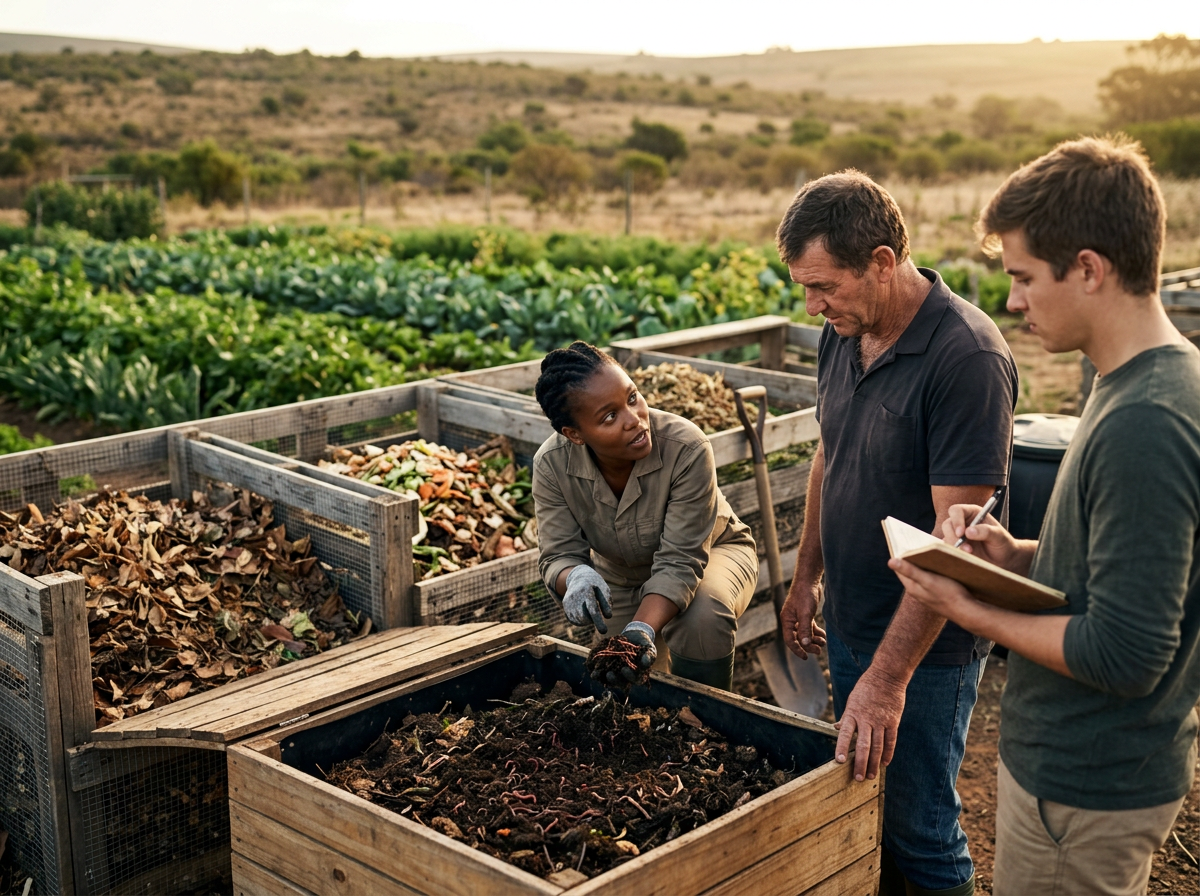
Turn your waste stream into a site-specific decision
If the checklist has exposed unanswered questions, that is useful. A Green Earth Concepts site assessment examines the waste, land, water, workflow and team before recommending a system. The goal is a right-sized plan, not the biggest unit.
Commercial worm farming in South Africa: common questions
Is any business with food waste a good candidate for a commercial worm farm?
No. Suitability depends on the type and cleanliness of the organic material, daily and seasonal volumes, preparation requirements, site conditions, operator capacity and a credible output destination. Prevention or another treatment route may be better for some streams.
How quickly can a commercial worm farm be installed?
The physical unit may be only one part of the programme. Audit, site design, permissions, site preparation, feedstock trials, procurement, commissioning and training can control the timetable. A responsible plan should set decision gates rather than promise a generic installation period.
Will a worm farm remove our need for waste contractors?
Not necessarily. A site will still have non-organic waste, contaminants, unsuitable organics and contingency needs. Some operations use on-site worms for a defined clean stream and retain approved off-site routes for everything else.
Can we sell the vermicompost?
Potentially, but sale should not be assumed. Product quality, consistency, testing, labelling, intended use, market demand and applicable requirements must be investigated. Begin with traceable batches and a realistic end-use plan.
What should we bring to a professional assessment?
Bring a week or more of weights by stream, photographs of generation and storage areas, a site plan if available, water and access information, staffing details, current collection costs, project goals and any known municipal or environmental conditions.
Start with the operation, not the equipment
Commercial worm farming works when biology and operations are designed together. Measure what arrives, protect the process from South African site conditions, give trained people clear ownership and decide how the output will be verified and used. Then pilot, learn and phase.
That route may feel slower than buying equipment first, but it answers the questions that determine whether the system can be maintained. Explore the Commercial Worm Farms service, complete the site and sizing work, and make the investment decision from evidence.