
Composting is not the first answer to edible surplus
Composting edible surplus can be better than landfill and still miss the highest-value action: preventing the surplus. Food already carries the cost and resources of purchasing, growing, transport, refrigeration, preparation and labour. Once it becomes waste, a recycling system can recover material value, but it cannot recover the meal, margin or staff time that was avoidably lost.
The organic waste hierarchy is a decision order. It helps procurement, kitchens, stores, events, farms, facilities and waste teams act on the cause before selecting the destination. For a site-specific route, Green Earth Concepts' organic waste recycling service can connect prevention and source separation to storage, collection, treatment and end use.
Use the hierarchy as a management sequence
At the top is prevention: do not create avoidable surplus. Next comes recovery and redistribution of food that remains safe and suitable for human consumption, through a verified process. Other repurposing routes may follow, but they are not automatic; animal-feed and industrial uses require appropriate legal, safety and technical review. Biological recycling—such as composting, vermiculture or anaerobic treatment—belongs lower in the sequence and should focus on unavoidable, accepted organic material. Disposal is the last resort for material without a safe, lawful and workable recovery route.
The hierarchy is not permission to move food informally. A best-before or use-by decision, temperature history, packaging integrity, allergen information, storage condition and recipient capability can affect whether redistribution is appropriate. Use the organisation's food-safety system and a verified redistribution partner. When safety or suitability is uncertain, stop and obtain competent advice.
It is also not a single waste-team project. Procurement affects pack sizes and specifications. Menu and production planning affect over-preparation. Stores affect rotation and visibility. Service teams affect portioning and returns. Facilities affect separation and storage. Management sets targets and responds to repeated causes. The practical South African business guide shows how those responsibilities connect to the wider operating system.
Assign an owner at every level
<p>Use this responsibility map to turn an environmental principle into daily work.</p><p><em>Measure reasons as well as kilograms. A lower total with no explanation may reflect prevention—or simply missed data.</em></p>
| Priority | Operational question | Primary owners | Useful evidence |
|---|---|---|---|
| Prevent | Why was this item bought, prepared or served without being used? | Procurement, kitchen, production, store, event lead | Forecast versus actual, over-production log, spoilage reason |
| Rescue safely | Is the food safe, suitable, traceable and accepted by a verified partner? | Food-safety lead, donor manager, recipient partner | Condition check, time and temperature records where required, handover record |
| Repurpose with approval | Is there a lawful, technically suitable route for this material? | Technical lead, recipient, compliance adviser | Written acceptance criteria and current approval |
| Recycle | Which accepted process matches the unavoidable material and site? | Waste manager, operator, service provider | Stream characterisation, contamination, capacity and end-use plan |
| Dispose last | Why could the material not safely move higher? | Waste manager and management reviewer | Reason code, quantity and corrective action |
Make the hierarchy practical without creating new risks
<p>Use these boundaries in hospitality, retail, schools, farms, estates, cooperatives and community projects.</p>
Do
- Start with the top repeat items and the operational reason for each loss.
- Use a verified food-safety and redistribution process for suitable surplus.
- Confirm written acceptance criteria before sending material to feed, compost, worms or another processor.
- Track who owns each intervention and when results will be reviewed.
- Include staff who handle the material; they can identify causes hidden from monthly reports.
Don't
- Call planned overproduction 'donation' instead of correcting the forecast.
- Redistribute food with uncertain safety, traceability or storage history.
- Assume 'organic' means acceptable to every animal, worm farm, compost site or municipal service.
- Use community recipients as a convenient disposal route or publish their stories without consent.
- Claim diversion success while avoidable food waste continues unchanged.
A 30-minute hierarchy review
<p>Take one recurring waste item and answer every question before choosing an intervention.</p>
- What exactly is the item, source and quantity? — Prevents a vague category from hiding different causes.
- Why did it become surplus? — Reveals forecast, specification, storage, preparation or service issues.
- Could the cause be prevented next cycle? — Keeps recycling from normalising avoidable loss.
- If edible, is safe recovery verified? — Protects recipients and the donor.
- If not for people, is another route explicitly accepted and compliant? — Avoids unsafe or unlawful repurposing.
- Which recycling pathway matches the unavoidable remainder? — Connects material behaviour to process fit.
- What measure will show movement up the hierarchy? — Turns intent into accountable improvement.
Find the highest-value intervention before buying equipment
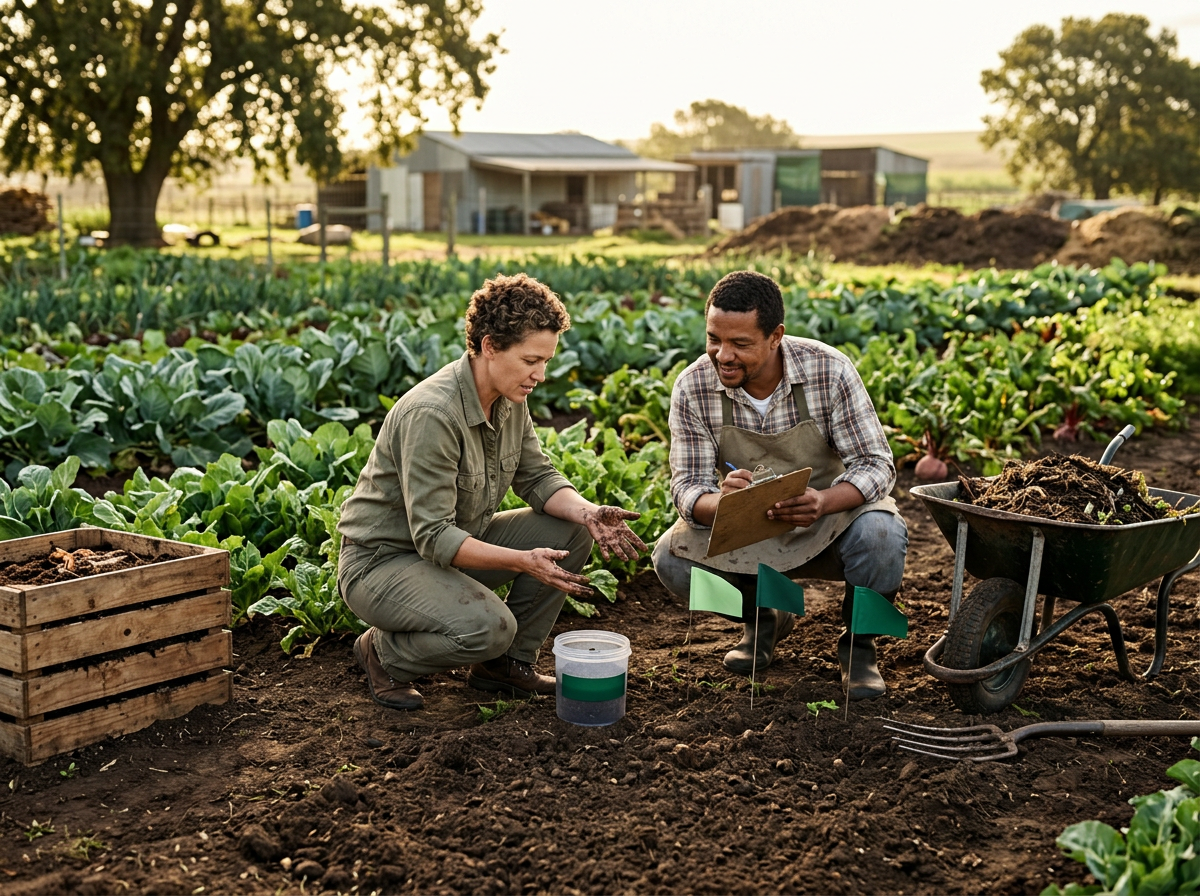
A site assessment can separate prevention opportunities from unavoidable feedstock, map the people and handoffs involved, and test whether a recycling pathway fits the site's volume, land, water, access and operating capacity. For deeper prevention work, read how to prevent food waste through procurement, menus and stock control.
Set priorities in this order
- Prevent avoidable surplus before buying treatment capacity.
- Rescue food only through safe, verified and dignified arrangements.
- Require technical and legal confirmation for non-food repurposing routes.
- Recycle unavoidable, clean and accepted material through a suitable process.
- Measure both quantities and reasons; a commercial organic waste audit creates the baseline.
- Avoid treating communities, farms or processors as outlets for material they did not agree to receive.
- Verify current municipal, environmental, food-safety and workplace requirements.
Move the decision upward, not only the material away
The strongest organic-waste programme is not the one that processes the most avoidable food. It is the one that learns why surplus occurs, prevents what it can, rescues suitable food safely, verifies any repurposing route, and recycles the unavoidable remainder through a controlled system. Pick one recurring item this week, assign its owner and follow it from purchase to final destination. That single trace often reveals the first practical move up the hierarchy.