
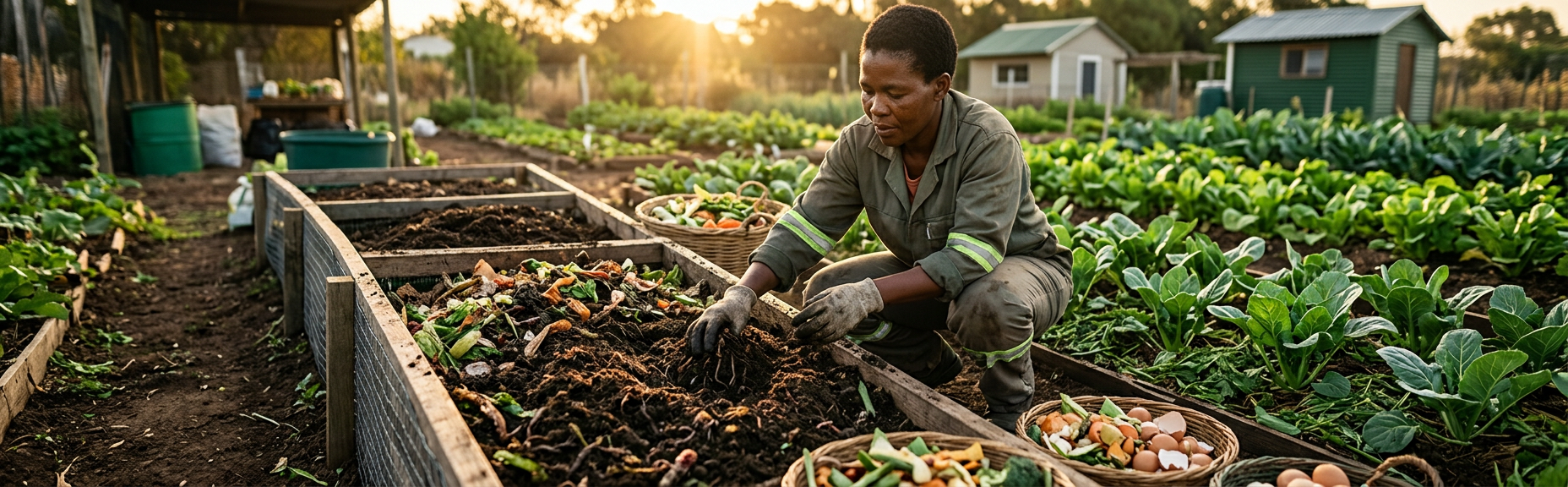
Organic waste is a chain, not a bin
A hotel can buy carefully and still throw away trays of untouched breakfast. A supermarket can separate spoiled produce and still lose the load because plastic packaging travels with it. A school can install a compost area and watch it fail when no one owns the holiday routine. Organic waste is not one problem; it is a chain of purchasing, preparation, service, separation, storage, movement, treatment and end use.
That is why useful organic waste recycling in South Africa starts with the operating system, not with a favourite machine. The best pathway for a Johannesburg estate may be wrong for a rural cooperative, a coastal hotel, a municipal facility or a farm with land but limited labour. Volume matters, but so do moisture, contamination, peaks, climate, access, water, available carbon-rich material, staff time, collection reliability and a credible use for the final product.
Green Earth Concepts approaches organic waste recycling solutions as a connected site problem. This guide shows how to prevent avoidable waste, build a reliable baseline, separate at source, choose a right-sized recycling route, train the people who run it and measure whether it is working. It is general operational guidance, not a substitute for site-specific environmental, municipal, food-safety or occupational-health advice.
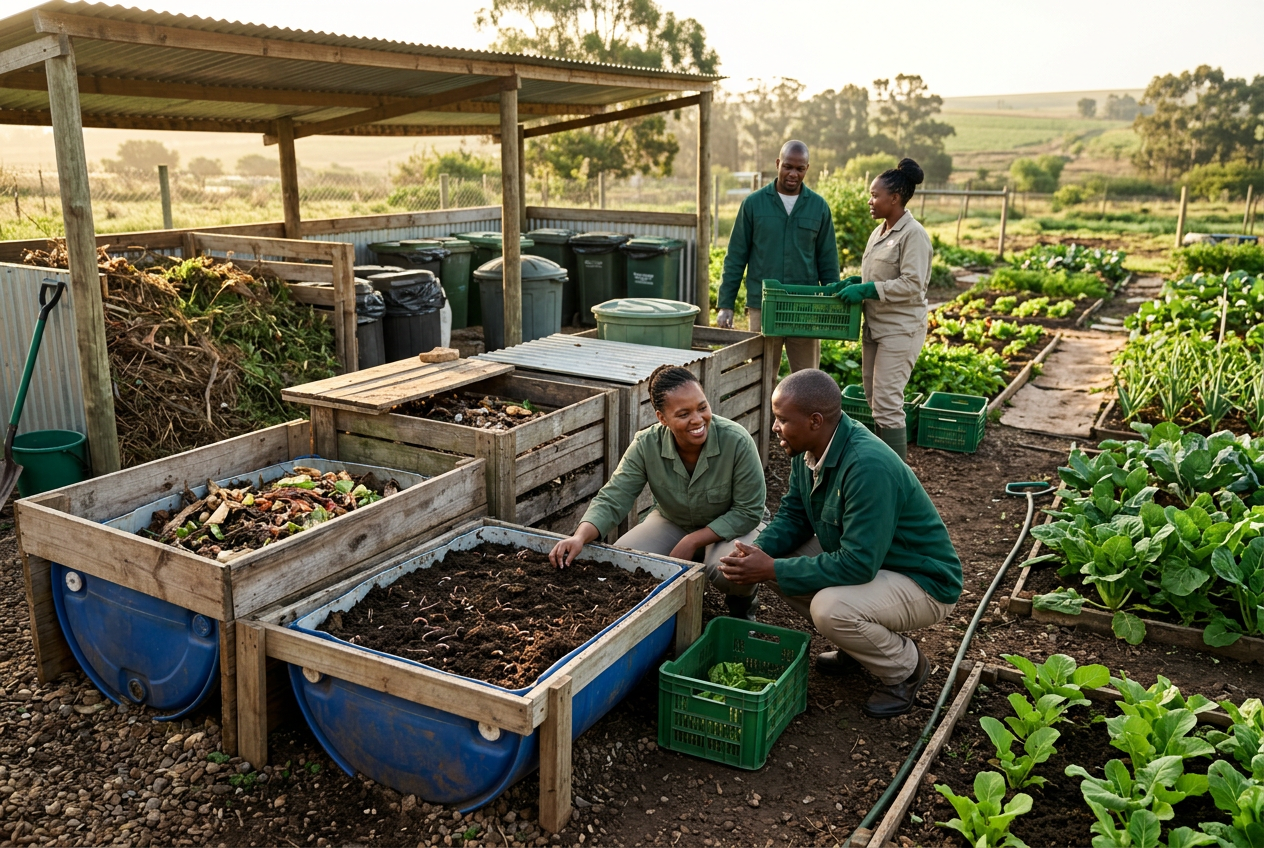
Start by defining what you are trying to change
The phrase “organic waste” can hide several different streams. Preparation offcuts are not the same as plate waste. Spoiled packaged stock is not the same as clean garden material. Manure, animal by-products, fats, sludges and unknown residues bring different risks and regulatory questions. Before combining anything, describe each stream by source, material, contamination, quantity, timing and current destination.
Then define the outcome. A business may want to prevent purchasing losses, reduce landfill disposal, improve a garden, stabilise a nuisance area, meet a customer requirement or build local skills. Those goals overlap, but they do not produce the same design. A system built mainly to process material can accidentally normalise avoidable food waste. A garden-led project can accept more material than the land can use. A collection contract can look efficient while weak source separation simply moves contamination to the processor.
A useful project boundary states what is included and excluded. For example: clean fruit and vegetable preparation scraps from three kitchens, collected during operating hours, held for no longer than the approved site interval, and sent to a verified processor. Exclusions might include packaging, chemicals, cleaning cloths, sanitary waste, glass, metal, healthcare risk waste, unknown liquids and animal material until a competent review approves a route. Clear exclusions protect staff and prevent wishful sorting.
South Africa's National Environmental Management: Waste Act provides the national framework for waste prevention, management, licensing, information and enforcement. National norms and standards also address matters such as waste storage and organic waste composting. The rules that apply to a particular site depend on activity, scale, material, location and local requirements. A business should confirm its duties with the relevant municipality, provincial authority and competent environmental adviser before constructing or operating a treatment facility, changing drainage, transporting waste or making claims about compliance.
Map the system before selecting equipment
<p>Complete this map for each stream. If a row contains guesses, treat the gap as an investigation task rather than designing around it.</p><p><em>Do not merge hazardous, healthcare risk, sanitary, chemical or unknown waste into an organic stream. Stop and obtain competent advice when material identity, safety or legal status is uncertain.</em></p>
| System point | Question to answer | Evidence | Typical owner | Failure signal |
|---|---|---|---|---|
| Prevention | Why is the material becoming surplus? | Purchasing, production, stock and service records | Procurement, chef, production or store lead | The same edible item appears repeatedly |
| Source separation | Can the right decision be made during the busiest period? | Station observations and small contamination checks | Department supervisor | Packaging or unsuitable material appears in organics |
| Internal movement | Who moves material, when and by which safe route? | Route walk and handover record | Facilities or stewarding lead | Overflow, leaks or missed handovers |
| Storage | How long is material held and under what conditions? | Container count, timestamps and area inspection | Facilities manager | Odour, pests, residues or exposed containers |
| Treatment or collection | Does the pathway accept this material and peak volume? | Written acceptance criteria and capacity evidence | Waste manager or verified service provider | Rejected loads, backlog or unstable process |
| End use | Who can safely use the output, and how much? | Output plan, quality controls and use records | Grounds, farm or authorised recipient | Unmoved output or unverified claims |
A practical roadmap from waste to a working system
- 01
Move preventable food waste up the hierarchy
Review forecasting, purchasing, storage, preparation, portioning and service practices before calling edible surplus a recycling feedstock. Use the organic waste hierarchy to separate prevention, safe redistribution, approved repurposing, biological recycling and disposal decisions. Redistribution is not an informal shortcut: food must remain safe and suitable, and the donor and recipient need agreed handling, traceability and legal compliance.
- 02
Build a representative baseline
Record material by source, category, day and shift across a normal operating cycle that includes known peaks. Weigh safely where possible, or use a documented container-volume method until better measurement is available. Note causes, packaging, contamination and unusual events. A monthly waste invoice rarely reveals which kitchen, store, ward, garden or event produced the problem. For a practical method, run a seven-day organic waste audit.
- 03
Design separation around real movement
Place containers where the decision happens, not where there happens to be spare floor space. Match openings, lids, capacity and cleaning method to the material and task. Use photographs of the site's own accepted and rejected items, paired with short words in languages the team understands. Test stations during the busiest shift and ask staff what makes the correct action awkward.
- 04
Protect quality in storage and collection
Specify who closes, moves, cleans and inspects containers. Keep the approved holding area secure, cleanable, protected from weather and pests, and arranged so spills cannot simply enter soil or stormwater. Collection frequency must reflect peak volume, material behaviour, climate and the recipient's acceptance rules. Prepare a missed-collection response before the first service day.
- 05
Choose treatment only after characterisation
Compare the stream with the pathway's accepted feedstocks, space, utilities, operator time, maintenance, climate controls, output quality and end-use demand. Composting, vermiculture and anaerobic digestion solve different problems and operate at different scales. Use a specialist comparison before choosing: compare composting, worm farming and biogas. Off-site processing can be the better option where space, approvals, skills or reliable end use are limited.
- 06
Assign ownership, training and measures
Name an accountable manager and task owners for every shift. Train with the actual containers, materials and system. Confirm competence through observed practice, not attendance alone. Start with a small set of measures: kilograms or documented volume by stream, avoidable food-waste hotspots, contamination observations, missed collections, nuisance incidents, process interruptions and output moved to an approved use. Review the data with operators, because they see failures before a monthly report does.
Readiness check before launching a pilot
<p>A useful pilot is small enough to control and large enough to expose the real handoffs.</p>
- A named stream with written inclusions and exclusions — Prevents the project from becoming a catch-all for unknown material.
- A baseline covering normal days and peak conditions — Avoids designing only for the quietest shift.
- Acceptance criteria confirmed in writing — Protects the processor and prevents rejected loads.
- Safe containers, route and holding area — Keeps a recycling initiative from creating hygiene, drainage or manual-handling problems.
- Operators trained and observed doing the task — Shows whether the workflow is usable under real conditions.
- A verified end use or recipient — Recycling is incomplete when output accumulates without a safe destination.
- A contingency for breakdowns and missed collections — Protects the site when the preferred route is temporarily unavailable.
- Current compliance review — Confirms applicable national, provincial, municipal, environmental-health and workplace requirements.
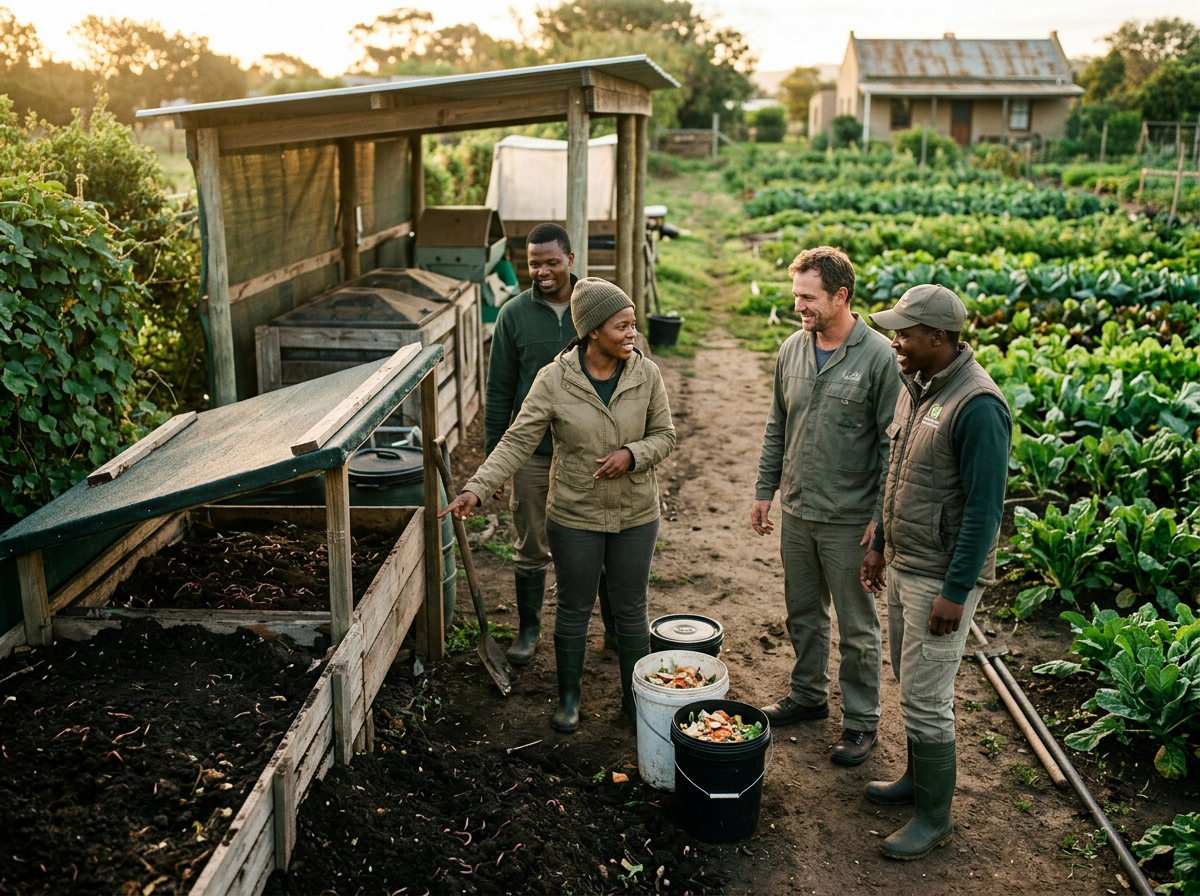
South African operations team reviews an organic-waste system connecting kitchen separation, covered storage, processing and garden use.
Pilot one controlled loop, then learn from it
Choose a source area with a stable team, visible material flow and a manager willing to respond to findings. Run the pilot through a full operating cycle, including at least one peak. Hold short daily reviews during launch: what entered, what did not belong, where the handover failed, whether containers were clean and sufficient, and what the processor or operator observed. Correct the system before blaming individuals.
For community projects and cooperatives, define decision rights and benefits before bringing material onto shared land. Local experience can improve the design, but it must not be extracted, published or repackaged without consent and agreed attribution. Women should be represented as technical decision-makers, operators and project leaders—not as symbolic beneficiaries. Photograph people or community knowledge only with informed permission and a clear purpose.
Map the real system before spending on the solution
A useful assessment looks at what the site generates, why it arises, where contamination enters, how material moves, what land and water constraints exist, who will operate the system and where outputs can go. That evidence supports a recommendation sized to the site—not to a generic product claim.
What to act on now
- Measure by stream and source, not only by the total skip or invoice.
- Prevent edible surplus before treating unavoidable organic residues.
- Design separation, movement and storage around the busiest real shift.
- Avoid selecting equipment from volume alone; characterise material, labour, space, utilities and end use.
- Verify current environmental, municipal, food-safety and workplace requirements for the actual activity and site.
- Train and observe the people who operate every handoff.
- Book a professional site assessment when material, capacity, drainage, nuisance, approvals or treatment fit is uncertain.
Build the chain that keeps clean material useful
Organic waste recycling works when the full chain works: less avoidable waste enters it, staff can separate during real operations, storage protects material quality, the chosen pathway fits the stream, and a trained owner measures what happens next. Start with one representative stream and one controlled loop. Learn from the pilot, correct the weak handoffs and expand only when the evidence supports it.