
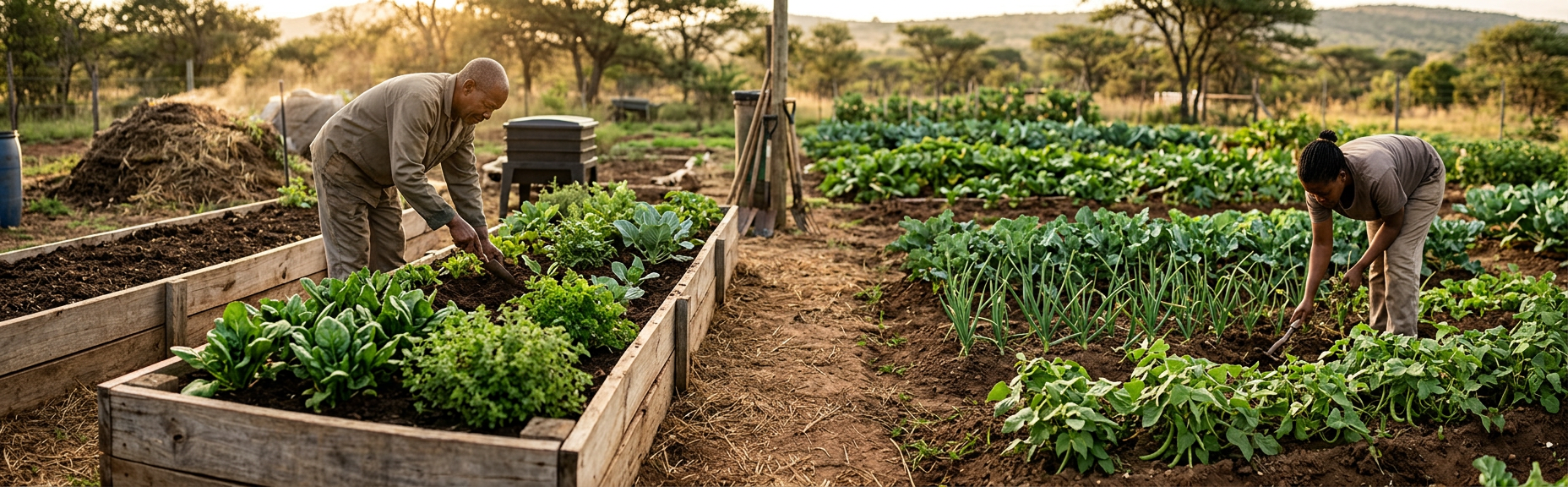
The photogenic bed is not automatically the practical bed
Raised beds are easy to admire. They create clean lines, defined paths and a sense that the garden is already organised. In-ground beds can look less dramatic, yet they may use existing soil, retain temperature and moisture differently and cost less to establish over a large suitable area. Neither option is inherently more sustainable.
The decision depends on the site and the people who will use it. A school may value clear boundaries and accessible bed heights. A small farm may need the lower material cost and scalability of in-ground rows. A property with shallow, rubble-filled soil may need a raised root zone, while a site with deep workable soil may gain little from enclosing every bed.
Compare the whole lifecycle: site preparation, materials, imported growing medium, irrigation, heat, repairs, access, replacement and daily maintenance. The best answer may be raised, in-ground or a hybrid plan.
For site-specific design and implementation, explore custom food garden design.
What each term actually means
An in-ground bed is formed in the existing soil surface, often with added organic material and defined paths. It can be flat, slightly mounded or shaped to manage local conditions. A raised bed lifts the growing medium above the surrounding grade and is commonly retained by timber, masonry, metal or another structure, although an unretained mound is also raised relative to the path.
The label does not guarantee performance. A raised bed filled with poor-quality material and supplied by uneven irrigation may fail. An in-ground bed in compacted fill may restrict roots and hold water. Judge the proposed construction, soil profile, water route and maintenance system—not the photograph used to sell the idea.
For the next practical decision, continue with test soil texture and drainage.
For the next practical decision, continue with build a no-dig vegetable bed.
For the next practical decision, continue with plan a home food garden budget.
Raised and in-ground beds across eight decision factors
<p><em>The table identifies trade-offs; it does not award a universal winner.</em></p>
| Factor | Raised bed | In-ground bed | Site question |
|---|---|---|---|
| Initial cost | Usually needs retaining materials, growing medium and additional construction | May use existing soil and fewer materials | What preparation and imported inputs are genuinely required? |
| Drainage | Can provide a deeper or elevated root zone, but still needs an outlet | Depends on natural profile, structure, slope and compaction | Where will excess water go after leaving the root zone? |
| Water and heat | May warm and dry faster because sides are exposed | May buffer temperature and moisture differently | What do sun, wind, mulch, soil and irrigation measurements show? |
| Accessibility | Can reduce bending when height, edge and path are designed for users | May require kneeling or bending unless tools and layout compensate | Who uses the bed and what reach, path and edge design is safe? |
| Soil control | Growing medium can be specified, but source quality and settling matter | Builds on existing soil and its constraints | Is the existing soil suitable, testable and safe? |
| Durability | Retainers weather, corrode, crack or loosen and need replacement | Fewer structural components, but edges and paths still need management | Can the budget and team maintain the chosen materials? |
| Scale | Useful for intensive, contained or demonstration areas | Often easier to extend over suitable land | Is this a pilot, household garden or production area? |
| Irrigation | Geometry can simplify laterals but zones may dry differently | Can integrate with larger row or bed layouts | Can unlike bed types be placed on separate schedules? |
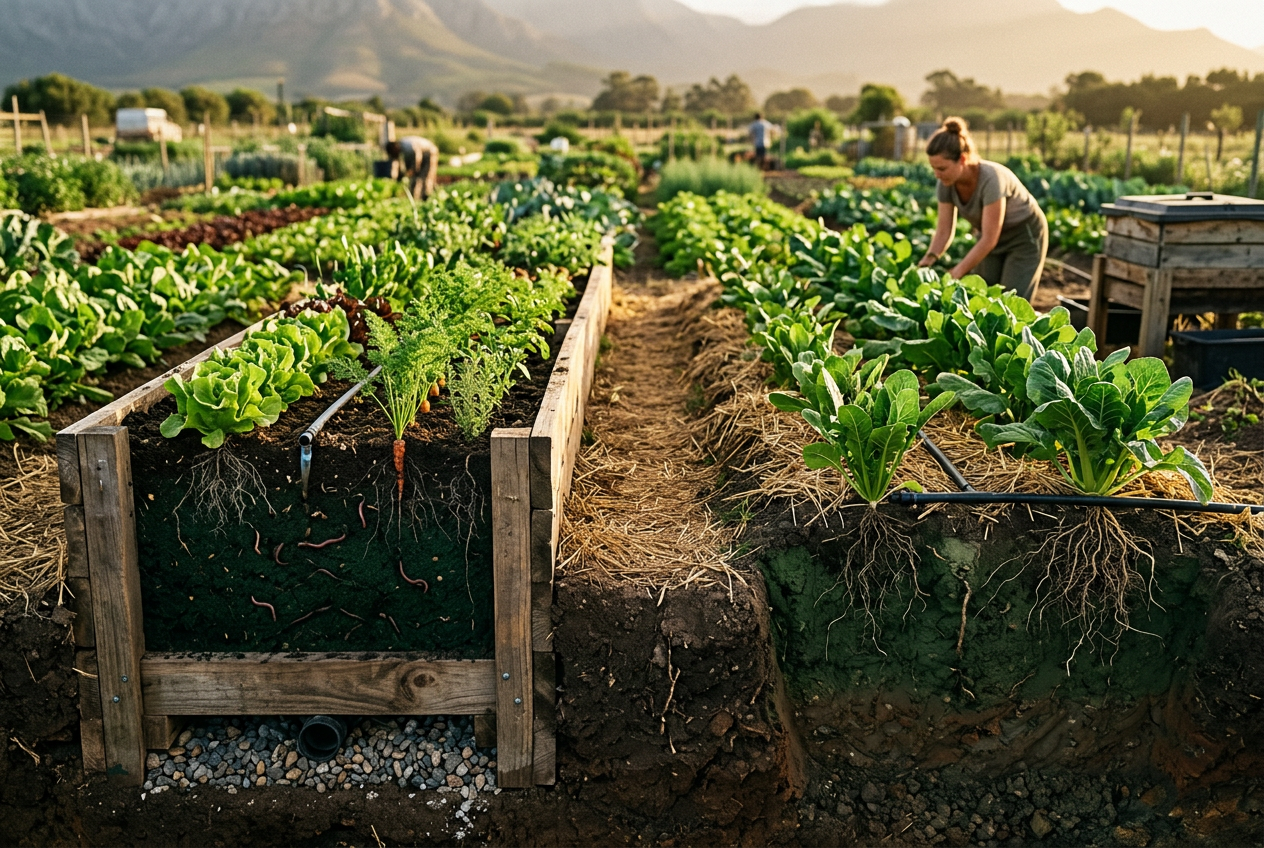
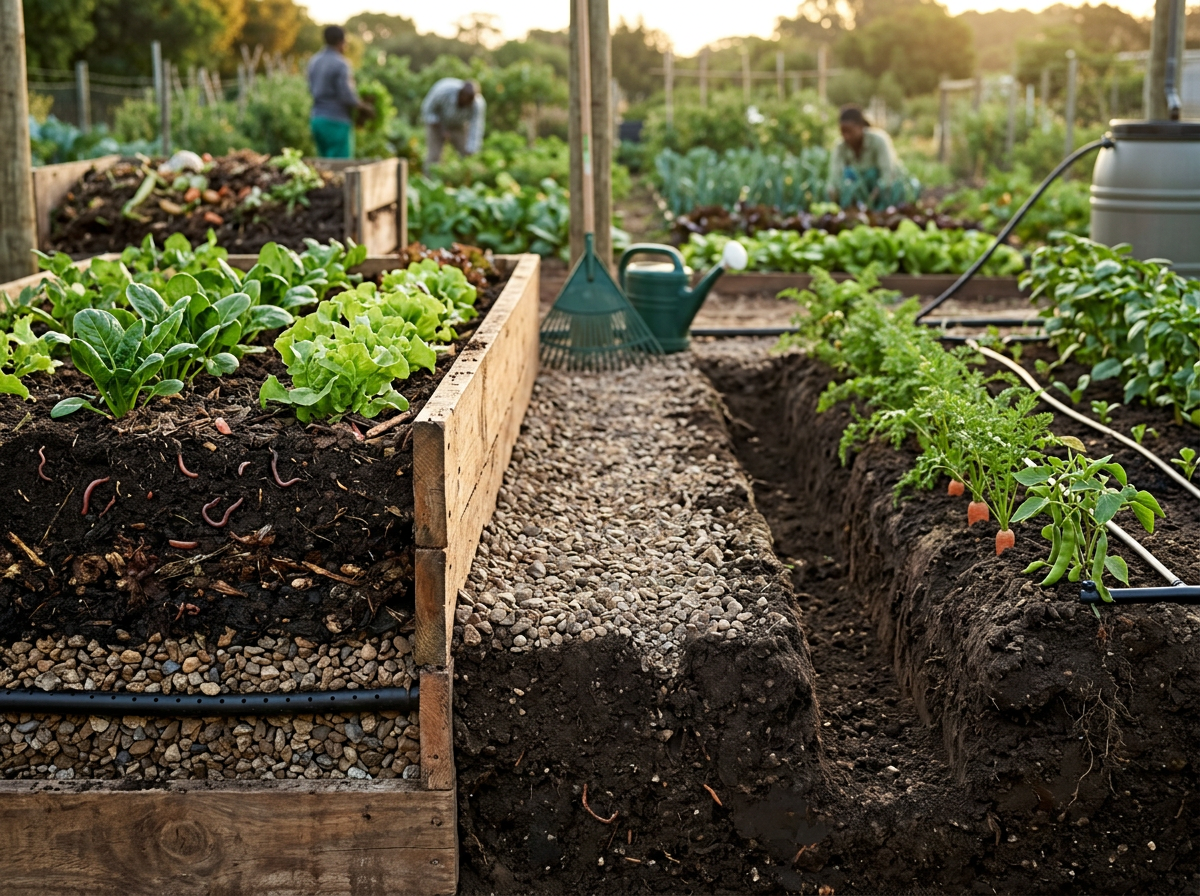
Cutaway comparison of raised and in-ground beds showing soil profiles, paths, drainage and drip lines
Three South African site scenarios
A small suburban home
The existing soil is deep enough but compacted near the driveway. Space is limited and the household wants herbs and vegetables close to the kitchen. A hybrid may work: one accessible raised bed beside the path, with smaller in-ground beds where soil and drainage are suitable. The irrigation schedule accounts for the raised bed drying differently.
A school learning garden
Clear bed edges, broad paths and selected accessible heights can help supervision and participation. Yet building every bed high may consume the budget that is needed for shade, water, tools and holiday maintenance. A pilot can combine low retained beds, one accessible demonstration bed and an in-ground area, then test how learners and staff actually use them.
A community or market garden
Over a larger area, the cost and replacement burden of retaining walls can be substantial. Where soil depth, drainage and safety are suitable, in-ground beds may make scaling more realistic. Raised beds can be reserved for a nursery, accessible area or a zone with a specific soil constraint. The group should agree who owns repairs and how imported growing medium is sourced before construction.
Questions to answer before ordering materials
- What does the soil profile and site history show?
- How does water enter, move through and leave the proposed bed area?
- Who needs to reach the centre, and from which side?
- What path width and surface allow safe work and movement?
- How hot, windy or frost-prone is the location?
- Where will growing medium come from, and how will its quality be checked?
- Which retaining materials are appropriate, safe and maintainable for the intended life?
- Can the irrigation system separate beds with different water behaviour?
- What is the setup cost and the likely repair or replacement burden?
- Could a small hybrid pilot answer the remaining questions?
Raised-bed questions
Are raised beds always better for drainage?
No. A raised root zone may drain more freely, but water still needs a safe route away from the bed. A compacted base, incoming runoff or poorly designed site drainage can leave raised beds saturated or move the problem elsewhere.
Do raised beds use more water?
They can dry faster because more of the soil is exposed above ground, but actual demand depends on bed material, depth, soil mix, crop, mulch, wind, sun and irrigation. Measure moisture in the root zone and schedule for the specific bed.
Can one garden use both raised and in-ground beds?
Yes. A hybrid layout can reserve raised beds for accessibility, shallow soil or intensive crops while using suitable in-ground areas for larger or lower-cost production. Irrigation and maintenance should be zoned for their different behaviour.
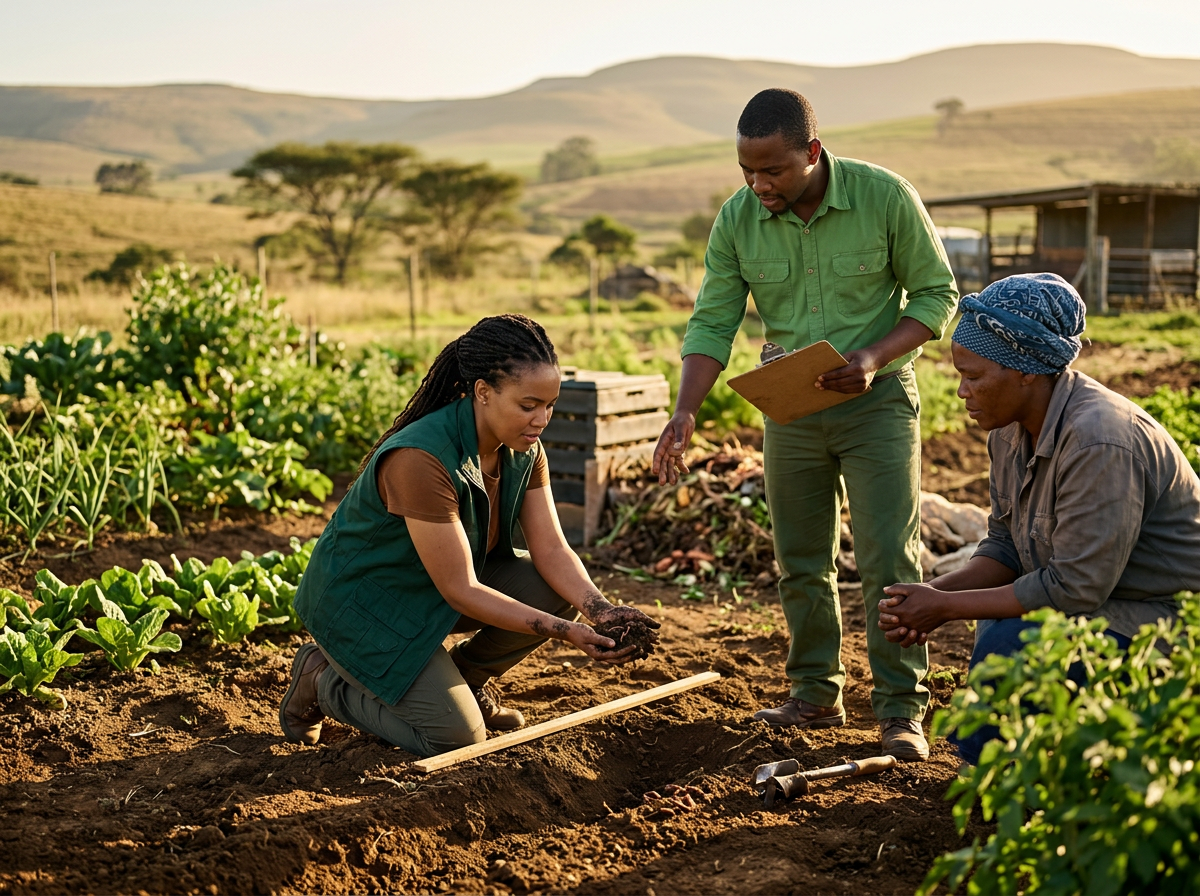
Choose the bed after reading the site
Green Earth Concepts can assess soil, drainage, water, access, growing goals and maintenance capacity, then recommend an appropriate raised, in-ground or hybrid layout. This helps prevent money being locked into materials before the root-zone and operating questions are answered.
Choose for fit, not fashion
- Raised beds can improve access or create a defined root zone, but they add material, fill and replacement decisions.
- In-ground beds can be economical and scalable where soil, drainage and access are suitable.
- Neither option fixes contamination, incoming runoff, a buried hard layer or an unreliable water source by itself.
- Paths, reach, irrigation and the people doing the work belong in the decision.
- A hybrid pilot often provides better evidence than an all-or-nothing build.
A bed is infrastructure for roots and people
The decision is not whether raised beds look more organised or in-ground beds look more natural. It is whether the chosen bed creates a suitable root zone, manages water responsibly and can be used and repaired by the people on site.
Test the soil and drainage, map access, price the lifecycle and consider a hybrid. Fit-for-purpose design is quieter than a trend, but it is far more likely to remain useful after the first season.