
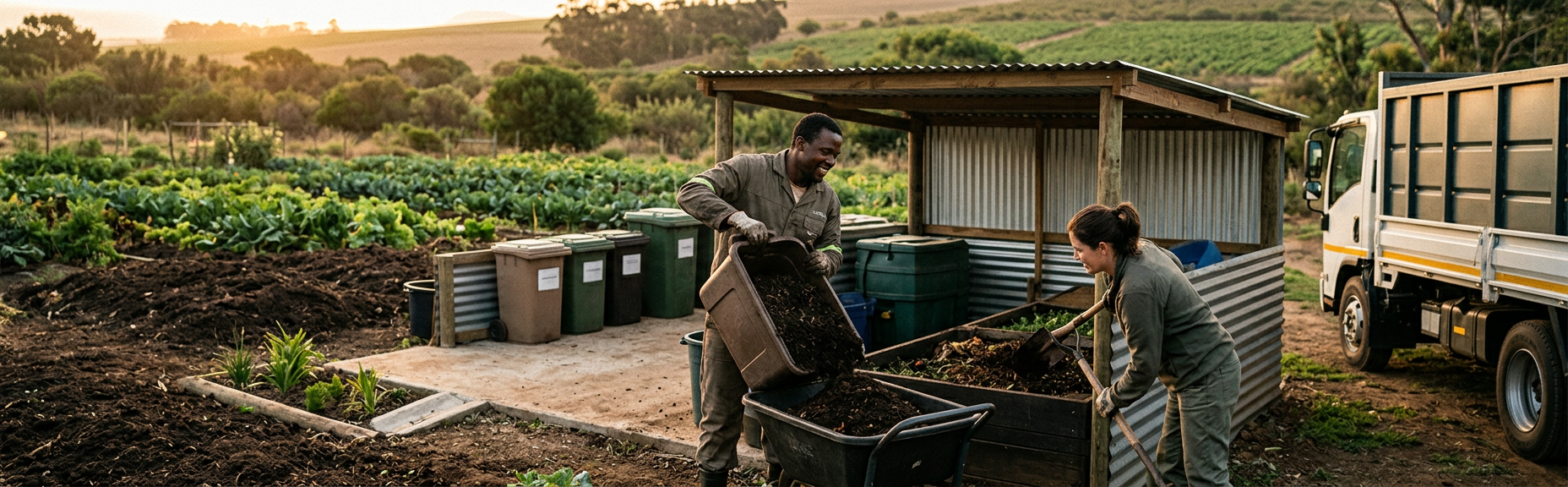
The holding area is part of the recycling process
A good recycling method cannot repair a holding area that cooks in the sun, leaks into drains or has no missed-pickup plan. Material that was separated correctly can become a nuisance, safety problem or rejected load during the few metres between the source station and the collection vehicle.
Organic waste storage must match the stream, peak volume, holding interval, climate, hygiene controls, operator capacity, vehicle access and final recipient. Green Earth Concepts includes those practical constraints in an organic waste recycling system. This guide helps you prepare a site brief; it does not replace the National Norms and Standards for the Storage of Waste, municipal by-laws, environmental-health rules, building and drainage requirements, fire controls or a site-specific occupational-health assessment.
Calculate storage from peaks and the longest credible interval
Start with material generated between collections, not a monthly average. For each source, record the peak daily mass or documented volume, the maximum time material may remain on site under the approved plan, and the containers used for internal movement. Include weekends, public holidays, events, seasonal harvests, school closures, traffic restrictions and any day when the collector normally cannot reach the site.
Provide spare capacity for foreseeable variation and a contingency, but do not solve uncertainty by buying containers too large to handle or clean safely. A 240-litre wheeled bin filled with dense wet material behaves differently from the same container filled with dry leaves. Capacity must be checked against safe gross weight, route gradients, thresholds, lifts, trolley space and the person or equipment assigned to move it.
Keep streams separate where the recipient, safety controls or treatment route differ. Clearly mark containers and prevent unauthorised deposits. Do not use an organic-waste holding area for chemicals, sanitary waste, healthcare risk waste, ash, sharps, unknown liquids or any material outside the approved acceptance list.
Storage and collection design brief
<p>Walk the proposed route with operators and the collector. Complete the evidence column before committing to construction or equipment.</p><p><em>Any change to hard surfaces, drainage, bunding, roofing, electrical services or vehicle routes needs competent design and approval. Do not direct spills or wash water into stormwater, soil, gardens or irrigation infrastructure without authorised technical review.</em></p>
| Design question | Evidence to collect | Failure to prevent |
|---|---|---|
| How much arrives between collections? | Peak by stream, source and day; container fill rate | Overflow and improvised storage |
| How long can material remain? | Approved service interval, recipient criteria, climate and hygiene review | Odour, pests and deterioration |
| Which container is suitable? | Material density, free liquid, closure, compatibility, cleaning and handling | Leaks, breakage and unsafe lifting |
| Where will containers stand? | Secure shaded area, surface, access, neighbours and sensitive receptors | Weather exposure, nuisance and unauthorised dumping |
| How will spills and wash water be controlled? | Site drainage plan and competent environmental/health review | Pollution of soil, stormwater or food areas |
| Can staff and vehicles reach safely? | Route walk, turning space, slopes, doors, traffic and collection window | Collisions, blocked access and missed service |
| Who inspects and cleans? | Named roles, frequency, method, supplies and records | Residue build-up and unclear ownership |
| What happens when collection fails? | Escalation contacts, spare approved capacity and alternative authorised route | Uncontrolled accumulation |
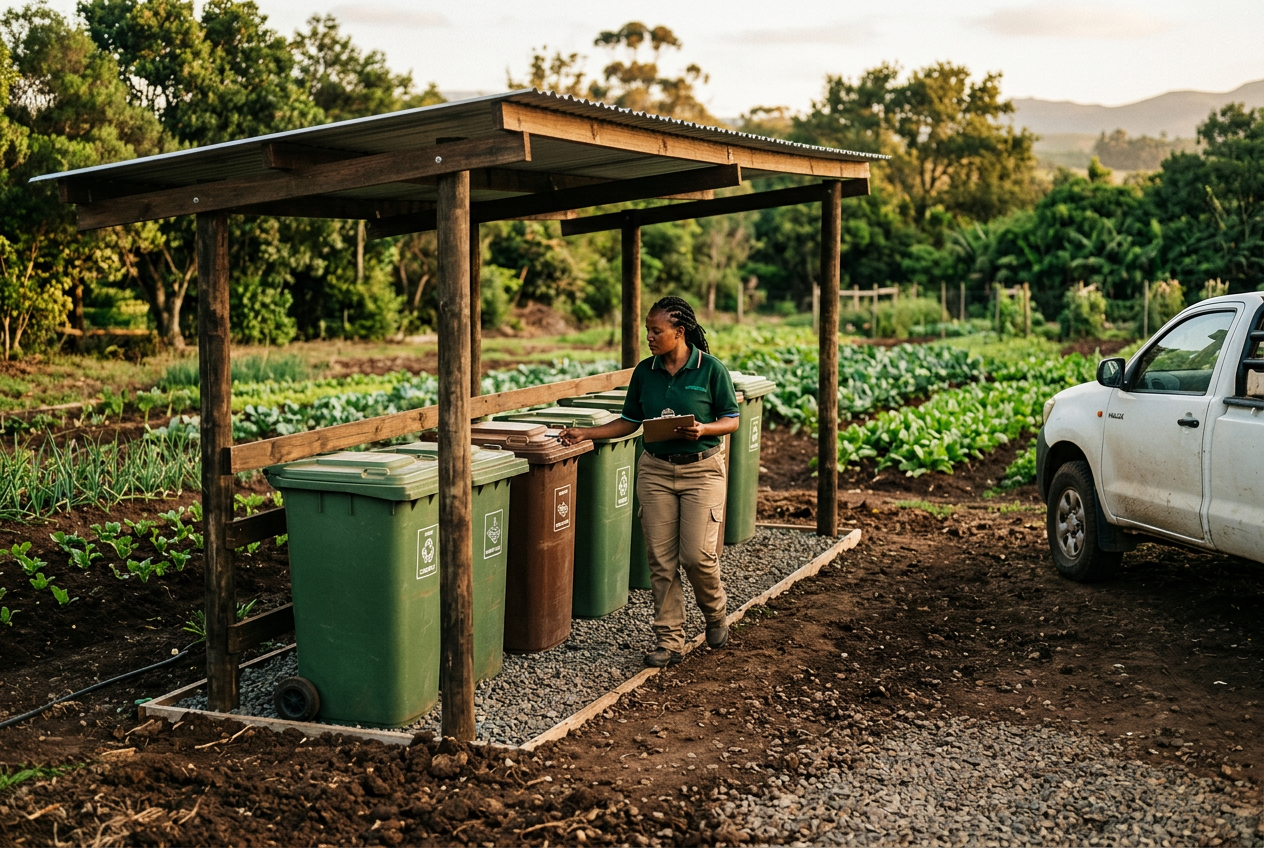
Set up the route, handover and contingency
- 01
Trace the route from every source
Walk each full container from the source station to the holding area. Note doors, thresholds, passenger areas, food routes, public areas, slopes, traffic and points where a container must be lifted or transferred. Link back to the source-separation bins and signage guide so containers and routes work as one system.
- 02
Set collection triggers
Use a fill-level or scheduled trigger that leaves safe closure and spare capacity. Record when material enters the holding area and when it leaves. For variable sites, add a peak-day check rather than relying on one weekly collection assumption.
- 03
Define the collector handover
Agree collection window, access contact, container or bulk-transfer method, acceptance check, quantity evidence, rejection process and proof of destination. Confirm who signs or records the handover and how damaged containers are reported.
- 04
Clean for the material and site
Remove residues with an approved method, inspect seals, lids, wheels and contact surfaces, and allow containers to return dry where appropriate. Control wash water according to the approved site plan. Keep cleaning tools separate from food-contact tools and store chemicals safely.
- 05
Inspect for nuisance and damage
At an agreed frequency, check closure, leaks, residue, odour source, pest evidence, container damage, surface condition, security and housekeeping. Persistent problems need the root-cause process in organic-waste odour and pest control, not fragrance or cosmetic cleaning alone.
- 06
Activate a missed-collection plan
Define who contacts the provider, when management is notified, how approved spare capacity is used, which source areas slow or stop generation, and which authorised alternative route may be called. Record the event and correct the underlying contract, access or communication issue. Use the full organic-waste contingency plan for load-shedding, storms and repeated service failure.
Daily and collection-day controls
<p>Adapt frequency to the site risk and approved plan.</p>
- Containers are correctly labelled, closed and not overfilled — Protects material and handling.
- No leaks, residues or exposed bags are present — Reduces nuisance and pollution risk.
- The area and route are clear — Keeps staff, vehicles and emergency access safe.
- Entry and removal times are recorded — Shows actual holding intervals.
- Quantity or container count is captured at handover — Supports operational and diversion evidence.
- Rejected material has a controlled response — Prevents abandonment or remixing.
- Cleaning and damage actions are closed — Stops small defects becoming chronic failures.
- Spare capacity and escalation contacts are available — Makes the contingency usable under pressure.
Protect the site while material waits
<p>Storage is temporary stewardship, not passive parking.</p>
Do
- Use closed, compatible and maintainable containers.
- Size from peak volume and safe gross handling weight.
- Keep the area secure, inspectable and protected from weather.
- Verify access and acceptance with the collector.
- Control spills and cleaning through an approved site plan.
- Record missed collections and corrective action.
Don't
- Place organics in direct sun because the space is convenient.
- Allow liquids to run to stormwater, soil or an unapproved drain.
- Rely on one person or one phone number for every collection.
- Overfill bins or leave bags beside them.
- Mix unknown or excluded waste into available capacity.
- Claim compliance from a photograph or generic checklist.
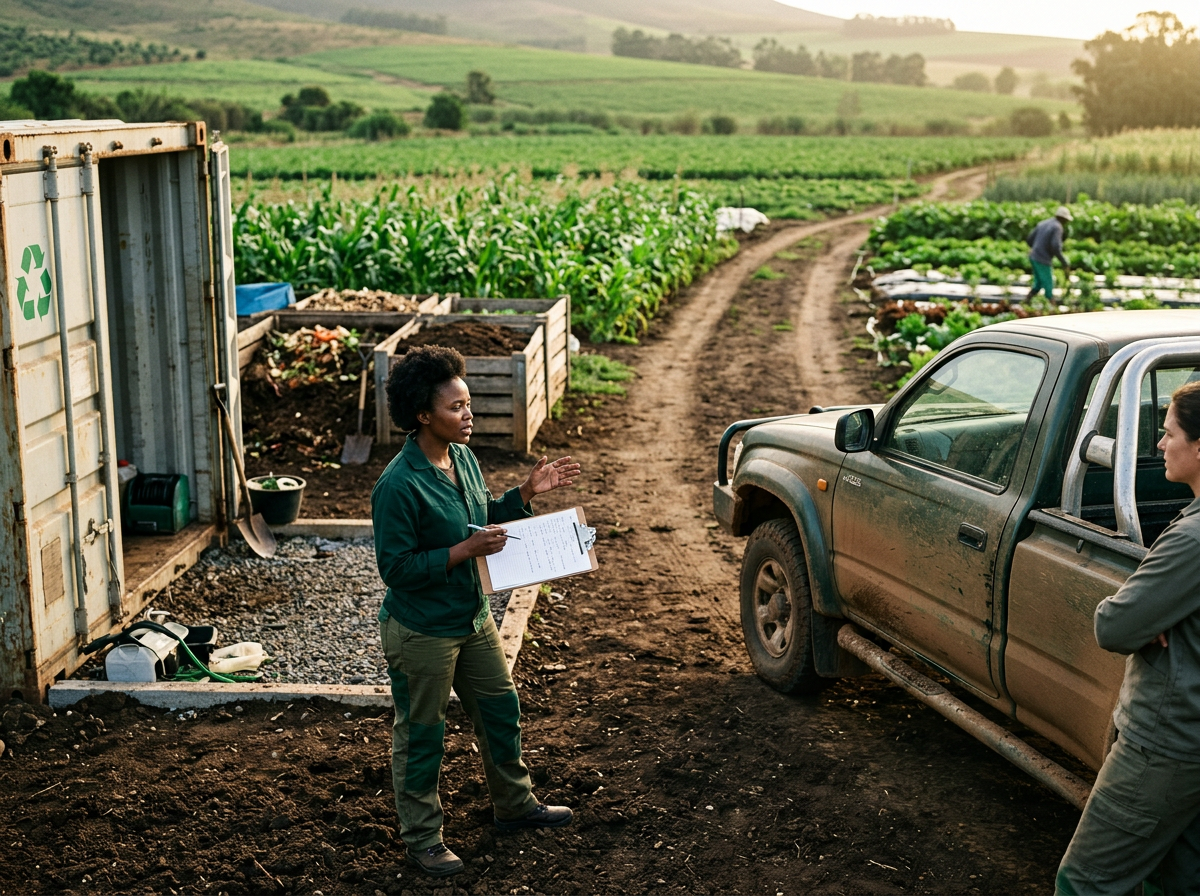
Include the holding area and vehicle route in the assessment
A site assessment can compare peak generation with container capacity, walk internal and vehicle routes, review the holding area's constraints, confirm team responsibilities and build a contingency around the chosen service model.
Design for the longest real wait
- Calculate capacity from peaks, service interval and credible delays.
- Match containers to material, closure, cleaning and safe movement.
- Keep storage secure, shaded where appropriate, inspectable and accessible.
- Verify drainage, environmental-health, fire, building, workplace and municipal requirements.
- Document collection, destination, rejection and missed-service routines.
- Avoid oversized containers and uncontrolled wash water.
- Book an assessment when surfaces, drainage, access, nuisance or compliance need redesign.
Keep clean material controlled until the next owner accepts it
Storage and collection succeed when separated material remains contained, identifiable, accessible and acceptable from the source station to the verified recipient. Design for peaks and delays, not the smoothest day. Name the people who inspect, move, clean, hand over and escalate. The few hours that material waits on site are part of the recycling process—and deserve the same attention as treatment.